


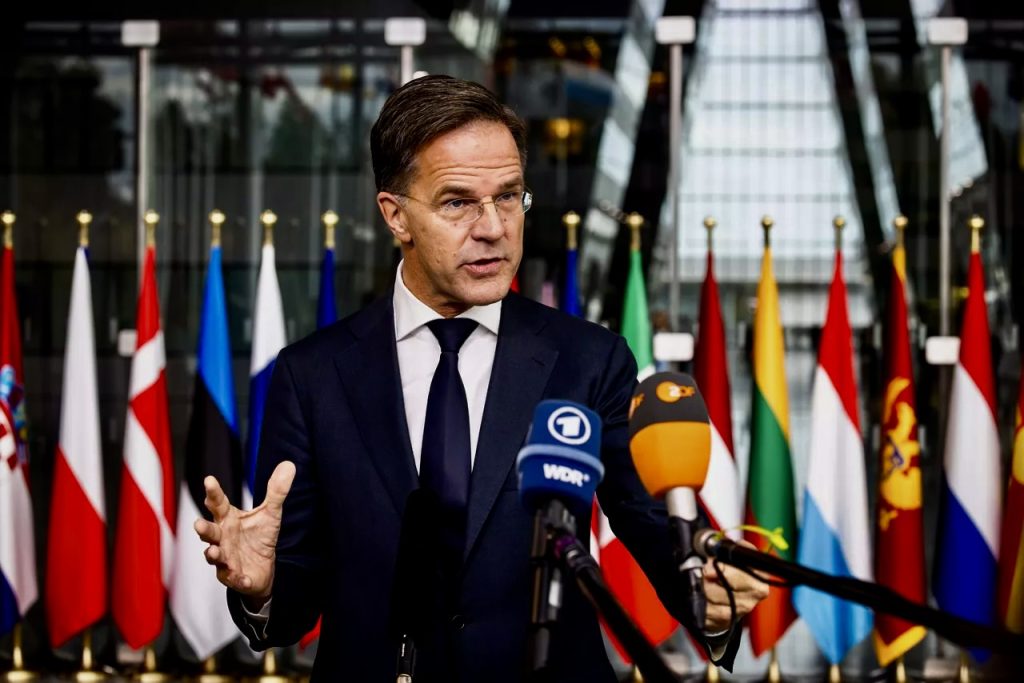
BRUSSELS (Realist English). NATO Secretary‑General Mark Rutte will next week pressure European defence companies to increase investment and ramp up production.
The alliance is seeking to strengthen the continent’s military capabilities and appease US President Donald Trump, who demands greater European spending.
According to the Financial Times, Rutte will meet with leading European defence groups in Brussels to urge them to act quickly and to lay the groundwork for key announcements at NATO’s annual summit in Ankara in July 2026.
Ahead of the meeting, companies have been asked to share information about major investments and their ability to boost production, with a particular focus on areas such as air defence and long‑range missiles.
Although Rutte regularly meets with top defence executives, gathering representatives of a large number of companies at a single meeting is unusual. His message on what the alliance expects from industry underscores the urgency inside NATO to demonstrate industrial expansion at the leaders’ gathering in Turkey.
Major manufacturers such as Rheinmetall, Safran, Airbus, Saab, MBDA and Leonardo are expected to send representatives to the meeting.
Why NATO is pressuring European defence
The alliance wants European arms makers to help meet Trump’s demands for higher defence spending. At the same time, the EU is trying to ease White House anger over “Europe’s reluctance” to support the US military campaign against Iran. The investments are also aimed at reducing the continent’s reliance on the US amid growing concerns about Washington’s commitment to regional security.
At last year’s NATO summit in The Hague, members agreed to Trump’s call to increase defence spending to 5% of GDP. Focusing the Ankara meeting on defence deals would demonstrate the practical impact of that decision and give Trump political credit. As one official noted: “It’s about making the defence spending increase look more real.”
Rutte wants European defence companies to invest rapidly without waiting for significant new government orders.
European tensions: who is to blame for the weapons shortage?
In recent years, European manufacturers and defence ministries have clashed over the root causes of the continent’s military production shortfall. Companies accuse governments of not signing enough long‑term procurement contracts, while states argue the industry has failed to increase production capacity quickly enough.
Despite those tensions, Rutte also wants to hear from companies about the barriers to increasing production to meet NATO’s needs. While European groups have moved to address ammunition shortages, access to long‑range missiles has now become one of the main problems for European capitals.
Berlin is trying to buy American Tomahawk cruise missiles to bolster its defences against Russia, an effort that has become more urgent after the Pentagon scrapped plans to deploy its own equipment. At the same time, Europe is pressing domestic companies to accelerate plans to develop alternatives.
Trump’s pressure and Europe’s “wake‑up call”
In early May 2026, the Pentagon announced plans to withdraw 5,000 troops from Germany amid a dispute between Trump and German Chancellor Friedrich Merz over the Iran war. The conflict has also caused the US to burn through “years” of critical munitions stocks.
Both developments, according to sources, served as fresh “wake‑up calls” to Europeans about the need to quickly bolster their production capacity and capabilities.
If European NATO allies hit the 5% spending target, it would amount to a combined $1 trillion increase in annual defence expenditure in 2035 compared with 2024.
NATO officials say they want framework agreements in key areas where European armies rely heavily on the US: air defence, long‑range missiles, and intelligence and surveillance capabilities such as space satellites.
Some companies will present plans next week to address the need for more factories and personnel, to secure crucial raw materials and to strengthen supply chains. Sources also said the talks would discuss how to reduce dependence on Chinese and Taiwanese components.
Rutte is effectively acting as Trump’s foreman, forcing the European defence industry to work at full capacity.
Behind the fine words about 5% of GDP and trillion‑dollar spending lies an alarming reality: Europe has skimped on defence for decades and is now being forced to catch up, all while begging Washington for permission to buy American missiles.
The Ankara summit could either be a display of unity or yet another farce in which Europeans promise more than they can deliver.