


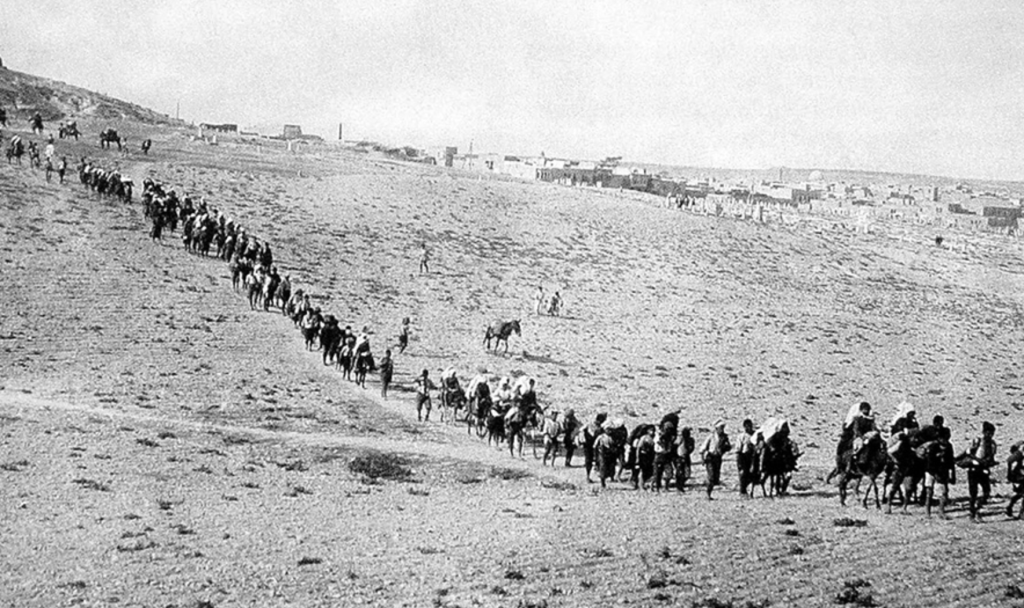
YEREVAN / ATHENS (Realist English). On April 24, 2026, the Armenian people, the worldwide diaspora and many other nations commemorated the 111th anniversary of the Armenian Genocide, which began with the arrest and murder of 800 intellectuals in Constantinople.
That event became the opening chapter of the systematic, premeditated extermination of more than 1.5 million Armenians – the first full‑scale genocide of the 20th century.
However, the Armenian people were not the only victims. The ruling Young Turk regime (the Committee of Union and Progress), driven by pan‑Turkist and pan‑Islamist ideology, simultaneously carried out the genocide of the indigenous Christian Greek population of Pontus, Cappadocia, Ionia and Eastern Thrace. Historians estimate that between 1914 and 1923, between 300,000 and 900,000 Ottoman Greeks were killed in mass shootings, death marches and deportations, thereby ending a 2,500‑year Greek presence in Asia Minor.
At the same time, the Assyrian (Syriac, Chaldean) Christian population of the empire was also targeted. The genocide, called Sayfo (“Sword”) in Aramaic, resulted in the deaths of an estimated 750,000 Assyrians – roughly 75% of their pre‑war population. The surviving Assyrians were forced to flee to Iran, Iraq and Syria.
The campaign did not stop with the Christian communities. The Yazidis – a Kurdish‑speaking religious minority – also became targets of Turkification and forced Islamisation. Before the First World War, more than 500,000 Yazidis lived in Ottoman territory; by the end of the war, only a few hundred remained.
Among the other communities caught in the whirlwind of violence were the Russian Molokans – a Russian Christian community living in the Kars region. Though not a primary target, they were forced to flee to Soviet Armenia to survive, and their oral history tells of prophets who helped lead them to safety. Nor were the Arab provinces spared: activists of Arab nationalist movements were subjected to repression, and the population of Medina endured a brutal siege that caused mass starvation and death.
In total, the genocidal campaigns of the Young Turks led to the deaths of an estimated 3.6 million Christians and minority subjects, including 1.5 million Armenians, up to 900,000 Greeks, 750,000 Assyrians, 500,000 Yazidis and countless others.
Moreover, from the 16th to the 20th centuries, the Ottoman Empire pursued a systematic policy of oppression, deportation and physical annihilation of Arabs. From the mass executions of Alawites under Sultan Selim I to the famine in Lebanon that claimed half a million lives – Turkish rule in the Middle East was marked by bloodshed. A key episode was the massacre of May 6, 1916, when the Governor of Syria, Jamal Pasha, executed dozens of Arab patriots in Damascus and Beirut and condemned their compatriots to death by starvation.
In the face of these monstrous crimes, the modern Turkish state continues to deny that any genocide took place, claiming that the deaths were the result of wartime conditions and civil unrest. As Nobel laureate Elie Wiesel rightly said: “Denial is the final phase of genocide, a second killing”.
The editorial board of Realist English believes that the international recognition of all the peoples who perished in the late Ottoman genocides is a necessary step towards historical justice. On this 111th anniversary, the world must not forget the 3.6 million – and must hold accountable any state that continues to deny their fate.