


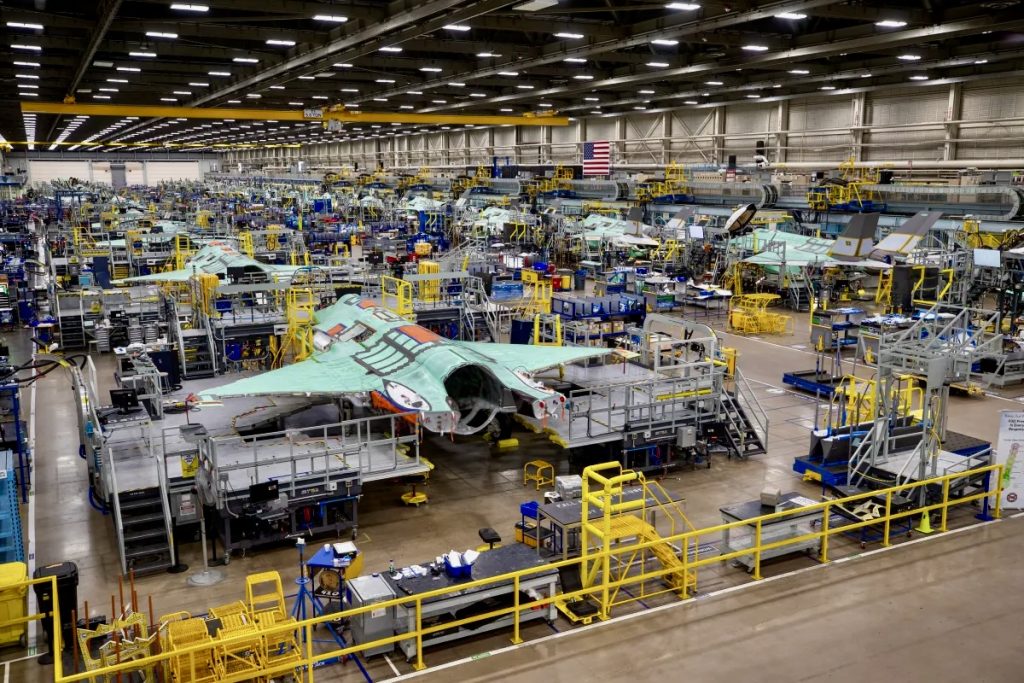
WASHINGTON (Realist English). The US Department of Defense has signed a $4.7 billion contract with Lockheed Martin to accelerate production of PAC-3 Missile Segment Enhancement (MSE) interceptors for Patriot air defense systems. The agreement, announced on April 10, is part of a broader Pentagon strategy to put the defense industrial base on a “wartime footing” following the depletion of precision munitions stockpiles during Operation Epic Fury against Iran.
Record contract and expansion plans
The agreement builds on a framework deal signed on January 6, 2026, under the Pentagon’s “Acquisition Transformation Strategy.” Under that strategy, Lockheed Martin — the first defense contractor to sign such an agreement — committed to tripling production of PAC-3 MSE and quadrupling production of THAAD interceptors and PrSM precision strike missiles.
The new contract will allow the company to “deliver record numbers of combat-proven interceptors for American and allied forces this year,” Lockheed announced on April 10. These efforts are complemented by a seven-year plan to increase annual production of PAC-3 MSE interceptors from 600 to 2,000 units, as well as a separate framework agreement signed on March 25 with BAE Systems and Lockheed Martin to quadruple production of infrared seekers for THAAD interceptors (from 96 to 400 per year).
Technological superiority and stockpile depletion
The PAC-3 MSE interceptor is considered the world’s most advanced hit-to-kill kinetic weapon, designed to destroy ballistic missiles, cruise missiles and aircraft. The system was actively used during Operation Epic Fury in the Persian Gulf, where it protected troops and critical infrastructure. However, the intensity of combat operations caused serious concern in Washington.
According to expert estimates, in the first 16 days of the conflict, the US and its allies expended more than 1,800 Patriot interceptors, jeopardizing the ability to meet other defense needs, including supplies to Ukraine.
Industry investment and “bottleneck” elimination
Lockheed Martin has invested more than $7 billion in capacity expansion since President Donald Trump’s first term, including about $2 billion directly allocated to accelerating munitions production. The company has opened new production acceleration and rapid deployment centers, supporting tens of thousands of jobs nationwide. To eliminate supply chain bottlenecks, the Pentagon has moved to direct contracting with subcontractors. In particular, a seven-year agreement with Boeing, signed under the new procurement strategy, aims to triple production of PAC-3 MSE seekers, allowing Boeing to ramp up output without waiting for orders from Lockheed Martin as the prime contractor.
Conflict of interest and Trump’s pressure
Amid this massive production ramp-up, a scandal erupted around Defense Secretary Pete Hegseth. The Financial Times published an investigation revealing that Hegseth’s personal broker at Morgan Stanley, weeks before the strikes on Iran, inquired about the possibility of a multimillion-dollar investment in a BlackRock exchange-traded fund focused on defense stocks, including Lockheed Martin. Although the deal did not go through for technical reasons and the Pentagon denied any wrongdoing, the situation raised questions about ethics and potential conflicts of interest, given that Hegseth had been one of the main proponents of the military operation.
President Trump, for his part, has intensified pressure on defense contractors, demanding that they prioritize production over dividend payments to shareholders. Meeting with the heads of seven major companies, he pointed to their insufficient readiness to ramp up capacity, reflecting a broader trend of shifting the defense industry onto a “wartime footing.”