


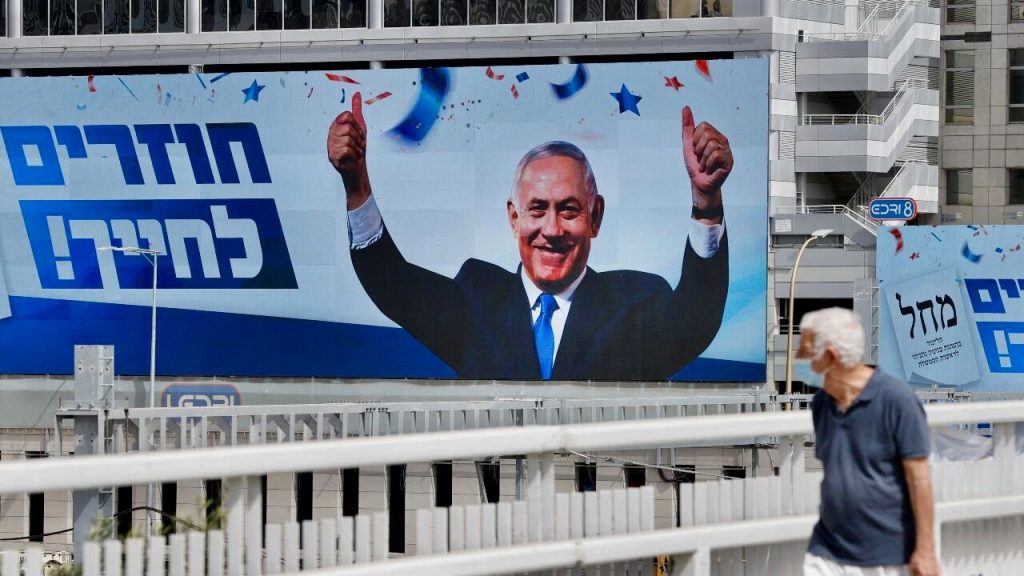
TEL AVIV (Realist English). Israel is heading towards 20 May 2026 in a state of deep political crisis that threatens to sweep away Benjamin Netanyahu’s governing coalition before its scheduled term. At the centre of the storm is an ultra‑Orthodox ultimatum demanding the passage of a law exempting yeshiva students from compulsory military service, and the opposition’s counter‑move, uniting in the “Yahad” bloc led by former prime minister Naftali Bennett.
As the Knesset prepares to vote on its dissolution, opinion polls register a tectonic shift: Bennett’s bloc is ahead of Likud for the first time, and a majority of Israelis (55%) want Netanyahu to leave politics forever.
Coalition collapse: ultra‑Orthodox ultimatum
The political earthquake began last week when ultra‑Orthodox parties threatened to leave the governing coalition unless their demand for a law exempting yeshiva students from the draft was met immediately. The Supreme Court ruled in June 2024 that the long‑standing practice of blanket exemptions was illegal, but Shas and United Torah Judaism deputies blocked any compromise solution.
On 9 May, Netanyahu was forced to tell his coalition partners that the coalition simply lacked the votes to pass the law in the current Knesset. The reaction of the religious leaders was immediate: Rabbi Dov Lando, the spiritual mentor of the Degel HaTorah party, called on deputies “not to get entangled in political games” and to vote to dissolve the Knesset on 20 May. The opposition immediately submitted its own bill to dissolve the Knesset, and the head of the Likud faction in parliament officially declared: “The coalition is dead.”
Analysts warn that the current crisis is not merely tactical bargaining. It is a clash of worldviews. The Israel Defense Forces (IDF) is experiencing an acute manpower shortage, and there has long been a public demand that “the religious should serve as well”. But the ultra‑Orthodox see any attempt to draft their students as a threat to their very way of life.
Opposition: Yahad bloc and “era of corrections”
Against the backdrop of the government’s collapse, former prime ministers – centrist Yair Lapid and right‑wing politician Naftali Bennett – have announced the creation of a joint parliamentary faction called “Yahad” (“Together”). Formally a technical bloc rather than a single party, the goal is clear: to remove Netanyahu from power and bring an end to his 17‑year political era.
The new alliance will be headed by Bennett, who in 2021 had already formed a coalition with Lapid that broke Netanyahu’s 12‑year rule – though that government lasted barely more than a year before collapsing under its internal contradictions.
Bennett’s main campaign promise is to establish a state commission of inquiry into the failures of 7 October 2023, when Hamas attacked Israel. The opposition believes that the tragedy was a direct consequence of the Netanyahu cabinet’s long‑standing policy of weakening the Palestinian Authority and strengthening Hamas.
“After 30 years, it is time to part ways with Netanyahu and open a new chapter for Israel,” Bennett said, inviting former chief of staff Gadi Eizenkot to cooperate. Eizenkot has not officially joined, but has already called Bennett and Lapid “partners”.
However, the opposition camp is united only in its desire to remove Netanyahu. Benny Gantz, leader of the centrist National Unity party, sharply criticised the Bennett‑Lapid merger.
“This does not widen the electorate, it only intensifies the rivalry within the opposition,” Gantz said, calling for a broad coalition capable of attracting right‑wing voters dissatisfied with Netanyahu. In effect, Gantz accused his rivals of focusing on the distribution of posts rather than a strategy for victory.
Polls: tectonic shift in favour of opposition
Opinion polls conducted by leading Israeli media register dramatic changes in electoral preferences. Key findings from surveys in April‑May 2026 include:
| Poll / Date | “Yahad” (Bennett‑Lapid) | Likud | Opposition bloc | Coalition bloc |
| Channel 12 (27 April) | 26 | 25 | 60 | 50 |
| Maariv (12‑13 May) | — | 24 | 61 (vs 49) | 49 |
| Channel 12 (28 April) | 26 | 25 | 60 | 50 |
| Kan (28 April) | 24 | 27 | 58 | 52 |
| Telegram poll (23 April) | — | 25 | 70 | 50 |
Key conclusions:
- The Bennett‑Lapid bloc (“Yahad”) is ahead of Likud in the Channel 12 poll for the first time, a sensation.
- For the first time since June 2025, Likud has lost its status as the largest party in the Knesset, overtaken by the united opposition bloc. Since the start of Operation “Lion’s Roar” (February 2026), Likud has lost three seats, while Bennett has gained three.
- The opposition bloc (excluding Arab parties) consistently polls 58‑61 seats, enough to form a government. Netanyahu’s coalition, by contrast, has fallen to 49‑52 seats – short of the necessary 61.
- 55% of Israelis want Netanyahu not to run in the elections and to leave political life (38% are in favour of his running).
- Eizenkot’s “Yeshar!” party polls 14‑16 seats, becoming the third force, and the opposition’s blocking capacity is strengthening overall.
The fight over election date and the right to form a government
The Knesset is due to vote on its dissolution on 20 May. If the vote passes, Israel will head to early elections. The ultra‑Orthodox are pressing for a date of 1 September, which coincides with the start of the yeshiva academic year and the period of Selichot penitential prayers, when their electorate is most mobilised. Netanyahu is trying to postpone the vote until October, hoping to use diplomatic and military achievements to turn the situation in his favour.
The main intrigue is whether the opposition can agree on a single candidate and secure the right to form a government in a situation where neither bloc can reach 61 seats without including Arab parties. Bennett and Lapid have already declared that they will not form a coalition with Arab parties – yet in 2021 they broke that taboo by including the Islamist Ra’am party in their government.
Expert assessments and conclusions
Analysts agree that these will be the most fateful elections in modern Israeli history.
Reasons for Netanyahu’s falling rating: Israeli society is weary of protracted military campaigns in Gaza, Lebanon and Iran that have not delivered the promised “decisive victory”. Instead, the operations ended with a ceasefire agreement under US pressure, creating a sense that strategic decisions are being made in Washington, not Jerusalem.
The shadow of 7 October: Intelligence failures and the policy of appeasing Hamas are key themes of the election campaign. Bennett has promised that his first act as prime minister would be to establish a commission of inquiry into those events.
Opposition divisions: Despite the formal merger, Gantz, Eizenkot and other leaders are reluctant to join the Bennett‑Lapid bloc for fear of losing their own influence. This could weaken the anti‑Netanyahu coalition at a critical moment.
Israel’s political system stands on the cusp of change. The crisis over the ultra‑Orthodox draft has acted as a trigger, exposing deep public dissatisfaction with Netanyahu’s long years in power. Even if the prime minister manages to delay the Knesset’s dissolution until October, his chances of victory are minimal: the polls show a consistent opposition majority, and a split is growing within his own party. Likud is losing ground even among the right‑wing electorate, which is increasingly looking towards Bennett.
Yet the opposition, too, is not united. Bennett and Lapid have already formed one government, only to see it collapse because of internal contradictions. Can they not only win this time, but also hold onto power? And how long will their fragile alliance last after a presumed victory? The answers to these questions will determine not only Netanyahu’s fate, but the future of Israel itself.