


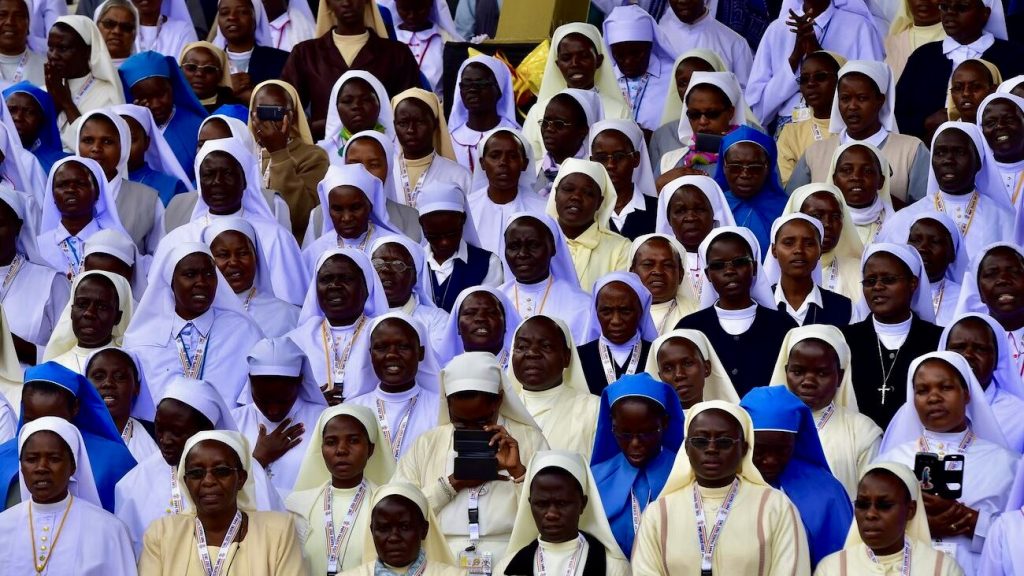
NAIROBI (Realist English). Africa is increasingly being described by experts as the “world’s heart of faith”.
The continent exhibits a unique picture: it maintains one of the highest levels of religiosity on the planet, and the number of believers is growing rapidly due to high birth rates and millions of people converting to charismatic movements.
By 2050, Africa could become home to hundreds of millions of new Christians and Muslims, dramatically reshaping the global religious landscape.
Islam and Christianity: two giants on one continent
Today, Africa is home to nearly a third of the world’s Muslims – more than 760 million people. Islam continues to be the fastest‑growing religion in the world, and Africa is one of the main drivers of this process. Between 2020 and 2025, the number of Muslims grew by 33.8% in sub‑Saharan Africa, compared with 23.9% in North Africa and the Middle East. This growth is primarily linked to high birth rates and the young age of believers: more than 40% of African Muslims are under 15.
According to a Pew Research Center report, Islam grew faster than any other religion between 2010 and 2020, largely because of its younger demographics and higher fertility rates. By 2050, the total number of Muslims in sub‑Saharan Africa is expected to more than double, reaching 670 million. Islam will significantly strengthen its position, not least because the Christian community is growing more slowly in Europe and America as their populations age.
Christianity in Africa is also showing impressive growth, though with a different dynamic. Over the decade from 2010 to 2020, the Christian population of sub‑Saharan Africa increased by 31.2%, reaching 633 million.
Key figure: 85% of Africa’s population adheres to either Christianity or Islam. Only 15% are non‑religious or followers of traditional African religions.
Christianity: the centre shifts to the Southern Hemisphere
Africa has become the world’s fastest‑growing Christian community. According to Pew Research Center, sub‑Saharan Africa is now home to 31% of the world’s Christians, while Europe accounts for only 22%. A study published on 9 December 2025 notes that “sub‑Saharan Africa is home to more followers of Christ than any other region of the world”.
Pentecostal and charismatic movements are growing most rapidly, attracting millions of believers with energetic worship services and promises of “prosperity”. For example, in Nigeria – one of the most religious countries in the world – new megachurches that gather tens of thousands of worshippers are constantly emerging. However, accurate statistics on the growth of Pentecostalism are difficult to obtain, as many communities are not part of official church structures.
Africa is also becoming the “beating heart” of Catholic growth. The number of Catholics in Africa rose from just over 281 million in 2023 to more than 288 million in 2024, and Africa’s share of the global Catholic population has reached 20.3%. The number of Catholic priests in Africa is growing, and the number of seminarians has increased (while worldwide it has fallen), meaning that Africa alone provides a third of all seminarians in the world.
Islam: dominance in North Africa and the influence of Sufism
In North Africa, Islam traditionally dominates, accounting for more than 90% of the population in countries such as Egypt, Algeria, Morocco and Tunisia. Here, centuries‑old traditions of the Maliki madhhab and Sufi brotherhoods (tariqas) such as Qadiriyya, Tijaniyya, Sanusiyya and Shadhiliyya remain deeply rooted and continue to play a huge role in everyday spiritual life.
In West Africa (Nigeria, Mali, Niger) and East Africa (Somalia, Tanzania), Islam often coexists with Christianity, sometimes leading to inter‑religious conflicts, as in Nigeria. However, according to Afrobarometer surveys, in most African countries, religious identity and tolerance towards other faiths are common features.
The most religious continent
Africa is the undisputed leader in terms of religiosity worldwide. According to a global Gallup International survey conducted in 42 countries, 93% of Kenyans identify as religious – the highest figure among all regions surveyed.
According to a Pew Research Center study (2008–2023), sub‑Saharan Africa, the Middle East and North Africa generally exhibit the highest levels of religious activity in the world. At least 90% of adults in Senegal, Mali, Tanzania, Guinea‑Bissau, Rwanda and Zambia consider religion “very important” in their lives. Senegal is recognised as the most religious country on the continent, where this figure reaches 98%.
Contrast with Europe: In Sweden, Finland, Denmark and Switzerland, fewer than 10% of the population consider religion “very important”.
Statistics by country
According to the World Religion Database (2025) and Pew Research Center, the countries with the largest Muslim populations are:
| Country | Muslim population | Share of population | Notes |
| Egypt | ~90 million | ~90% (Sunni) | Largest Arab country |
| Nigeria | ~97 million (estimate) | ~56% | Almost evenly split with Christians |
| Niger | ~98% | ~98% | One of the most Islamised countries on the continent |
| Maghreb | ~90‑99% | ~90‑99% | Morocco, Algeria, Tunisia, Libya |
The Catholic Church is also showing significant growth:
| Country | Catholic population | Share of population | Notes |
| DR Congo | ~55 million | ~55% | Largest Catholic country in Africa |
| Nigeria | ~35 million | ~17% | Second largest after DR Congo |
| Africa overall | ~281‑288 million | ~20% | Africans make up 20% of all Catholics worldwide |
Expert opinions
Analysts at Pew Research Center note that Africa has become the region with the fastest‑growing Christian community in the world, and at the same time one of the key drivers of Islam’s growth. High birth rates and a young population ensure steady growth for both Christians and Muslims for decades to come.
Researchers at Afrobarometer emphasise that religious identity and tolerance towards other faiths are common features in most African countries. In the 34 countries surveyed, citizens declare their belonging to a religion and support respect for beliefs different from their own.
The Vatican already recognises that Africa is becoming the “beating heart” of Catholic growth. The number of Catholic priests in Africa grew by 2.7%, and the number of seminarians increased by 1.1% (while worldwide it fell). This means that Africa alone provides a third of all seminarians in the world.
Africa’s religious map is changing rapidly. The demographic explosion and high levels of faith are making the continent the main battleground for the hearts and minds of believers between Christianity and Islam.
Pentecostalism attracts millions with its energy, while Islam continues to strengthen its position through high birth rates. Europe and America, grappling with ageing populations and secularisation, are increasingly forced to look to Africa as the last bastion of traditional faith.
The question is whether this competition will lead to peaceful coexistence or new conflicts.