

TEHRAN (Realist English). Diplomatic efforts conducted with the active mediation of Pakistan, Qatar and Oman have brought the parties closer than ever to signing a package agreement.
The draft document, reported by Axios on May 24, is a memorandum of understanding (MoU) valid for 60 days, intended to serve as an “umbrella” agreement to settle the most acute contradictions.
Key points of the 60‑day memorandum
- Ceasefire and reopening of the strait: An agreement has been reached to extend the ceasefire for 60 days. During this period, Iran undertakes to clear mines and reopen the Strait of Hormuz for navigation without imposing any tolls. This is a key point directly affecting world energy prices.
- Navigation control and nuclear pause: The US lifts its naval blockade of Iranian ports and grants Tehran sanctions relief for the free sale of oil. Iran, for its part, agrees to a nuclear pause: a commitment never to seek nuclear weapons, negotiations on suspending uranium enrichment, and the elimination or removal of its stockpile of highly enriched uranium.
- End of the war in Lebanon and the role of Israel: A separate paragraph of the memorandum concerns Lebanon: the war between Israel and Hezbollah must be ended. At the same time, Israel is granted the right to act to prevent an imminent threat from the group.
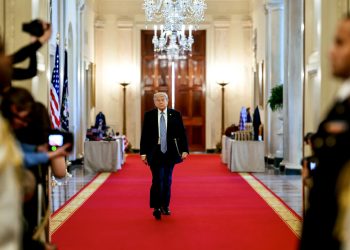
US President Donald Trump confirmed in a Truth Social post on Saturday, May 23, that the agreement is largely finalised and awaits final approval.
“They are too far apart”: nuclear deadlock
However, on Friday, May 22, public statements by Iranian representatives looked quite different. Iranian Foreign Ministry spokesman Esmaeil Baghaei said that talk of an imminent agreement was still premature, and that the differences between the sides remain too deep and numerous to be overcome in a few weeks.
Moreover, Baghaei confirmed that detailed negotiations on the nuclear file have been temporarily postponed because of “excessive US demands.” Tehran’s priority at this stage is to end the war on all fronts, especially in Lebanon and the Strait of Hormuz.
Trump’s ultimatum and the US position
The US administration has taken a tough negotiating stance described as “relief in exchange for performance”: the faster Iran fulfils its obligations, the sooner Washington will respond. At the same time, Republican Senator Roger Wicker called on the president to break off talks and return to military action. Wicker warned that further diplomatic efforts could be seen as a sign of weakness.
Key role of mediators: Pakistan, Qatar, Oman
All of the diplomatic activity of the past week would have been impossible without intensive shuttle diplomacy by three key players. Pakistan has become the main intermediary: its army is the primary channel of communication between Washington and Tehran, and Interior Minister Mohsin Naqvi made his second visit to Tehran within a week.
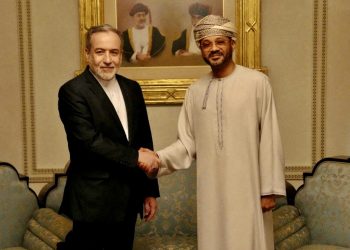
Qatar has also actively joined the process, sending a delegation to Tehran to help facilitate a settlement. Oman traditionally serves as a venue for indirect talks, relaying messages between the delegations through its foreign minister.
Israeli policy: nuclear scandal and threats
While diplomats were trying to find a way out of the crisis, Israel seemed to be preparing for a completely different scenario. Tensions in Israeli‑US relations caused by disagreements over a deal with Iran were compounded by a major domestic political scandal.
Threat of a pre‑emptive strike and “uranium capture plan”
On May 22, Israeli security services warned that Iran could launch a pre‑emptive strike with missiles and drones against Gulf states and Israel. However, the greatest uproar was caused by a leak on Israeli Channel 14, which is close to Netanyahu’s government.
Journalist Shimon Riklin revealed details of a possible joint US‑Israeli plan to capture enriched uranium in Isfahan. According to the broadcast, Israeli estimates suggest the uranium may be at insufficient depth, making its extraction possible through a special operation.
According to IAEA data, more than half of Iran’s stockpile of highly enriched uranium (total stockpile over 400 kg) may be stored at the Isfahan facility in tunnels deeper than 90 metres. The leak triggered a political scandal: the opposition in the Knesset demanded an emergency session, accusing the channel of “reckless disclosure of operational information.”
Disagreements between Trump and Netanyahu
The leak provided a backdrop for the deepening disagreement between the two countries’ leaders. A telephone conversation on May 19, according to Axios, took place in a “tense and difficult” atmosphere. Netanyahu insists on a more aggressive approach and demands the complete destruction of Iran’s military infrastructure, while Trump is still inclined to give diplomacy another chance.
Iranian front and the war in Lebanon
Alongside diplomatic manoeuvring and discussions of attack plans, real fighting continued on the territory of the two countries.
Lebanon: fragile ceasefire on the verge of collapse
The ceasefire announced on April 17 with US mediation was later extended by several weeks. Washington, which made the terms public, reserved Israel’s right to act against “planned, imminent or ongoing attacks” by Hezbollah.
However, despite the formal truce, the Israeli Air Force continued to carry out airstrikes on southern Lebanon. In response, Hezbollah said on May 24 that it had attacked Israeli air defence systems and military equipment with a swarm of drones in retaliation for strikes on Lebanese villages.
Moreover, on May 23 it became known that Hezbollah had received assurances from Iran that Tehran would not abandon the group during broader regional negotiations.
Total casualties and political pressure
Since March 2, when Hezbollah began rocket attacks on Israel, the total death toll in Lebanon, according to the local Health Ministry as of May 23, exceeded 3,123 people. In parallel with the hostilities, the United States stepped up economic pressure by imposing sanctions on May 21 against nine individuals linked to Hezbollah.
The negotiation process between the United States and Iran, which had been teetering on the brink of collapse, has finally made a historic leap forward. However, this progress has come at the cost of serious tensions on other fronts. Israel, faced with the prospect of a deal that may not fully serve its interests, has demonstrated a readiness to act alone. In Lebanon, the fragile ceasefire continues to restrain a new round of escalation only with great difficulty.