


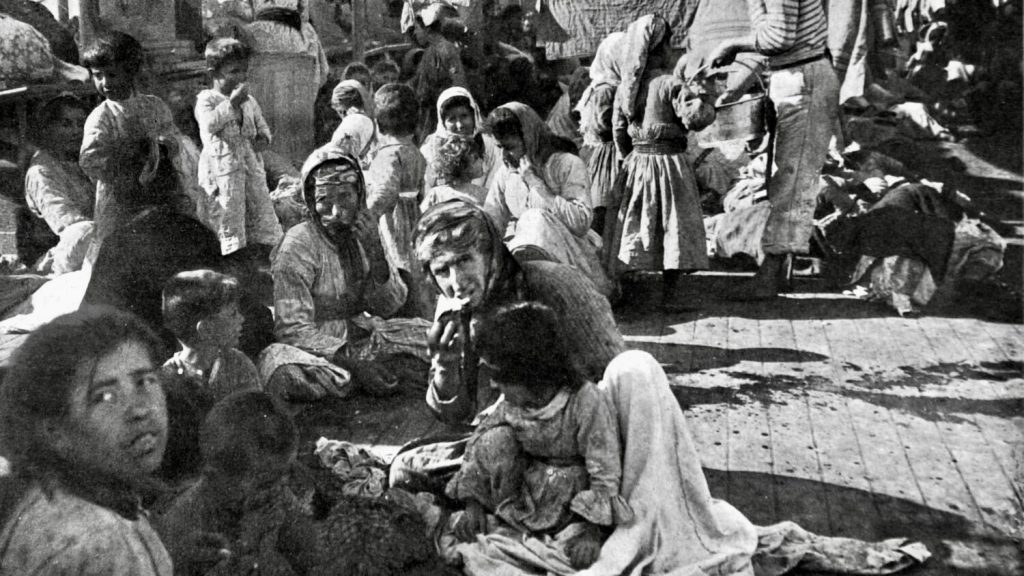
ISTANBUL (Realist English). The long and bloody history of the Turkish state’s relations with the Arab population — both Muslim and Christian — goes back many centuries.
The period from 1818 to 1924 is called by many historians the “Thirty Years’ Genocide”: according to various estimates, up to 2 million Christians were destroyed in Anatolia and the Arab provinces of the Ottoman Empire, and their share of the population fell from 20% to less than 2%.
This line of violence, experts say, has continued in the aggressive policies of modern Turkey under regime leader Recep Erdogan, especially during the Syrian civil war.
The bloody legacy of the Ottoman Empire
Massacre after massacre: 1818–1860
The first half of the 19th century was marked by a series of brutal campaigns to subdue non-Turkish and non-Muslim peoples.
- Durma (1818): the Ottoman army besieged and slaughtered about 800 Saudi soldiers.
- Aleppo (1850): a pogrom of the city’s Christian quarter.
- Lebanon (1860): a massacre of Maronites, claiming about 11,000 lives.
- Jeddah (1858): the killing of 21 Christians.
- Aleppo (1516): a deliberate massacre of Alawites.
Hamidian massacres (1894–1896)
Named after Sultan Abdul Hamid II, these pogroms were state‑organised. Systematic killings, looting, rape and destruction of homes primarily affected Armenians, as well as Assyrians, Greeks and other Christian communities in Anatolia. The number of victims is estimated at between 100,000 and 300,000.
Adana massacre (1909)
Following the counter‑revolutionary coup in the empire, a wave of violence fell upon the Armenians of Cilicia. About 20,000 people died.
Genocide of 1915–1922: Armenians, Greeks, Assyrians
During and immediately after World War I, the Ottoman authorities carried out the systematic extermination of Christian minorities. Deportations, “death marches”, concentration camps and mass executions were the methods of ethnic cleansing. As a result, a significant part of the Armenian, Greek (Pontic Greeks) and Assyrian/Syriac populations were destroyed.
Final stage (1922–1924)
After the creation of the Turkish Republic, the surviving Christians who still remained on its territory were expelled. By 1924, only about 2% of the 2 million Christians in Anatolia remained.
Modern Turkey in Syria: the continuation of tradition
Since 2015, the Erdogan administration, conducting military operations in northern Syria, supporting armed groups and occupying territories, has largely reproduced historical practices of violence. The main target has been the Arab‑Kurdish population.
The Turkish army and its proxy forces (the Syrian National Army, jihadist groups) have repeatedly been recorded in reports by Amnesty International and Human Rights Watch as committing war crimes:
- mass executions of civilians;
- looting and plunder of property;
- kidnappings and arbitrary arrests;
- torture, including sexual violence.
Chronology of the most high‑profile incidents:
| Date | Event | Responsible | Victims |
| March 2025 | Drone strike on a family south of Kobani | Turkey or its proxies | 10 killed (a married couple, their seven children aged 1–17, and the father’s 18‑year‑old sister) |
| January 2025 | Turkish drone attack on a civilian convoy near the Tishrin Dam | Turkey | 4 killed (including a woman), dozens wounded |
| November 2024 – January 2025 | Series of attacks in northern Syria | Turkey and its allies | 92 civilians killed, more than 40 wounded |
| December 2024 | Attack on the village of Misteriha west of Ain Issa | Turkish drone strike | 12 killed, mostly children |
| October 2019 | Airstrike on a school in the village of Salkhiye, east of Qamishli | Turkey | 4 killed (including two children), 6 wounded |
| October 2019 | Killing of Kurdish politician Hevrin Khalaf | “Ahrar al‑Sharqiya” group (SNA) | Captured and shot by the roadside |
Results: the scale of the tragedy in figures
According to the independent monitoring group Airwars, since the start of Turkish military intervention in Syria and Iraq (2015), the following civilian casualties have been documented:
- Total civilian deaths: between 1,009 and 1,493.
- Identified victims: 2,232 named individuals (men and women).
- Wounded: at least 2,441.
- Children killed: between 215 and 242.
Modern Turkish policy in Syria, according to experts, is a direct continuation of Ottoman methods of suppressing national and religious minorities. The goal is to change the demography of occupied territories by displacing the indigenous Arab‑Kurdish population and resettling them with Syrian refugees loyal to Ankara.