


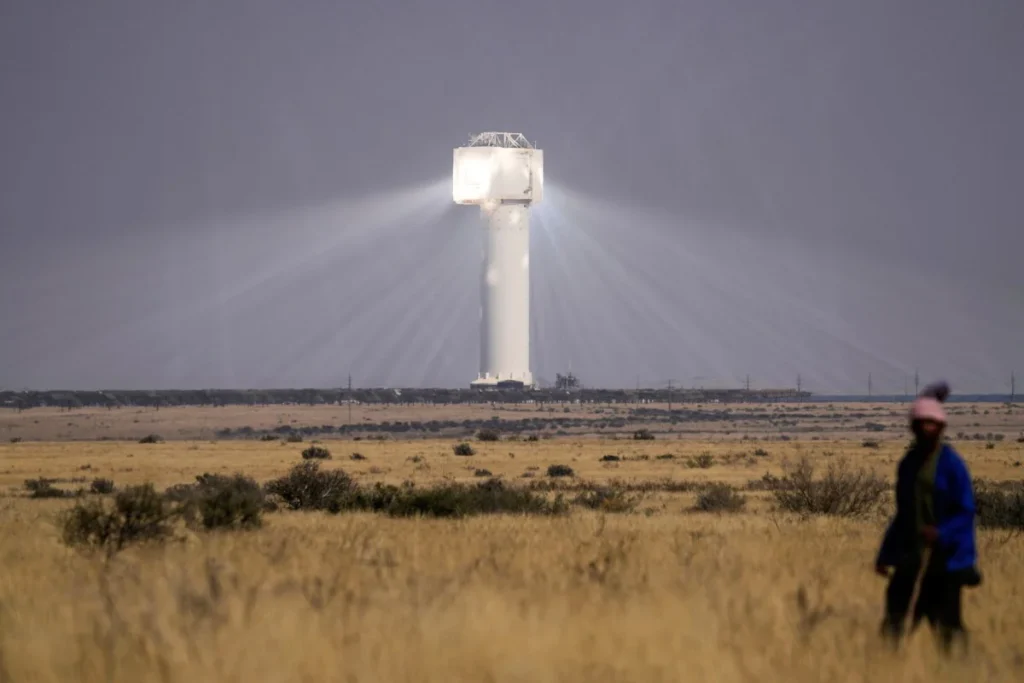
JOHANNESBURG (Realist English). Africa is experiencing a rapid expansion in solar power, fuelled by record imports of Chinese-made panels and the construction of major renewable energy plants across the continent.
According to a study released Monday by Oxford Economics, Africa imported 9,516 megawatts of Chinese solar panels in the first seven months of 2025, up from 6,625MW during the same period last year. China, which produces roughly 80 percent of the world’s panels, has become the dominant supplier for both household and industrial solar capacity on the continent.
South Africa, Algeria and Nigeria are leading the surge, while imports to several other African nations have more than quadrupled year on year. Much of the growth is linked to Chinese-backed infrastructure: PowerChina is building the 342MW De Aar Central Solar Power Plant in South Africa, while in Algeria it is working with China State Construction Engineering Corporation on projects including a 220MW plant in Biskra and a 200MW facility in El M’Ghair.
The study underscored that while sub-Saharan Africa’s electricity access remains the lowest in the world — reaching just 53.3% of the population compared with a global average of 91.6% — the rise in solar imports signals a meaningful boost in capacity. Oxford Economics economist Lyle Begbie noted that the lifetime cost of solar has plummeted over the past decade, making it the cheapest energy source in history.
Dave Jones, chief analyst at energy think tank Ember, reported a 60% increase in Chinese panel imports to Africa in the year to June, totalling 15,032MW. Outside South Africa, imports have tripled over two years, with 20 countries setting records. Sierra Leone, for instance, has imported enough solar panels in the past year to generate electricity equal to 61% of its 2023 total, while Chad’s imports equate to nearly half of its annual output.
Former Liberian minister W. Gyude Moore said the trend is driven by affordability and necessity: widespread grid failures, load shedding and utility insolvency have created demand for modular, rapidly deployable technologies. “Africa’s relative poverty has meant cost matters more than elsewhere,” Moore said.
Officials and analysts expect the continent’s reliance on Chinese solar technology to deepen, as Beijing continues to subsidise production and export its influence in the global renewable energy market.