


NEW YORK (Realist English). The rapid expansion of artificial intelligence is forcing technology companies and governments to rethink how data centers — the backbone of the digital economy — are built and powered, as rising demand strains electricity grids, water supplies and environmental limits.
Data centers underpin nearly every online service but consume vast amounts of energy and cooling resources. With AI workloads accelerating, existing infrastructure risks hitting a breaking point. “There’s going to be a tipping point where current data center architecture is no longer fit for purpose,” said Simone Larsson, head of enterprise AI at Lenovo.
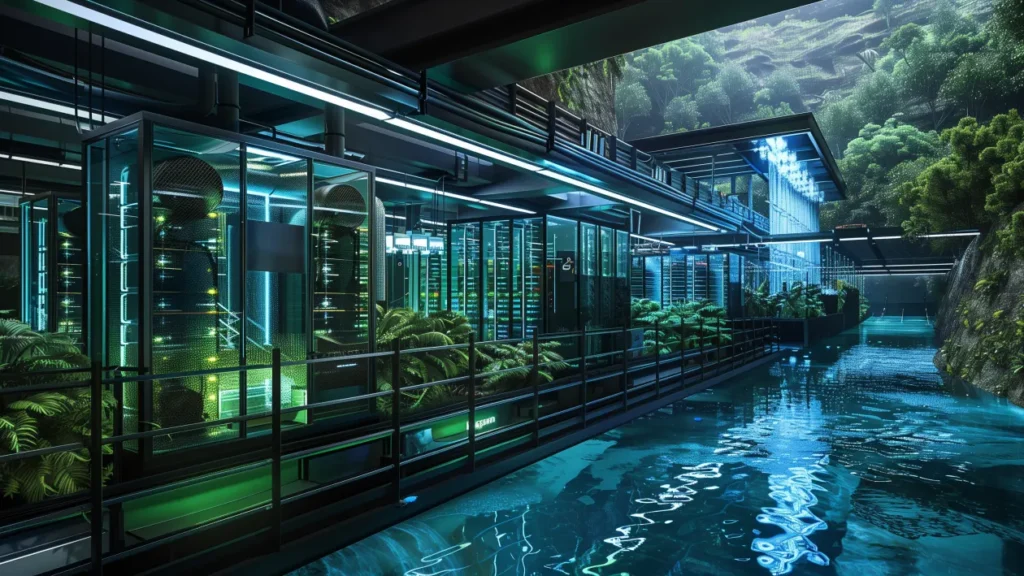
A recent Lenovo study found that while most IT decision-makers prioritize reducing energy use, fewer than half believe their current data center designs meet sustainability goals. In response, companies and designers are exploring unconventional solutions, including underground facilities built in disused tunnels, modular “data villages” that reuse waste heat to power nearby homes and public buildings, and even orbital data centers powered by solar energy.
Some experimental approaches are already being tested. Microsoft previously deployed a subsea data center to exploit natural cooling, while operators across Europe are increasingly redirecting excess heat from facilities into residential heating networks. More ambitious projects backed by Google, Alibaba and Nvidia are examining the feasibility of space-based computing, though high costs and technical hurdles keep such concepts firmly long-term.
Experts caution that many of the proposed designs remain decades away from large-scale deployment, requiring major regulatory changes, grid upgrades and expanded renewable energy capacity. Still, analysts say incremental fixes will not be enough. As AI continues to scale, the industry faces growing pressure to redesign data centers from the ground up — or risk turning the infrastructure powering the AI revolution into its main constraint.