


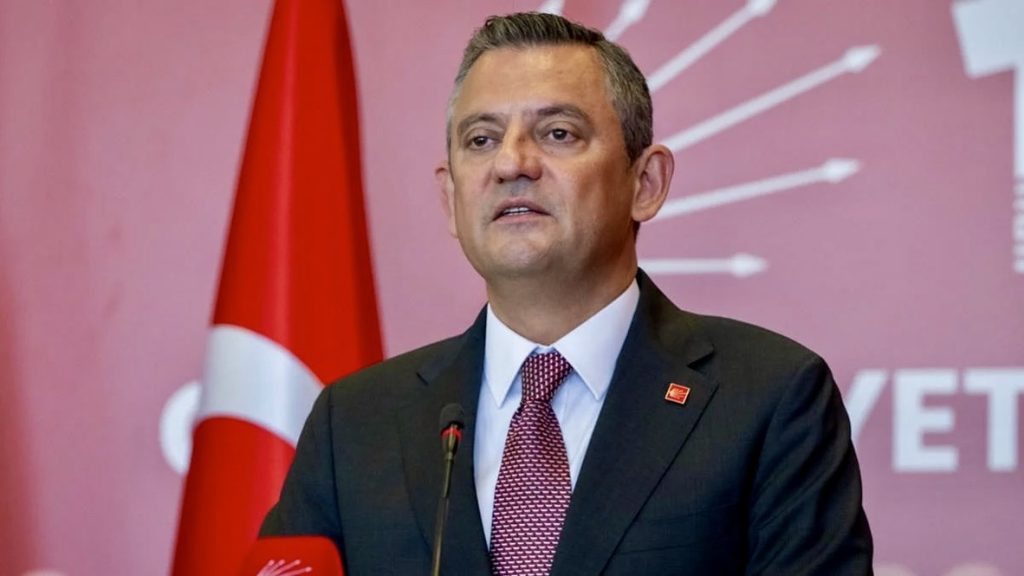
ANKARA (Realist English). A court in Ankara has issued a ruling that effectively removes the leadership of Turkey’s largest opposition party, the Republican People’s Party (CHP).
The results of the CHP’s 2023 convention have been annulled, meaning the election of Özgür Özel as party chair has been declared invalid.
This move could tighten President Recep Tayyip Erdoğan’s grip on power and cause financial markets to crash. The opposition force, which runs neck-and-neck with the ruling party in polls, risks being left leaderless ahead of the 2028 presidential elections.
Financial markets reacted instantly. Turkish stocks plunged more than 6% on the evening of May 21. The lira dipped sharply but later recovered its losses and stabilized at 45.6 to the dollar.
Economic instability is being exacerbated by external factors: annual inflation has reached 32.4% — a six-month high — and the Central Bank of Turkey was forced in April to raise its year-end inflation forecast from 18% to 26%.
Kılıçdaroğlu Returns
The court has ordered the provisional suspension of Özel and other senior CHP officials. They will be replaced by former party chair Kemal Kılıçdaroğlu and other CHP members who held office before the 2023 convention.
Kılıçdaroğlu is a figure considered unpopular within the party. His return threatens a split and could demoralize voters. The opposition has two weeks to file an appeal with the Supreme Court.
The CHP’s Central Executive Committee held an emergency meeting, refused to recognize the court’s ruling, and is preparing an appeal. Party leader Özel stated: “Neither our party nor our country will capitulate to this coup.”
Pressure on the Opposition: From Arrests to the Economy
The CHP has faced unprecedented judicial persecution since the arrest last year on corruption charges of Istanbul Mayor Ekrem İmamoğlu — widely seen as Erdoğan’s main rival.
That arrest led to mass protests and a crash in the lira, and the central bank spent $50 billion to support it. Since then, dozens of other opposition officials have been detained.
The country’s economic situation remains fragile. Due to the war in Iran, Turkey — which imports nearly 75% of its energy needs — is under severe pressure on its balance of payments. In March, international reserves shrank by a record $43 billion, and the current account deficit has widened.
Court Ruling Coincides with Ministers’ Trip
Notably, the verdict was delivered just as Finance Minister Mehmet Şimşek and Central Bank Governor Fatih Karahan were in London for a presentation to investors. In parallel, the Turkish parliament approved an ambitious package of tax breaks designed to attract capital fleeing instability in the Gulf.
Justice Minister Akın Gürlek — the same person who, as Istanbul’s chief prosecutor, led the case against İmamoğlu — called the court’s ruling “a reinforcement of citizens’ confidence in democracy” and described it as “thorough, independent and impartial.”
The CHP rejects the accusations and calls the events politically motivated pressure. The government insists on the independence of the judiciary.
Rising Tensions and External Operations
Deputy Chairman of the Felicity Party, Mustafa Yılmaz, stated that the court’s decision to annul the CHP convention’s results means “Turkey will go to early elections within 45 days.” The opposition believes the authorities intend to use the judiciary to eliminate political rivals ahead of the 2028 presidential elections.
Amid the political crisis, the authorities have maintained a hard line. In Erzurum province last week, there was an attack on İmamoğlu’s campaign bus, resulting in injuries to his supporters. Simultaneously, raids against members of the PKK took place across the country, particularly in Kurdish regions.
Ankara’s activity has also been directed outward. Turkey has carried out new strikes against Kurdish forces in northern Iraq and Syria. Official Ankara has declared that all PKK infrastructure facilities in neighboring countries are now “legitimate targets.” The Syrian Foreign Ministry has condemned the Turkish army’s actions as a direct threat to regional peace and security.