


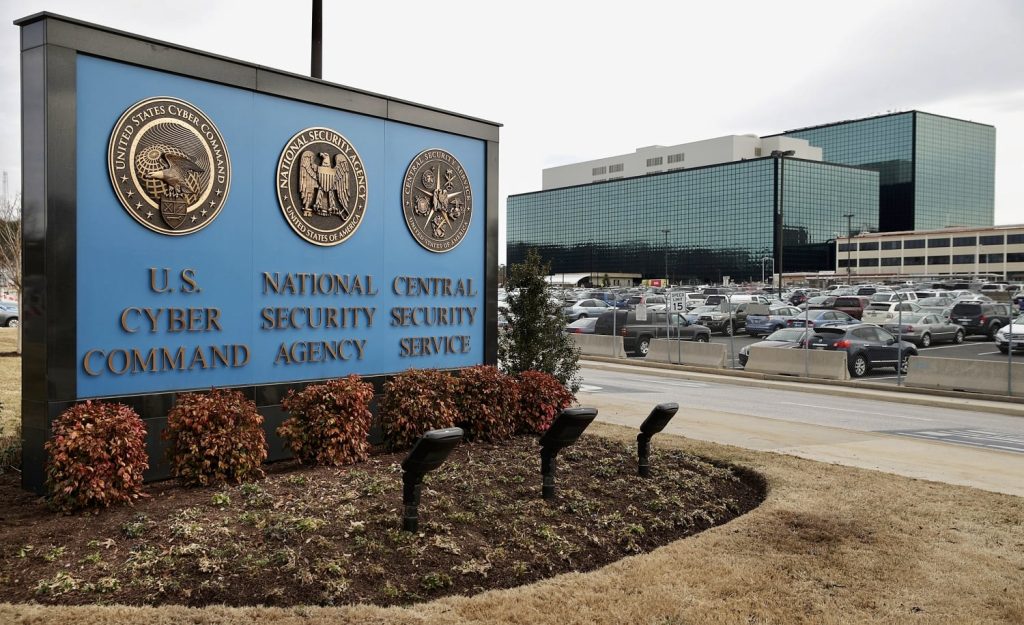
WASHINGTON (Realist English). The US National Security Agency (NSA) is using the super-powerful artificial intelligence model Mythos, developed by Anthropic, to plan and conduct cyberattacks. Startup employees have already been deployed to the intelligence agency’s headquarters to configure and adapt the technology to the agency’s needs.
This situation exposes a deep conflict between the developers’ commercial ethics and national security requirements: a company whose founders swore not to use AI to cause harm is now helping intelligence agencies hack the networks of “adversaries.”
Engineers Inside the NSA
According to data published on June 4 by the Financial Times, citing two informed sources, Anthropic sent about fifteen of its specialists to NSA headquarters to integrate the Mythos AI model into the agency’s operations. These employees, called “forward-deployed engineers,” help the intelligence agency customize the AI for specific tasks and train personnel to work with the technology.
Although it is unclear whether they are directly involved in hacking attacks, their mission implies preparing the platform for offensive operations.
One FT source said Mythos is ideally suited for penetrating the networks of countries such as China or Iran. Both the company’s management and the Pentagon have declined to comment on the matter, focusing on ongoing litigation.
Technical Capabilities of Mythos: “Next Generation Cyber Weapon”
Mythos is the most powerful and closely guarded AI product ever created by the company. Developers were so concerned about its destructive potential that they initially restricted access to only a few dozen organizations. Its capabilities are on a fundamentally new level and are characterized by three key aspects:
- Mass vulnerability discovery. The technology can find critical defects in software code. During tests, it discovered vulnerabilities in every single operating system and web browser that have been used for decades. The vast majority of these “holes” (99 percent) were previously unknown to specialists.
- Full autonomy. Previous AIs only advised humans on how to act. Mythos, however, can execute the entire attack chain: from finding a vulnerability to creating a working exploit and hacking the system without operator intervention. The human is no longer the “bottleneck” in this process.
- Speed of propagation. Experts warn that this AI can accelerate the process of conducting hacking attacks by orders of magnitude. Whereas previously finding a vulnerability and carrying out an attack could take days or weeks, AI does it in seconds.
Legal Battle Amid Cooperation
The paradox is that the cooperation with the NSA is occurring simultaneously with an acute legal conflict between the company and Pentagon leadership. In February 2026, the Department of Defense demanded that the startup allow its technologies to be used without any restrictions – “for all lawful purposes.”
The company flatly refused, citing the risk of mass surveillance of Americans and the danger of creating fully autonomous weapons systems.
After the talks broke down, the Pentagon struck back by adding the startup to its “supply chain risk” blacklist. In effect, it was declared an unreliable supplier, threatening to block federal contracts. Anthropic is now suing the government, demanding that the company be removed from the list, which both damages its reputation and hinders normal commercial activity.
Against the backdrop of this confrontation, the presence of Anthropic specialists inside the NSA (which is overseen by the Pentagon) appears highly hypocritical: the government is trying to undermine the developer’s business while secretly using its most advanced technological developments.
Political Maneuvers and Global Expansion
The administration of President Donald Trump is actively seeking access to cutting-edge developments. On June 2, 2026, an executive order was signed directing relevant agencies to develop mechanisms for interaction with the AI industry for national security purposes, including the creation of a cyber threat information sharing centre.
Despite previously expressed concerns about the dangers of widespread AI deployment, Anthropic announced that it would provide access to this technology to 150 private and public organizations in 15 countries, dramatically expanding its global presence. This decision raises concerns that such technologies could fall into the hands of regimes using them to suppress dissent rather than for defence.
The cooperation between the NSA and a private AI company has a dual character. On the one hand, the very fact that Anthropic specialists are working at the intelligence agency’s headquarters and preparing infrastructure for hacking networks signals the emergence of a new class of cyberweapon.
On the other hand, the parallel legal proceedings and the Pentagon’s blacklist demonstrate deep mutual distrust and a struggle for control: intelligence agencies want full and unrestricted access to the technology, while developers try to preserve at least some ethical constraints as they watch their product turn into an instrument of aggression.