


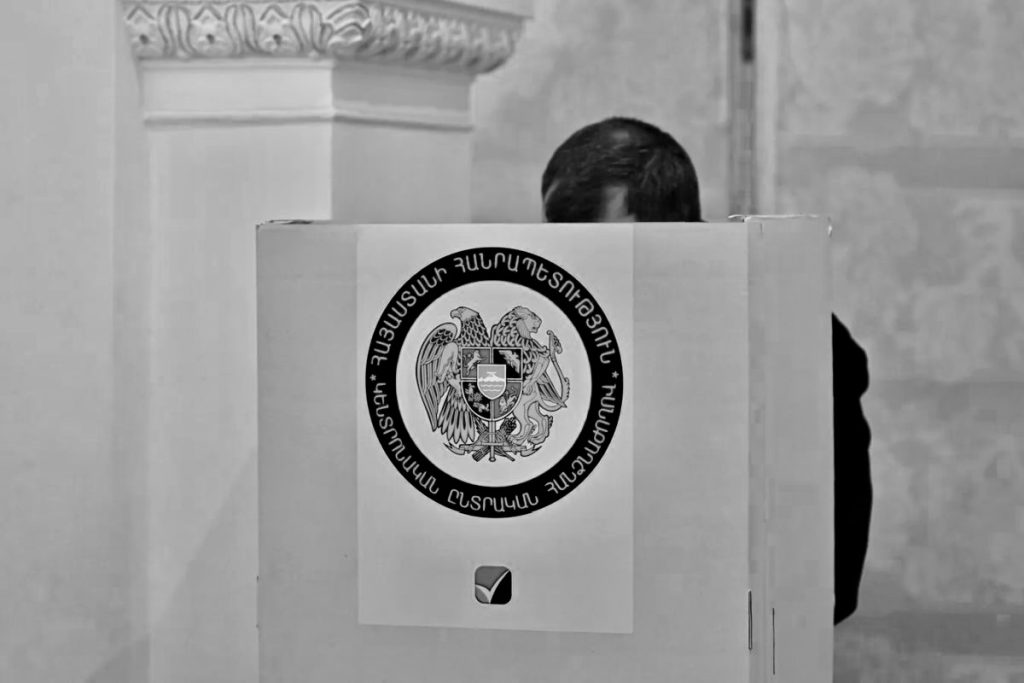
YEREVAN (Realist English). On June 7, parliamentary elections are taking place in Armenia, which opposition forces and human rights organizations call one of the most rigged in post‑Soviet history. As of 11:00 a.m., turnout was about 7.5% — out of more than 2.48 million eligible voters, 187,917 had cast their ballots.
However, the process is already accompanied by numerous arrests, direct pressure on the opposition, voter intimidation, and serious technical violations that call the legitimacy of the eventual results into question.
Hundreds of Arrests and “Classic Repression”
From the very morning of election day, Armenian law enforcement launched a large‑scale campaign to suppress opposition activity. the Strong Armenia bloc has recorded hundreds of violations across all 2,005 polling stations. Opponents of Prime Minister Nikol Pashinyan accuse the authorities of unleashing “classic repression.”
According to opposition data:
- Arrests of campaign staff. From early morning, law enforcement officers have been detaining members of the opposition Armenia and Strong Armenia blocs’ campaign staff. The detentions are taking place under various pretexts, including questioning as witnesses. The opposition sees this as “information terror” and a gross violation of citizens’ electoral rights.
- Arrests of election commission heads. On the night before the elections, two chairmen and a secretary of precinct election commissions were detained. No official reasons have been given, but the opposition links this to an attempt to paralyze the work of polling stations in opposition districts.
- Intimidation of activists. Political scientists Tigran Kocharyan and Beniamin Matevosyan note that the authorities are using administrative resources and creating an atmosphere of fear to mobilize their supporters and demoralize opposition‑minded citizens.
Disenfranchisement of Refugees from Karabakh
One of the most acute problems overshadowing the elections is the infringement of the rights of forcibly displaced persons from Nagorno‑Karabakh. After the exodus of 2023, according to various estimates, between 25,000 and 100,000 Karabakh Armenians have faced the impossibility of exercising their constitutional right to vote.
The main problem lies in bureaucratic status. Many of them hold old‑style Armenian passports with code 070, but the Armenian Ministry of Internal Affairs considers these merely travel documents. To obtain full citizenship and the right to vote, refugees must go through the procedure of obtaining a “new” passport, which is an insurmountable task for many given the lack of housing and work.
Human rights defenders report that only 25,126 Karabakh Armenians have managed to obtain documents and have been included in the voter rolls. The rest, formally remaining citizens, have been disenfranchised. Lawyers are forced to go to court to defend the rights of refugees, but these are only isolated cases that do not solve the problem systematically.
Senior officials openly state that the only way to vote is to officially formalize citizenship, ignoring the fact that people have a constitutional right to be included in the rolls based on international conventions.
Pressure on the Military and Blackmail of Those Returning from Russia
Apart from pressure on the civilian population and refugees, two other vulnerable groups have come under attack: military servicemen and Armenians working in Russia.
The army
Corps commanders of the Armenian armed forces are using their official positions to campaign. Colonels Simon Nazaryan and Gagik Poghosyan (3rd and 5th corps) publicly call on soldiers not to vote for the opposition, exerting direct pressure on their subordinates.
There are no mechanisms to ensure the secrecy of the vote for military personnel, making them hostages to the will of their superiors.
Migrants in Russia
Armenian authorities have launched a campaign to intimidate citizens arriving from Russia to participate in the elections. Deputy head of the prime minister’s staff, Taron Chakhoyan, officially threatened on social media that all men who come to “vote for bribes” will be sent to 25‑day military training camps, and evaders face criminal liability.
According to Economy Minister Gevorg Papoyan, this decision by the authorities is aimed against potential opposition voters, while the authorities are ready to welcome their own supporters with open arms.
These measures are already being implemented: at Yerevan airport, men are checked by military police and handed summonses.
Mass Procedural Violations and Threats of Fraud
On election day itself, opposition observers are recording systematic violations of the law that may indicate preparations for fraud.
- Campaigning at polling stations. Representatives of the ruling Civil Contract party are entering polling stations with campaign materials, a direct violation of the ban on campaigning on election day. The Central Election Commission and the police are taking no action.
- Carousel voting and secrecy of the vote. Reports are coming in of attempts to organize repeat voting. In the regions, according to the Armenia bloc, police officers are planning to vote again. Observers are recording instances of open voting, violations of the secrecy of the ballot, and incidents where the ballot paper had already been signed before the voter arrived.
- Technical failures. The Strong Armenia bloc reports mass power outages at polling stations and malfunctions of fingerprint scanning devices, calling into question the legitimacy of voter identification and raising serious suspicions of possible interference with the equipment.
“This Is Our Last Chance”
These elections in Armenia are not just about distributing parliamentary mandates — they determine the country’s future geopolitical course. The vote is seen as a referendum on whether Armenia will remain in the Eurasian Economic Union (EAEU) or take a course toward membership in the European Union.
Pashinyan, whose Civil Contract party is considered the main exponent of pro‑Western sentiment, said he “will accept any choice of the people.” However, his main opponent, the Armenia bloc of former president Robert Kocharyan, accuses the authorities of trying to rig the results to hold onto power.
The leader of the Strong Armenia party, Russian businessman Samvel Karapetyan (who is under house arrest), whose party advocates economic change and close ties with Russia, threw down a challenge: “The repression continues, and many are being arrested today. But that means nothing — we will still win.”
At a rally on the eve of the elections, Pashinyan demanded that the law enforcement system work even more effectively, threatening the opposition: “All the bribes hidden in every corner must end up in prison.”
In response, Ishkhan Saghatelyan, a representative of the Armenia bloc, urged citizens not to be afraid and to vote according to their conscience: “June 7 could become a turning point in the history of the Armenian people. We have the opportunity to completely close the page of shame and disgrace. This is our last chance.”
Polls close at 8:00 p.m. local time. The outcome of the elections may determine not only the fate of Pashinyan’s government but also Armenia’s further integration into Western structures, which will inevitably affect the entire balance of power in the South Caucasus.