


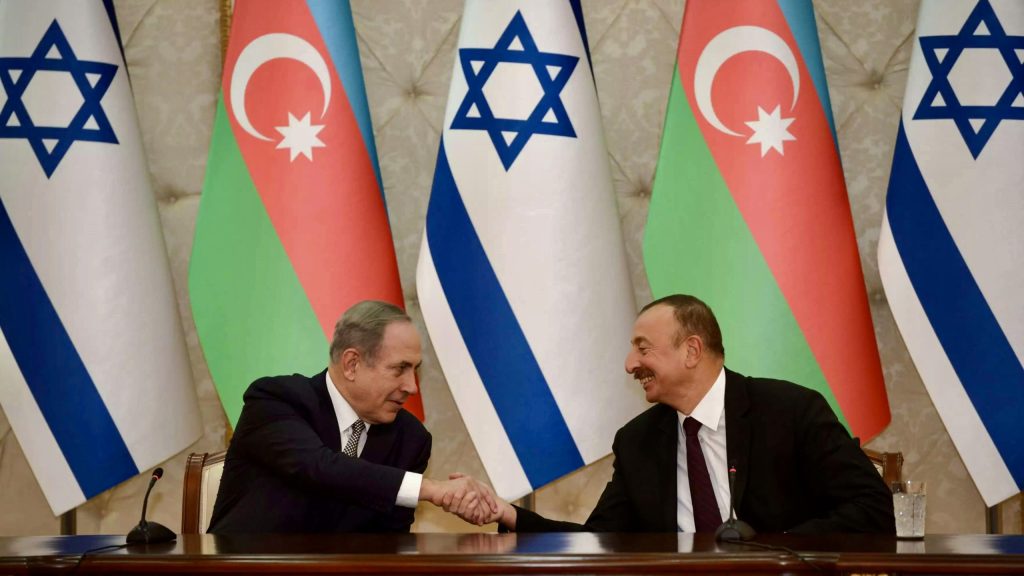
BAKU (Realist English). By late April 2026, relations between Azerbaijan and Israel, long-standing allies in energy and the military-industrial complex, have not only withstood the test of the Gaza war and Iranian threats, but have reached a qualitatively new level of openness and trust.
Energy in figures: oil records and new gas horizons
Despite regional conflicts and the formal (but ineffective) Turkish embargo on trade with Israel, imports of Azerbaijani crude oil from the Ceyhan port grew by 31% in 2025, reaching 94,000 barrels per day — the highest since 2022. This allowed Baku to cement its status as Israel’s largest oil partner, with a 46.4% share of Israel’s total crude imports (almost double Russia’s 28%).
Partnership is also developing dynamically in the gas sector. Azerbaijan’s state oil company SOCAR has acquired a stake in the Tamar gas field and exploration rights, making Baku a key player in the Jewish state’s energy security.
Baku’s pro-Israel course: embassy, military tech and diplomacy
The most striking demonstration of new openness was the opening of Azerbaijan’s embassy in Tel Aviv in 2023. Baku became the first Shiite Muslim country to do so, publicly defying Iranian pressure.
Military-technical cooperation has ceased to be covert. In 2025–2026, amid the Iran–Israel war, talks have intensified on joint intelligence, cybersecurity and procurement of advanced weapons systems, including drones and missiles.
Baku also acts as a reliable diplomatic assistant to Israel. According to media reports, Azerbaijani diplomats in 2025–2026 conducted shuttle negotiations between Jerusalem and Ankara to prevent accidental clashes in Syria. In autumn 2025, Azerbaijan threatened to boycott Eurovision 2026 if Israel was not allowed to participate, drawing criticism from some EU countries.
Anti-Israeli rhetoric in Azerbaijan: where is it?
Anti-Israeli statements are virtually absent from Azerbaijan’s public discourse. Criticism of Israel in Azerbaijan is a tool of Baku’s “opponents” in foreign policy, not domestic protest. The main sources of criticism are foreign actors: Iran and Palestinian sources. The local blogosphere and politicians who support the official line mostly take a pro-Israeli or neutral stance.
As early as 7–8 October 2023, the Azerbaijani–Israeli Interparliamentary Working Group issued a statement strongly condemning the rocket attacks on Israeli territory. The statement stressed that in this difficult hour, the Azerbaijani people stand with the people of Israel.
Immediately after the events of 7 October 2023, Azerbaijani authorities urgently made public statements in support of Israel, and Azerbaijan’s ambassador to Israel condemned Hamas. However, two weeks later, attending an emergency meeting of OIC foreign ministers in Jeddah, Foreign Minister Jeyhun Bayramov condemned Israel’s actions in Gaza and expressed support for the Palestinian people.
Official Baku has largely avoided public condemnation of Israel. All its public criticism has been either directed at abstract violence or tactically fitted within OIC rhetoric.
Support for Israel was particularly noticeable at the societal level. Polls showed that nearly two-thirds of Azerbaijanis support Israel, and Israel’s ambassador to Baku, George Dick, publicly thanked the Azerbaijani people for this gesture of friendship.
International criticism: mostly from Tehran
Tehran consistently criticises the Azerbaijani-Israeli rapprochement as “anti-Islamic” and threatening regional stability. Iran accuses Israel of trying to “sow discord” and spreads conspiracy theories about a “Zionist project” in the Caucasus that threatens Iran’s territorial integrity.
Part of the Turkish press calls Azerbaijan an “Israeli puppet.” Baku is also criticised by some Arab countries for its strategic alliance with Israel, which calls into question its neutrality in the Palestinian-Israeli conflict.
Strategic course and its price
Baku believes the game is worth the candle. The partnership brings real dividends: the Azerbaijani army becomes more technological, and the budget more stable thanks to oil exports. Israel receives guaranteed energy supplies and a strategically important ally on Iran’s land borders. This rapprochement constitutes one of the most serious challenges to Tehran’s policy. Iran perceives Israel’s presence on its northern borders as an existential threat, yet in 2026 it can oppose this alliance only with rhetoric, not real levers of influence.