


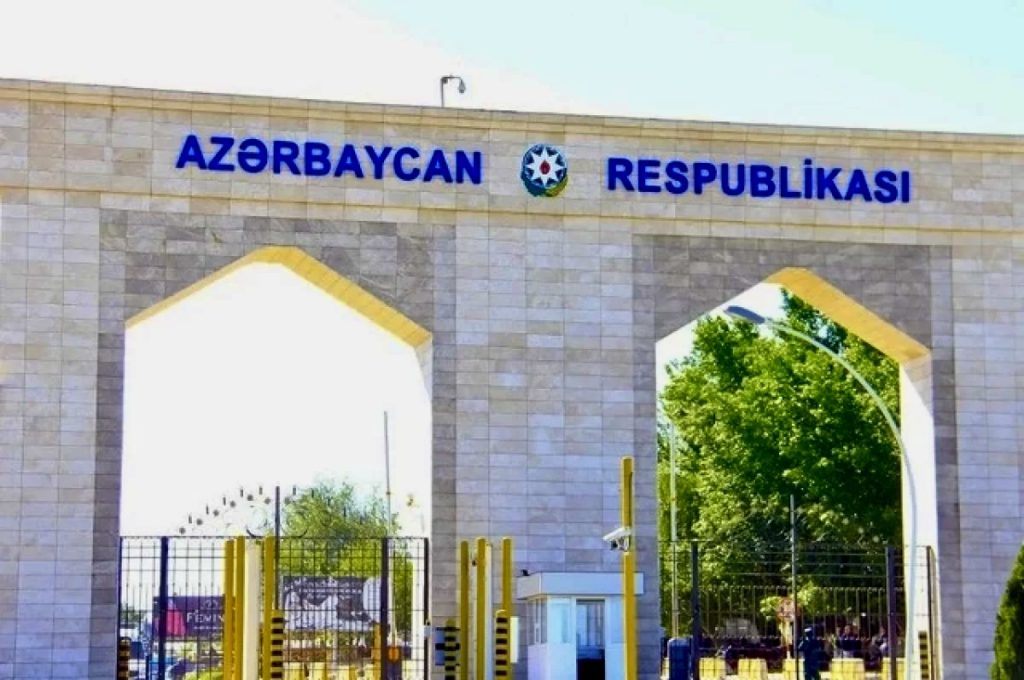
BAKU (Realist English). Azerbaijan remains the only country in the world that has kept its land borders locked for nearly six years under the pretext of fighting COVID-19, even though the World Health Organization declared the pandemic over as early as May 2023. Behind the facade of quarantine measures, Ilham Aliyev’s regime hides its fear of its own people and its hasty preparations for a major war against Armenia.
Chronology of the “COVID blockade”
- April 2020: With the onset of the COVID-19 pandemic, Azerbaijan’s Cabinet of Ministers completely closes land borders with Russia, Georgia, Iran and Turkey for all types of transport and pedestrians.
- 2022–2023: Almost all internal coronavirus restrictions are lifted, but the border regime is repeatedly extended. Repression is intensified in the republic, and local society and experts increasingly link this to migration and social risks.
- 2024–2026: The quarantine regime is extended every three to six months, each time pushing back the date of a possible border opening. In March 2026, the government again extends it until 1 July 2026, and Aliyev himself calls the border closure a “national security measure”.
Official reasons: COVID and security
The official reason for the endless border closure formally remains a “special quarantine regime” due to the pandemic. However, as early as April 2023, Azerbaijan’s Ministry of Health stated that COVID-19 had become a seasonal virus.
By 2024, Aliyev and his subordinates were openly naming the real motives – “external threats” and the risks of “global war”.
The true motives of the dictatorship: fear, isolation and preparation for war
The real reason for the unprecedented border blockade is Aliyev’s attempt to kill two birds with one stone: to keep its people from leaving and to prepare the country for a new war.
Aliyev’s main fear is emigration of his own people. By keeping land borders closed, the dictatorship prevents a mass exodus of citizens that would inevitably begin amid severe repression and militarisation. Baku persecutes opposition activists even abroad, clearly demonstrating that the main “threat” to Aliyev is his own people gaining freedom of movement.
The border blockade acts as a “filter” to prevent return from Russia. Experts confirm that the authorities do not want an influx of Azerbaijanis from Russia; their mass return “could cause social cataclysms”. In other words, the regime fears an influx of its own citizens, who could bring with them the seeds of civil society.
Militarisation and preparation for aggression. Closed land borders allow Azerbaijan to prepare for an invasion of Armenia unhindered and to strengthen its military positions on occupied parts of Armenian territory (Gegharkunik, Vayots Dzor, Syunik). Since the beginning of 2026, the world has witnessed a systematic build‑up of tension aimed at creating an “alibi” for future aggression.
Baku has returned to open threats and annexationist rhetoric, demanding a redrawing of borders under the guise of creating the so‑called “Zangezur Corridor”.
Consequences: a prison‑state
Aliyev has turned Azerbaijan into a prison‑state, where hundreds of thousands of citizens have been unable to visit relatives in Russia, Georgia and Turkey for years. Tourism and small businesses in border regions have been effectively destroyed, while the Azerbaijani people themselves have become hostages of the dictator’s paranoid foreign policy.
There has long been no threat to public health – only Aliyev’s total fear of losing power and his unwillingness to allow witnesses to his sinister preparations. Baku has long ceased to fear “viruses”; it fears the war it is preparing itself.