


NEW YORK (Realist English). The global oil market experienced one of its most volatile trading days in the past 18 months. On the evening of May 4, following reports of an Iranian missile strike on a U.S. patrol vessel, Brent crude jumped to $115 per barrel, gaining more than 8% in a single day.
Prices followed a classic “roller coaster” pattern: during morning trading, Brent fell to $105.55, while WTI dropped to $99.11, but by the close of the session, both benchmarks had fully recovered their losses.
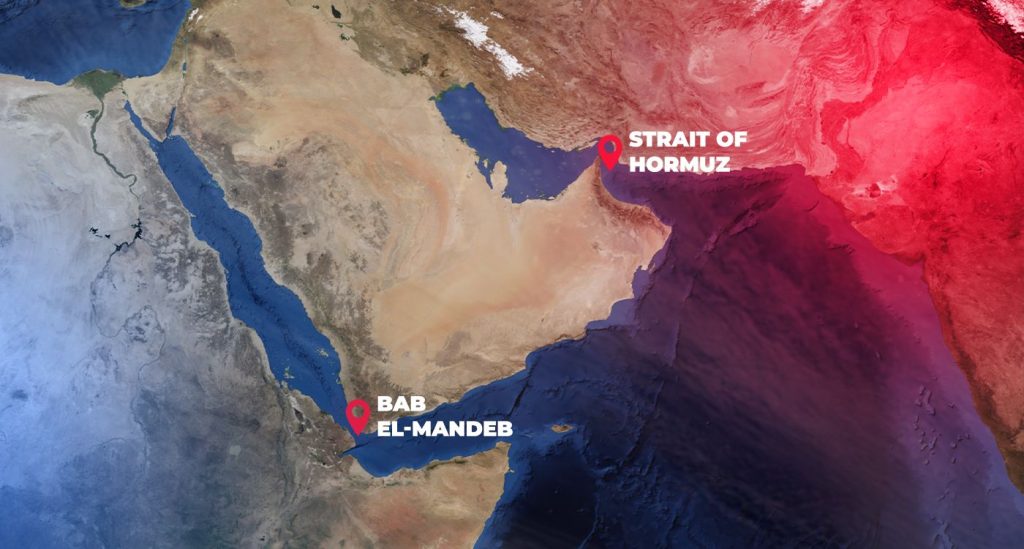
Strait of Hormuz: Point of No Return
The main driver of the evening surge was escalating tensions in the Persian Gulf.
According to regional media, Iranian forces launched a missile strike in the Gulf of Oman against a U.S. patrol vessel that had ignored prior warnings. The missiles reportedly hit their target, forcing the vessel to halt its movement toward the Strait of Hormuz.
On the same day, the UAE Ministry of Defense reported intercepting three Iranian missiles over its territory. In the city of Fujairah, a fire broke out at an oil facility following a drone strike believed to be of Iranian origin.
Earlier in the day, markets had been partially stabilized by statements from Donald Trump, former U.S. president and current Middle East envoy, who said Washington was ready to assist vessels blocked in the strait and gave a positive assessment of U.S.–Iran negotiations.
However, the naval incident effectively wiped out hopes for a near-term de-escalation.
OPEC+ Makes a “Symbolic” Move
Amid the crisis, seven key OPEC+ members — Saudi Arabia, Iraq, Kuwait, Algeria, Kazakhstan, Russia, and Oman — agreed to increase output in June by 188,000 barrels per day.
Quota breakdown:
- Russia and Saudi Arabia — +62,000 bpd each
- Iraq — +26,000 bpd
- Kuwait — +16,000 bpd
- Kazakhstan — +10,000 bpd
- Algeria — +6,000 bpd
- Oman — +5,000 bpd
However, analysts say the decision is largely symbolic. With the Strait of Hormuz effectively blocked, oil produced in the Middle East cannot physically reach global markets.
It is also notable that on May 1, the United Arab Emirates withdrew from OPEC+, despite being the cartel’s fourth-largest producer (2.9 million bpd, or 11.1% of total output).
Russian Deputy Prime Minister Alexander Novak called the move a sign of a “deep crisis in the global oil industry,” while emphasizing that Russia remains committed to the alliance.
U.S. Oil Inventories Shrinking Rapidly
Additional pressure on the market is coming from declining U.S. stockpiles.
According to the U.S. Energy Information Administration (EIA):
- Commercial crude inventories fell by 6.2 million barrels (to 459.5 million barrels) in the week ending April 24
- The Strategic Petroleum Reserve (SPR) dropped by 7.1 million barrels (to 397.9 million barrels)
- U.S. oil production declined to 13.585 million bpd
Fuel inventories are also tightening:
- Gasoline stocks fell by 6.1 million barrels, now below the five-year average
- Distillate inventories are 11% below normal levels
What Do Experts Say?
Goldman Sachs has raised its forecast for Q4 2026:
- Brent — $90
- WTI — $83
The bank estimates a 14.5 million bpd drop in Middle Eastern production, resulting in a record global inventory drawdown of 11–12 million bpd in April.
The global market could shift from a 1.8 million bpd surplus in 2025 to a deficit of around 9.6 million bpd by Q2 2026.
ANZ forecasts:
- Brent above $90 through the end of 2026
- $80–85 in 2027
If supply disruptions in the Persian Gulf persist, prices could remain above $100 for most of next year.
CRISIL notes:
“The market is tightening due to constraints around the Strait of Hormuz.”
Even if transit improves, supply normalization will be gradual.
The Economist points to three key market illusions:
- A U.S.–Iran peace settlement
- Reopening of the Strait of Hormuz
- A return to supply abundance
“All three assumptions are highly questionable,” the publication writes.
Key Indicators
| Indicator | Value | Change |
| Brent (July, ICE) | 115 $ | +8.48% |
| WTI (June, NYMEX) | $106.26 | +7.3% |
| Urals | $113.5 | +0.32% |
Outlook for 2026–2027
- World Bank: Brent at $86 in 2026
- U.S. EIA: Peak at $115 in Q2 2026, then decline to $90 by year-end; around $76 in 2027
- Goldman Sachs: $90 in Q4 2026; above $100 if Hormuz remains closed for over a month
- CRISIL: $90–95 in FY2027
- ANZ: $80–85 in 2027.
As major powers engage in geopolitical maneuvering around the Strait of Hormuz, the real economy is taking a direct hit — through energy prices.
OPEC+ has exposed its limitations: production quotas are meaningless if oil cannot be transported.
Russia’s budget, based on $69 per barrel, is temporarily benefiting from higher prices, but long-term stability remains uncertain. There is only one point of consensus among analysts: extreme volatility will persist, and any news from the Persian Gulf will be immediately reflected in prices.