


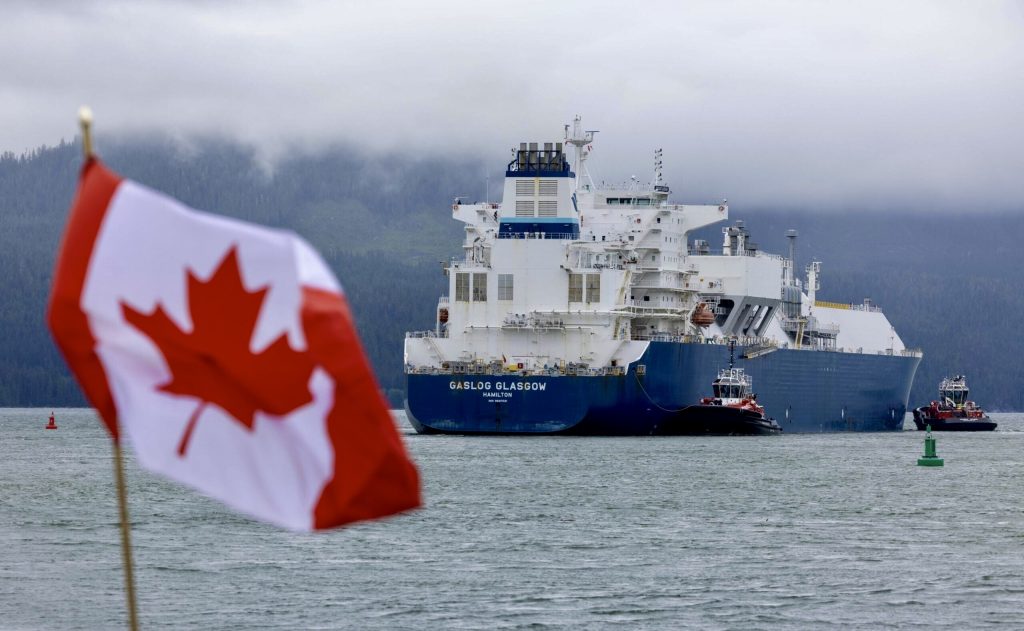
OTTAWA (Realist English). Germany and Canada have signed a major liquefied natural gas (LNG) agreement that will allow the European economy to reduce its dependence on Russian raw materials and diversify its energy supply sources. The document was announced on May 26 on the sidelines of a meeting of senior energy officials from the two countries.
Terms of the Deal
Under the agreements reached, the German state-owned company SEFE has entered into a long‑term off‑take agreement with the consortium developing the Ksi Lisims project in British Columbia.
SEFE will purchase 1 million tonnes of LNG per year for approximately 20 years, starting in the early 2030s.
The Ksi Lisims Project: A Floating Giant
The central element of the deal is the construction of a floating gas liquefaction complex costing approximately 10 billion Canadian dollars (about $7.3 billion USD) on Canada’s Pacific coast.
The plant’s capacity after commissioning will be 12 million tonnes of LNG per year, making it the second largest in the country and allowing Canada to join the ranks of the world’s top five LNG exporters.
The project is being developed jointly by the investment company Western LNG (backed by Blackstone), the Rockies LNG consortium and the Nisga’a Nation.
Geopolitical Background
The agreement is a strategic response by Europe to geopolitical challenges. The European Union intends to completely abandon imports of Russian pipeline gas by the autumn of 2027, and Russian LNG by the beginning of 2027. Furthermore, the conflict in the Middle East has put supplies from the Persian Gulf at risk.
Canadian Energy Minister Tim Hodgson, commenting on the deal, said: “We can become an alternative. We can become a reliable supplier that will not use energy as a weapon of coercion.”
Challenges and Criticism
Despite its strategic importance, the project faces several challenges:
- Logistics costs: Canadian LNG will have to be shipped via the Panama Canal, which increases the final price for European consumers compared to US gas.
- Environmental risks: Environmental groups and local communities have filed lawsuits against the construction of the Prince Rupert Gas Transmission pipeline, which is needed to supply the plant with feedstock. Opponents argue that the project was approved by the authorities without proper preliminary studies.
- Long‑term risks for Germany: Analysts warn that by entering into costly contracts at the expense of developing “green” energy, Berlin risks creating excess LNG import capacity in the long term.
Contradictions of the Current Moment
While the contracts were being finalised, Europe increased its imports of Russian LNG by 16% in the first quarter of 2026 compared to the same period last year. Exports via the “TurkStream” pipeline are falling, but Russia has expressed its readiness to resume supplies via the “Yamal – Europe” gas pipeline, while its project to create a gas hub in Turkey remains in question.
The agreement between Germany and Canada symbolises a tectonic shift in global energy flows and confirms Europe’s desire to diversify its supplies. However, the success of the Canadian project will be a test of the strength of the Western coalition: whether it can overcome logistical, financial and environmental barriers to create a reliable alternative to Russian gas, or whether ambitious plans will founder on the harsh reality of the market economy.