


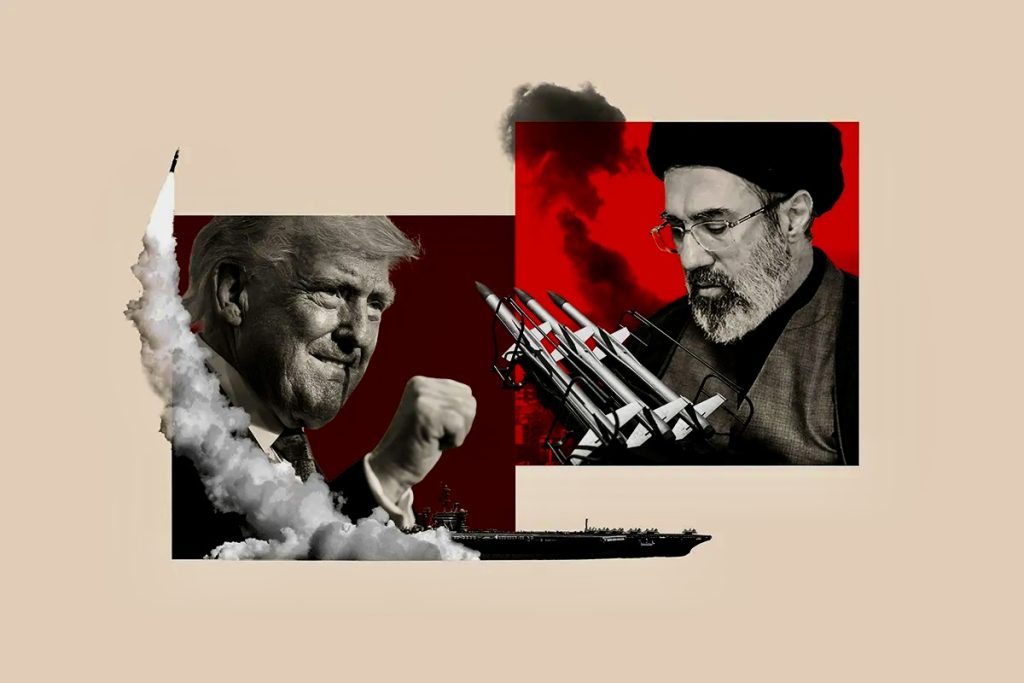
MOSCOW (Realist English). In his article for Realist English, Stanislav Ivanov, a leading researcher at IMEMO RAS and Candidate of Historical Sciences, analyzes the outcomes of the war ahead of the two-week ceasefire between the US, Israel and Iran, reached on April 8, 2026, with Pakistan’s mediation.
Ivanov examines whether this ceasefire will be a step toward lasting peace in the Middle East or merely a temporary respite before a new escalation. The expert assesses the actual results of Operation “Epic Fury,” the prospects for a comprehensive peace treaty similar to the JCPOA, and possible scenarios – from freezing the conflict to a return to hostilities.
Details of the agreement remain unclear
The active phase of the armed conflict between the US and Israel, on one side, and Iran, on the other, ended as suddenly as it began. The outcome of this short-lived war was predictable: no one won, although all participants declared themselves victorious. The parties to the conflict suffered significant financial, material, reputational and human losses; the global community also suffered due to the spike in hydrocarbon prices and the restriction of maritime and air traffic in the region. A natural question arises: will the ceasefire reached on April 8, 2026, with Pakistan’s mediation, be a step toward lasting peace in the Middle East or merely a temporary respite for the parties?
The details of the ceasefire agreement between Washington and Tehran are still unknown. It is reported that Donald Trump had previously proposed a 15-point plan, while the Iranian leadership put forward a counter-plan of 10 points, which was adopted as a basis. To what extent these documents were reconciled and brought to a common denominator remains unclear. It can be assumed that disagreements between the parties persist. The main tangible result of the latest agreements is the ceasefire and Iran’s consent to reopen the Strait of Hormuz, which is vital for global shipping. Israel also joined the agreement, making an exception for itself in the form of continuing its military operation against Hezbollah militants on the Lebanese front. At the same time, the opposition to Netanyahu’s government criticized this US-Iran agreement, emphasizing that it ignores Israel’s interests.
Prospects for a peace treaty: most likely no
Will the parties be able to discuss and conclude a more substantial peace treaty over the next two weeks, similar to Iran’s nuclear deal with the “P5+1” (Russia, US, China, UK, France, Germany) of July 14, 2015 (the JCPOA)? Most likely not. The contradictions between the parties are too great.
Trump continues to essentially demand Tehran’s capitulation: the curtailment of Iran’s nuclear program, limitation of its missile potential, and an end to support for Iranian proxy forces in the Middle East (Lebanese Hezbollah, Yemen’s Ansar Allah, Palestinian Hamas and Islamic Jihad, Iraqi Hashd al-Shaabi and Kataib Hezbollah). The Iranian leadership proposes to limit itself to a commitment not to create nuclear weapons, but to retain the right to enrich uranium for peaceful purposes. The Iranians are refraining from discussing the other two items on Washington’s proposed agenda for now.
A stalemate: “neither war nor peace.”
It is quite likely that a stalemate situation will arise, which is called “neither war nor peace”: the active phase of the armed conflict will be frozen, but restrictive sanctions by the US, its Western partners and the UN against Iran will remain indefinitely. Continuation of political and diplomatic pressure on Tehran, cyberattacks, support for Iranian separatist and opposition groups, and other manifestations of the Cold War are also not ruled out. Moreover, Trump is again threatening: “The US is ready to return to military action against Iran if they cannot agree on a deal acceptable to Washington.”
Why the war did not achieve its goals
The US and Israeli military operations against Iran did not achieve their stated goals. Although the Islamic Republic suffered significant military-economic and infrastructure losses, and political and military leaders of the country, including the Supreme Leader and spiritual leader of Iran, Ali Khamenei, and nuclear scientists were killed, the state retained its ability to defend itself and respond asymmetrically to attacks by the US and Israeli armed forces.
The hopes of American and Israeli politicians for the overthrow of the theocratic regime in Tehran were not realized. The 90-million-strong Iranian people rallied during these tragic weeks for Iran and supported their military-political leadership in the fight against the aggressors. In response to Washington’s threats to strike Iran’s energy infrastructure, Iranians began forming human chains (shields) around power plants and similar facilities.
It was becoming increasingly obvious to the US and its Western partners that there was no military solution to Iran’s nuclear program, nor any chance of forcibly overthrowing the regime in Tehran. This war inflicted heavy losses and costs not only on the US, Israel, Iran, and the Gulf states, but also on China, India, and the EU countries. Further prolongation of the armed phase of the US-Iran conflict threatened a new global energy crisis. Even within the US, dissatisfaction with Trump’s Middle East policy was growing: not only Democrats, but also a number of Republican politicians accused Trump of starting this war not in Washington’s interests, but under pressure from the Israeli lobby.
Pressure instead of war
Under these circumstances, Trump is unlikely to continue the military operation against Iran. Most likely, he will continue political and diplomatic pressure on Tehran in order to conclude a deal favorable to Washington. And Trump will convince the American public and his Israeli partners that the goals of the US military operation “Epic Fury” have been achieved, that Iran has suffered irreparable damage, and that its nuclear and defense capabilities have been significantly weakened and set back for years.
Stanislav Ivanov, leading researcher at IMEMO RAS, Candidate of Historical Sciences, exclusively for Realist English