


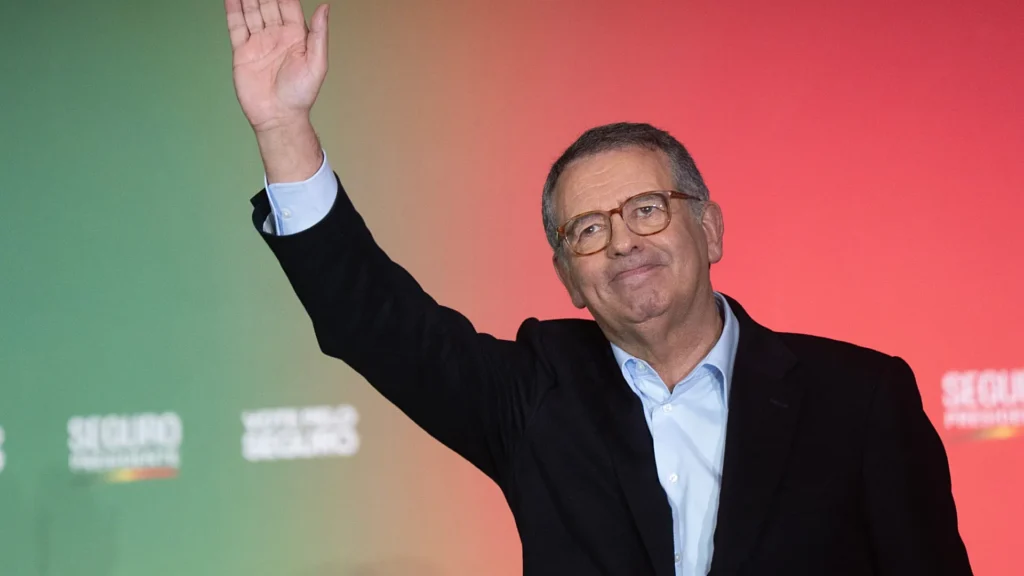
LISBON (Realist English). Centre-left candidate António José Seguro is on course to win Portugal’s presidential election after decisively defeating his far-right rival in a run-off vote, according to near-final results.
With 95% of ballots counted, Seguro had secured around 66% of the vote, comfortably ahead of André Ventura, leader of the far-right Chega (Enough) party, who stood at 34%.
The campaign was partly overshadowed by severe storms that hit Portugal in recent days, causing flooding and disruption across parts of the country. Voting was postponed in some of the worst-affected areas due to Storm Leonardo.
Seguro, 63, emerged as a broad consensus candidate, drawing support not only from the centre-left but also from prominent figures on the conservative side of Portuguese politics. Several former centre-right ministers publicly backed Seguro, and thousands of self-described “non-socialists” signed an open letter urging voters to support him as a bulwark against the far right.
The former leader of the Socialist Party is now set to succeed outgoing president Marcelo Rebelo de Sousa, a conservative who has held the office since 2016.
Portugal’s presidency is largely ceremonial but carries significant constitutional powers, including the authority to veto legislation — a veto that parliament can override — and, in exceptional circumstances, to dissolve parliament and call snap elections.
Although Ventura was decisively defeated, his second-place finish underscores the rapid rise of Chega, which became the second-largest party in parliament last year, just six years after its founding in 2019. The party’s ascent has reshaped Portugal’s political landscape and challenged long-standing taboos around far-right representation.
Prime Minister Luís Montenegro, who leads the centre-right government, has previously denounced Ventura as “xenophobic, racist and demagogic”. However, Montenegro declined to formally endorse either candidate during the presidential race.
The result confirms Seguro’s position as a unifying figure for mainstream parties, while highlighting both the limits — and the persistence — of far-right support in Portuguese politics.