


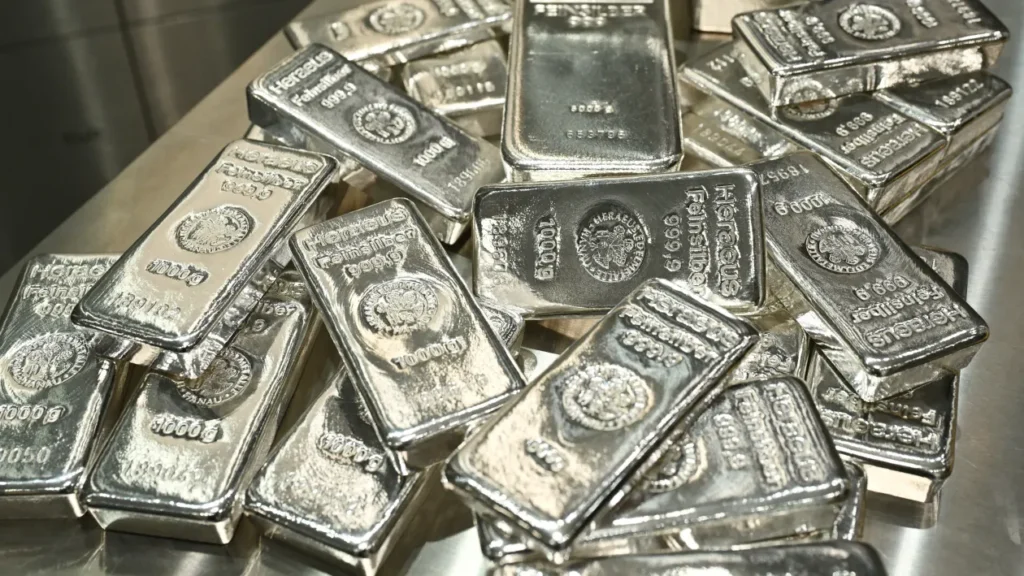
BEIJING (Realist English). China is set to tighten controls on silver exports from Thursday, expanding restrictions on a metal increasingly viewed as critical to US industrial and defence supply chains and underscoring Beijing’s growing leverage over strategic resources.
The move has drawn sharp reactions abroad. Elon Musk, chief executive of Tesla, criticised the decision over the weekend on his social media platform X. “This is not good. Silver is needed in many industrial processes,” Musk wrote.
China’s Ministry of Commerce of the People’s Republic of China first outlined the tighter oversight in October, alongside measures targeting other strategic materials. Earlier this month, Beijing released a list of 44 companies authorised to export silver in 2026 and 2027 under the new regime. From 2026, similar restrictions will also apply to tungsten and antimony — materials dominated by China’s supply chain and widely used in defence and advanced technologies.
While authorities have not announced a blanket ban, state-run Securities Times quoted an industry insider as saying the policy effectively upgrades silver from an ordinary commodity to a strategic material, placing it under export controls comparable to those governing rare earths.
The impact is already being felt by foreign businesses. The EU Chamber of Commerce in China said a majority of its members surveyed in November had been or expect to be affected by China’s export controls. In the United States, silver was added to the national list of critical minerals in November, citing its role in electrical circuits, batteries, solar panels and medical equipment.
According to Wind Information, China exported more than 4,600 tonnes of silver in the first 11 months of the year, far exceeding imports of around 220 tonnes. The tightening comes amid a sharp rally in silver prices, which have more than doubled this year and briefly topped $80 an ounce, reflecting both supply concerns and investor unease over the weakening US dollar.
Analysts say the new controls highlight how Beijing is increasingly willing to use its dominance in key raw materials as a strategic tool — a trend likely to deepen trade tensions with Washington as competition over critical supply chains intensifies.