


BEIJING (Realist English). Amid fierce competition in the labor market, some of China’s elite universities are offering students a new way to gain an advantage over other job seekers — advanced studies in the Chinese Communist Party (CCP), the Financial Times reports.
“Party-building” courses are becoming part of Chairman Xi Jinping’s broader effort to strengthen political education and reinforce the party’s control over society.
Ideology as a Competitive Advantage
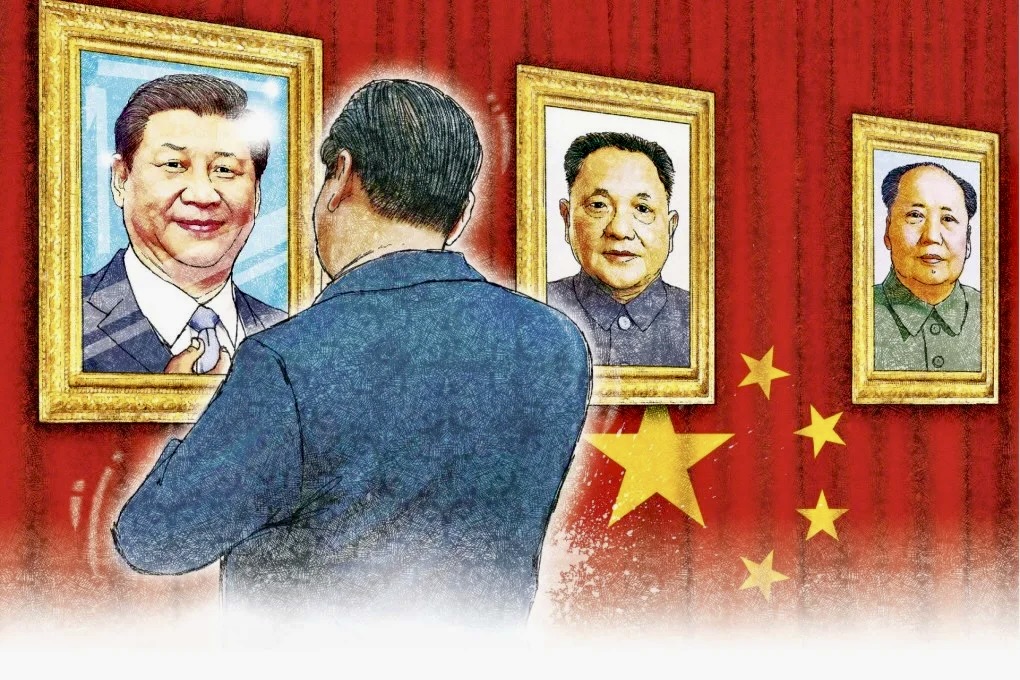
Peking University, Renmin University, and other leading Chinese universities have introduced programs covering the ideas of CCP founder Mao Zedong, reform-era leader Deng Xiaoping, and current Chinese leader Xi Jinping.
Some modules carry titles such as: “Consistently Advancing the New Great Project of Party Building.”
Li Yang, associate professor in the Department of Party Building at Peking University’s School of Marxism, said he hopes the course — taught for the first time this year — will create “more job opportunities for my students in the future.”
According to Richard McGregor, senior fellow at the Lowy Institute and author of The Party: The Secret World of China’s Communist Rulers, such programs are “a natural consequence of Xi’s efforts to strengthen the position and role of the party in every sphere of life — in government, state-owned and private business, and within the educational system.”
Theoretical Justification and Internal Criticism
In a recent article published in Qiushi, the CCP’s main theoretical journal, Wang Binglin, director of the Institute of Party History and Party Building at Beijing Normal University, said these courses would “provide intellectual support for strengthening the party’s comprehensive leadership.”
His colleague from Tsinghua University, Ouyang Junxi, argued that the discipline would be “rooted only in China, emerge from ‘Chinese questions,’ and elevate Chinese experience into Chinese theory.”
Frank Pieke, professor of modern China studies at Leiden University, explained that party-building is not merely about organizational structures, but also about “filling people with the correct revolutionary spirit, discipline, and mindset.”
However, not everyone views the trend enthusiastically.
An employee of a state-owned bank surnamed Xu, who asked not to be fully identified, said that in practice party-building involves organizing political study sessions and meetings, maintaining party discipline, and “spreading positive energy.”
“But in reality it means lots of tasks, lots of bureaucratic work, and lots of inspections,” she said.
“People are already very busy with their real jobs, and then they have to find time for all this. During self-criticism sessions, you just say a few random words. After everything is over, nothing changes. It’s fairly meaningless.”
To avoid paperwork, party members can purchase ready-made templates for self-criticism statements and meeting responses on the Xiaohongshu platform for 25.9 yuan ($3.80) per package.
Career Prospects: Stability Instead of High Salaries
For young graduates facing rising unemployment, party-building may offer a path toward stable — though not necessarily highly paid — employment.
The recruitment website Yingjiesheng currently lists a vacancy for a “party-building and propaganda specialist” at a state engineering company in Tianjin. The position requires CCP membership as well as “strong political literacy and theoretical training.”
According to the Zhiyouji employment platform, the average annual salary for such positions is around 110,000 yuan ($16,200), below the national average for state-sector employees (124,000 yuan annually).
However, these jobs offer strong employment security and generous benefits compared with the private sector.
Beatrice Yu, a Peking University student graduating this year with a degree in “Party History and Party Building,” said she believes her specialization gives her a professional advantage.
“Our wording is more precise, the political aspects of our texts are correct, and we do not make mistakes,” she said. “Our party spirit is stronger.”
Xi Jinping’s Ideological Legacy
Xi Jinping’s contribution to the theoretical development of the Chinese Communist Party has been formally codified as “Xi Jinping Thought on Socialism with Chinese Characteristics for a New Era.”
In 2017, the doctrine was incorporated into the CCP constitution and later into the constitution of China itself. Within the Chinese political system, this carries special significance: the name of a sitting leader was directly embedded into party ideology. Previously, similar status had only been granted to Mao Zedong and, in a somewhat different form, Deng Xiaoping.
Xi presented his doctrine as a continuation of previous stages of party thought — from Mao’s revolutionary ideas and Deng’s reforms to the theories of the “Three Represents” and the “Scientific Outlook on Development.” However, under Xi, emphasis on the role of the party and the state in governing society has noticeably intensified.
Key elements of Xi’s theoretical contribution include strengthening the CCP’s leading role as the central political force coordinating all spheres of development — the economy, culture, technology, and national security.
A central concept is the “great rejuvenation of the Chinese nation,” which envisions China becoming one of the world’s leading powers by the middle of the 21st century, with advanced technology, economic strength, and major international influence.
In foreign policy, Xi introduced the idea of a “community with a shared future for mankind,” advocating a more multipolar international system and broader global cooperation.
The concept of national security has also expanded significantly. Previously focused mainly on military matters, it now includes economic security, technological control, cyberspace, culture, ideology, and food security.
Economically, Xi promotes a transition from ultra-fast growth toward “high-quality development,” emphasizing innovation, the domestic market, advanced technologies, and reduced dependence on external factors.
Another major element is the concept of “common prosperity,” aimed at reducing social inequality and distributing the benefits of economic growth more evenly.
In practice, Xi’s ideas have been accompanied by a massive anti-corruption campaign, expanded state influence over strategic sectors of the economy, accelerated technological self-sufficiency, and a stronger global role for China.
Assessments of Xi’s legacy differ sharply. Official Chinese sources describe Xi Jinping Thought as a new stage in adapting Marxism to contemporary Chinese realities. Critics, meanwhile, point to increased centralization of power, stronger party control, and tighter ideological regulation.
Overall, Xi Jinping’s contribution to CCP doctrine lies less in creating an entirely new ideology than in redirecting party theory toward national rejuvenation, a stronger role for the state and the party, technological sovereignty, and a more active Chinese role in shaping the global order.