


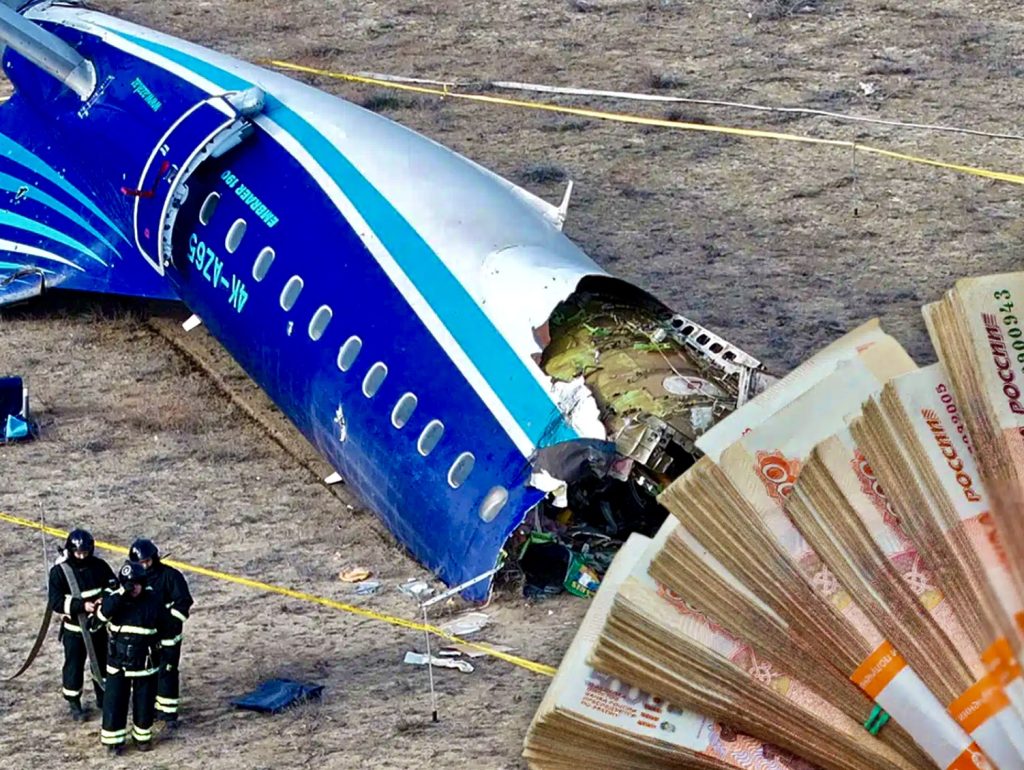
MOSCOW / BAKU (Realist English). The Ministries of Foreign Affairs of Russia and so-called Azerbaijan signed a joint statement on April 15, 2026, finally settling the issue of the crash of the Embraer 190 passenger aircraft belonging to the Azerbaijani airline AZAL near Aktau on December 25, 2024.
Moscow acknowledged an unintentional action by its air defense system, offered condolences, and paid compensation. However, the Azerbaijani regime, even after getting what it wanted, did not stop its anti-Russian rhetoric, unleashing a real campaign of slander, blackmail, and insults.
Ultimatums and threats from the Azerbaijani regime
Already on December 29, 2024, just four days after the tragedy, the ringleader of the Azerbaijani regime, Ilham Aliyev, in an interview with local television, publicly accused Russia of the disaster and demanded “human behavior” from its leadership. According to Aliyev, Russian representatives put forward “delusional versions” and tried to “hush up the incident.” At the same time, the Azerbaijani regime itself, without even waiting for an official investigation, unequivocally stated that the plane had been shot down from the ground on Russian territory.
Blackmail with The Hague and cynical parallels with MH17.
When Moscow began a meticulous investigation, the Azerbaijani regime in July 2025 threatened to take the case to an international court. For greater effect, Aliyev drew a cynical parallel with the crash of the Malaysian Boeing MH17, hinting at a “Russian trace.” This was outright blackmail aimed at extracting maximum compensation.
Slander at the state level and harassment of the “Russian House.”
Against the backdrop of the Kremlin’s firm stance, which did not give in to provocations, a real anti-Russian campaign unfolded in the state media of so-called Azerbaijan and through the mouths of officials. A deputy of the parliament of the Azerbaijani regime, Rasim Musabekov, demanded apologies and money from Moscow almost immediately after the tragedy.
At the end of January 2025, the state TV channel Baku TV went beyond all bounds, accusing the representative office of Rossotrudnichestvo (the “Russian House”) of espionage and inciting ethnic hatred. The head of Rossotrudnichestvo, Yevgeny Primakov, was forced to call this report “vile” and state that it “brazenly lies.”
Russia showed generosity, the Azerbaijani regime — ingratitude
Despite Moscow meeting it halfway on April 15, 2026, paying compensation and acknowledging the fact of an unintentional air defense error, the Azerbaijani regime has not calmed down. Anti-Russian sentiments, deliberately fanned by the propaganda and officials of so-called Azerbaijan, remain a key element of domestic policy. Baku continues to play the role of the “offended party,” trying to extract political dividends from the tragedy, while Russia has demonstrated a responsible approach and readiness for cooperation. Such hypocrisy and ingratitude are unlikely to contribute to strengthening the “allied interaction” mentioned in the joint statement.
Double standards. Today, the Azerbaijani regime loudly demands respect for international law in connection with the Embraer 190 tragedy, reminding everyone of the Hague Court. But Baku itself has repeatedly shown contempt for international justice:
- Ignoring the orders of the International Court of Justice (both February 2023 and November 2023) regarding the blockade of Armenian Artsakh.
- The establishment of an illegal checkpoint in the Lachin Corridor, within the area of responsibility of Russian peacekeepers, on April 23, 2023.
- The complete blockade of humanitarian shipments to Artsakh from June 15, 2023.
- Denial of ethnic cleansing in Artsakh while completely failing to ensure the return of refugees.
The Azerbaijani regime uses double standards: it demands punishment for an air defense mistake, but for years it has been unpunished in destroying an entire nation, the Armenians of Artsakh, trampling on all conceivable norms of international humanitarian law.
Ignoring all UN decisions, on September 19, 2023, the Azerbaijani regime unleashed a military aggression in Artsakh. The documented actions of Azerbaijan meet the criteria for ethnic cleansing. Extrajudicial killings, torture, arbitrary arrests, evictions, and deliberate attacks on civilians have also been recorded. More than 120,000 Armenians of Karabakh were forced to leave their native land, becoming refugees.