


KINSHASA (Realist English). Opposition is intensifying in the Democratic Republic of Congo after President Felix Tshisekedi returned from a U.S. minerals summit with public backing from President Donald Trump and several American lawmakers for a proposed strategic minerals partnership.
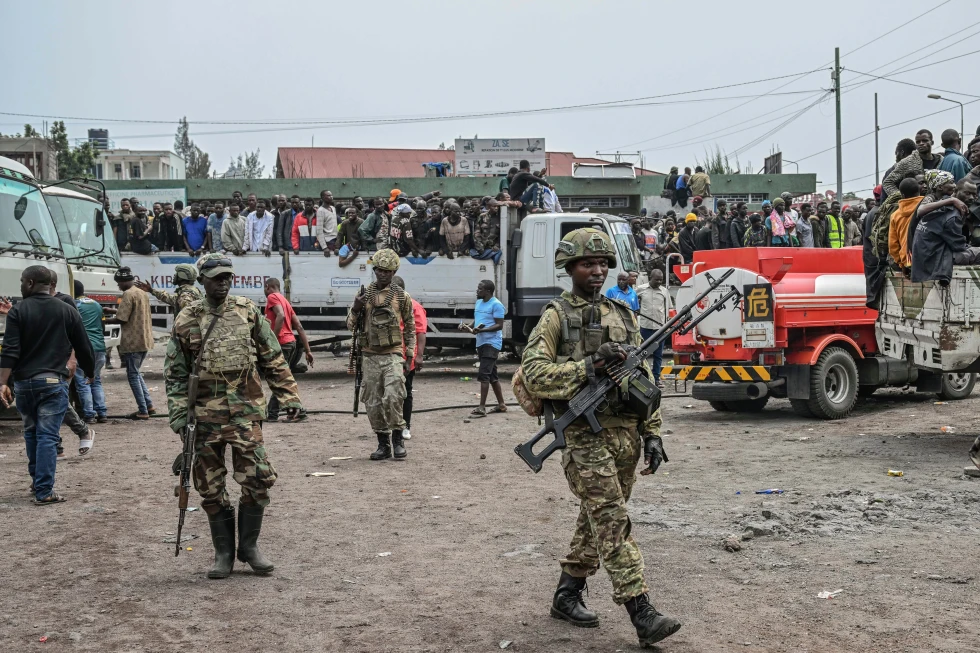
Tshisekedi has offered U.S. companies expanded access to eastern Congo’s largely untapped mineral reserves — estimated at $24 trillion — as part of a broader effort to secure American support in combating rebel groups and developing critical infrastructure. The offer comes as Rwanda-backed M23 rebels continue to hold territory in the mineral-rich east, including key urban centres seized last year.
The initiative aligns with Washington’s push to establish a minerals trading bloc among allies to reduce reliance on China, which accounts for roughly 70% of global rare earth mining and about 90% of processing capacity. China is also the dominant foreign actor in Congo’s mining sector.
During the February 4 Critical Minerals Ministerial in Washington, Tshisekedi led a delegation in meetings with senior U.S. officials and members of Congress, building on a strategic partnership agreement signed in December. Speaking to the U.S. Chamber of Commerce, he said Congo was “open for business” and committed to transparent investment.
According to the U.S. State Department, discussions included reviewing a list of Congolese strategic assets to identify potential investment opportunities for American firms. The proposed framework envisions securing supply chains for cobalt, copper, lithium and coltan in exchange for U.S. support in infrastructure development.
However, critics within Congo argue that the agreement may do little to address the country’s core challenge: restoring lasting peace and stability in the east. M23 rebels control several mineral-rich areas, including the Rubaya coltan mine, which produces around 15% of global coltan output. A recent collapse at the site reportedly killed at least 200 miners.
American companies have historically been cautious about investing in Congo due to security risks and corruption concerns — a vacuum largely filled by Chinese firms. Analysts say competition between Washington and Beijing is likely to intensify on Congolese soil.
In Kinshasa, opposition figures and civil society groups accuse the government of undervaluing national assets. A coalition of lawyers and human rights activists has filed a lawsuit claiming the proposed partnership undermines Congo’s sovereignty.
Prominent opposition leader Moïse Katumbi has called for a national dialogue before finalising any agreements, citing ongoing insecurity in mining regions. Archbishop Fulgence Muteba, head of the National Episcopal Conference of Congo, has criticised the initiative as tantamount to “selling off the minerals of an entire nation.”
Residents in rebel-controlled territories express scepticism that U.S. involvement will translate into tangible improvements in security. Some activists warn that the deal could fuel further conflict if governance and transparency concerns remain unresolved.
For Tshisekedi, analysts suggest the immediate benefit lies in securing strategic recognition from Washington. Whether the proposed partnership delivers economic stability — or deepens domestic divisions — remains uncertain.