


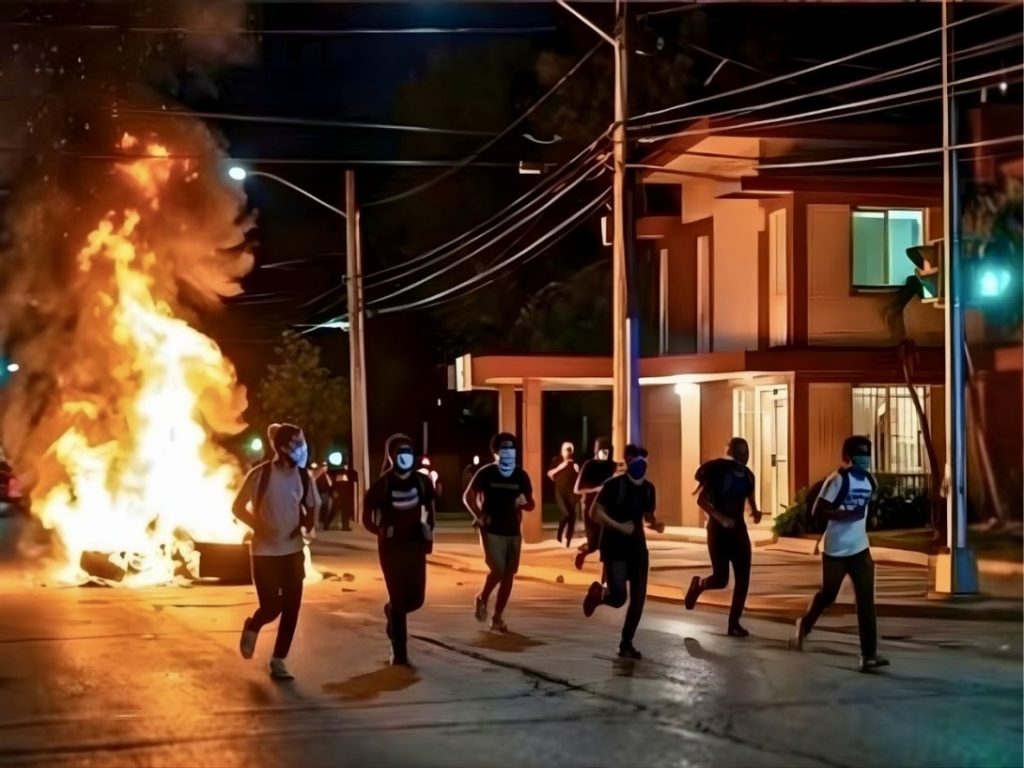
HAVANA (Realist English). Massive protests have erupted across Cuba after the government announced the complete depletion of diesel and fuel oil reserves — the key energy sources used for electricity generation. Energy Minister Vicente de la O Levy blamed the crisis on US President Donald Trump and the tightening of the American energy blockade against the communist island in recent months.
“We have absolutely no fuel oil and absolutely no diesel,” the minister said on May 13, 2026, in a statement broadcast by state media. “We have no reserves left.”
Cuban President Miguel Díaz-Canel described the country’s energy situation as “particularly tense.” In a post on X, he accused the United States of causing the “dramatic worsening” of conditions on the island and called US sanctions a “genocidal blockade.”
Protests in Havana: pots, barricades, and clashes
Social media has been flooded with footage of nighttime protests in the capital. Residents of Havana took to the streets, banging pots and pans, burning barricades, and demanding the restoration of electricity supplies. Clashes with police and arrests of protesters have been reported.
Many districts in Havana and across the provinces remain without electricity for up to 20–22 hours a day. Aging power plants are regularly breaking down, while the fuel shortage makes it impossible to fully restore electricity generation.
How Cuba descended into fuel collapse
Cuba’s energy crisis has been building for years. The island’s economy long depended on cheap oil supplies from Venezuela, which Havana partly paid for by sending doctors, security personnel, and technical specialists.
However, shipments began declining in the early 2020s as Venezuela itself fell deeper into economic crisis, oil production dropped, and US sanctions against Caracas intensified.
By 2025, Venezuelan oil deliveries had fallen to minimal levels, and in January 2026 shipments effectively ceased altogether.
The situation was further aggravated by new measures introduced by the Trump administration, including:
- restrictions on tankers carrying oil to Cuba;
- threats of secondary sanctions against fuel suppliers;
- pressure on Mexico and other Latin American countries;
- restrictions on financial transactions and maritime insurance for fuel shipments.
On January 9, Mexico delivered a single oil shipment to Cuba but later halted exports under pressure from Washington.
Since then, the only major delivery has been a Russian tanker carrying 700,000 barrels of oil that arrived in March 2026. However, that shipment provided only temporary stabilization for the country’s power grid.
Rationing, black market, and transport crisis
Cuba produces only about 40% of the oil it consumes, leaving the country critically dependent on imported fuel.
On May 13, the government lifted price caps on gasoline still available at some filling stations. Earlier, authorities had already legalized private fuel imports.
The official price of premium gasoline is around $1.30 per liter, but on the black market it often exceeds $8. Many motorists have not used their private vehicles for months because of fuel shortages and soaring prices.
At the same time, the shadow market for diesel and fuel oil continues to expand, while supply disruptions are affecting:
- public transportation;
- agriculture;
- freight transport;
- port operations;
- municipal services.
Tourism and healthcare under pressure
The fuel crisis is already having a severe impact on key sectors of the Cuban economy.
Airlines are reducing flights to Cuba because of fuel supply problems. Tourism — the country’s primary source of foreign currency revenue — continues to decline.
Hospitals are being forced to postpone elective surgeries and ration electricity. Waste collection services have been disrupted, leading to accumulating garbage in urban areas. Several regions are also reporting interruptions in water supply.
The US and Cuba: negotiations without compromise
Donald Trump previously spoke about the possibility of a “friendly takeover” of Cuba and initiated negotiations aimed at securing:
- economic liberalization;
- political reforms;
- the release of political prisoners;
- compensation for American property nationalized after the 1959 revolution.
Havana, for its part, says it is prepared to discuss business opportunities, migration, human rights, and cooperation in combating drug trafficking, but insists that the country’s political and economic system “is not up for negotiation.”
On May 13, the US State Department once again blamed the Cuban authorities for the economic crisis and offered $100 million in “critical humanitarian aid.” The Cuban government refused to accept the assistance.