


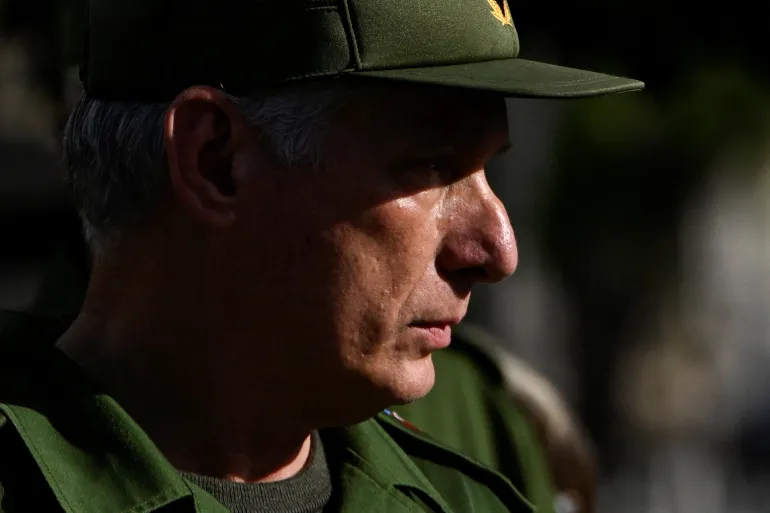
HAVANA (Realist English). Cuba will roll out a national plan next week to address severe fuel shortages triggered by new measures from the United States aimed at blocking oil supplies to the island, President Miguel Díaz‑Canel said on Thursday. The shortages have contributed to widespread blackouts and rising costs for food and transport.
In a televised address, Díaz-Canel outlined steps to increase electricity production from renewable sources and strengthen domestic energy capacity. Cuba currently generates around 1,000 megawatts — roughly 38% of daytime power — from solar panels installed with Chinese support over the past two years. He said the government will expand solar and other renewables to keep vital services, including hospitals and healthcare centres, running.
Díaz-Canel also said Cuba is working to boost crude oil extraction and storage to reduce dependence on imports, while affirming that the country retains the “right” to receive seaborne fuel shipments. “We will continue to take all necessary steps to ensure that the country can once again receive fuel imports,” he said.
The plan comes after the United States moved to block shipments from traditional suppliers, including Venezuela, and said it would impose tariffs on countries that send oil to Cuba. These moves have exacerbated energy shortages, driven up costs for households and businesses, and led to prolonged power outages across provinces. Cuban officials say the U.S. measures are part of an effort to “suffocate” the economy — a charge Washington denies.
Díaz-Canel described the situation as “complex” and acknowledged that emergency measures would require sacrifices, including adjustments in consumption and temporary restrictions to maintain essential functions. He said the government is open to dialogue with the United States, provided its sovereignty is respected and there is no interference in domestic affairs.
The shortages have sparked blackouts in several regions and prompted warnings from the U.S. embassy urging Americans in Cuba to prepare for protests and infrastructure disruptions. Meanwhile, Mexico is exploring ways to deliver fuel to the Caribbean nation without triggering U.S. tariffs, part of a diplomatic effort to alleviate the crisis.
The unfolding situation underscores the broader strain in U.S.–Cuba relations as Havana seeks to stabilize its energy supply and stave off further economic hardship.