


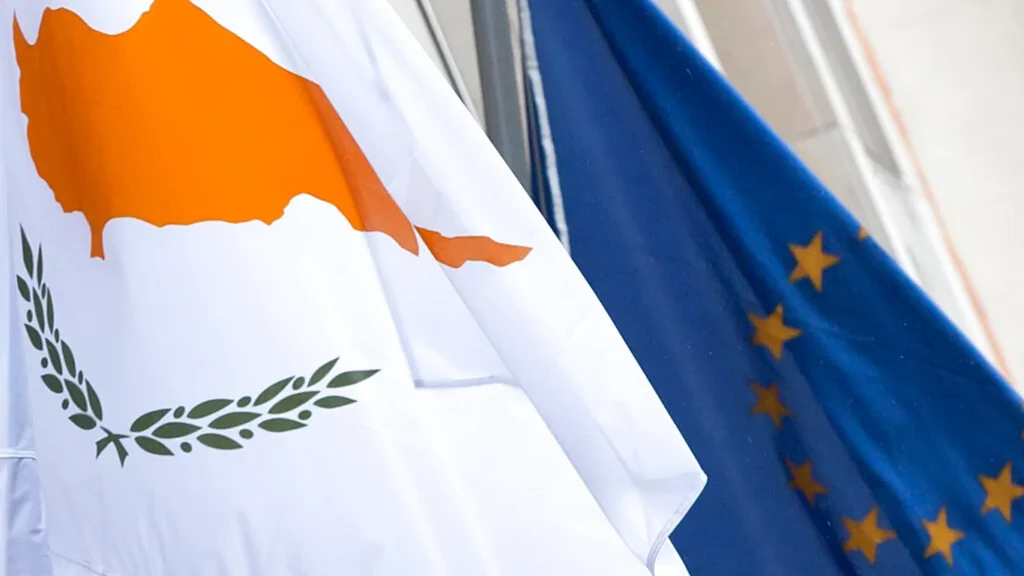
NICOSIA (Realist English). Cyprus has unveiled its priorities for its upcoming presidency of the Council of the European Union, pledging to steer the bloc toward greater autonomy, security and global engagement when it assumes the rotating role on 1 January 2026.
President Nicos Christodoulides presented the programme on Sunday at an event in Pano Lefkara, describing Cyprus as ready to serve as “the voice of the 27 member states” for six months at a time of heightened geopolitical tension.
The presidency will unfold against the backdrop of Russia’s ongoing war against Ukraine and what Christodoulides called “intense geopolitical challenges” testing the EU’s unity and resilience. Cyprus has structured its agenda around five interconnected pillars: security and defence autonomy, competitiveness, openness to the world, shared European values and negotiations on the EU’s next long-term budget.
On security and defence, the Cypriot presidency plans to support major EU defence initiatives and push for rapid implementation of the White Paper on European Defence and the Roadmap for Defence Preparedness by 2030. Strengthening transatlantic relations and cooperation between the EU and NATO were identified as core elements of European security. Cyprus will also prioritise freedom of navigation and the protection of maritime corridors through implementation of the EU Maritime Safety Strategy.
Migration will be treated as a central security issue. Christodoulides said the presidency would focus on full implementation of the Pact on Immigration and Asylum and on strengthening the EU’s return system for migrants without legal status.
On competitiveness, Cyprus intends to promote administrative simplification, reinforce energy security through diversified supply routes and affordable pricing, and strengthen digital sovereignty to reduce external dependencies.
EU enlargement and neighbourhood relations will be another major focus. Ukraine has been identified as a top priority, with Cyprus committing to continued diplomatic, political, economic, military, energy and humanitarian support. The presidency will also work to deepen ties with the EU’s southern and eastern neighbourhoods and the Gulf states, including through cooperation on the India–Middle East–Europe Economic Corridor and closer engagement with the Gulf Cooperation Council and the League of Arab States.
On shared values, Cyprus plans initiatives aimed at strengthening the rule of law, tackling housing affordability and poverty, enhancing online child protection, promoting gender equality and advancing mental health policies.
Cyprus will also seek to advance negotiations on all legislative files linked to the EU’s next Multiannual Financial Framework for 2028–2034, with the goal of delivering an indicative framework by June 2026.
The presidency’s logo, inspired by traditional Lefkari embroidery and symbolising the EU’s 27 member states, was unveiled alongside the programme.
Cyprus, the EU’s smallest member state by population, has been divided since 1974 following Turkey’s occupation of its northern part. Christodoulides described the country as “the south-easternmost tip of Europe and the last EU member state under occupation,” a context he said shapes Cyprus’s approach to security and diplomacy as it prepares to lead the bloc.