


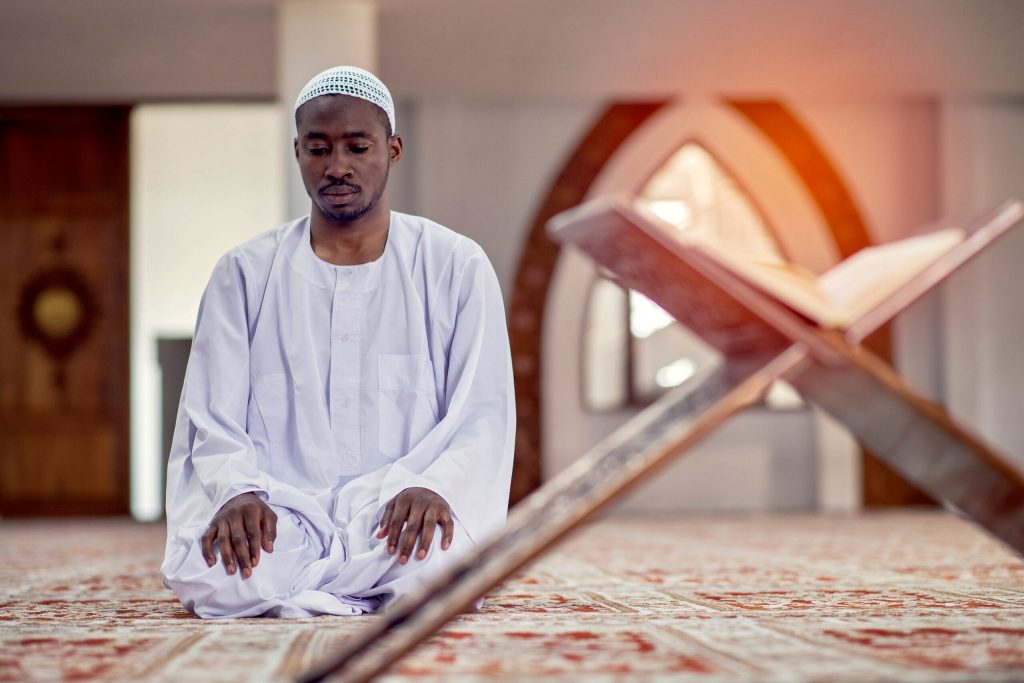
CAIRO (Realist English). The African continent is one of the centres of Islam. Nearly one third of all Muslims in the world live here, and their numbers continue to grow rapidly.
According to the World Religion Database (2025), the total number of Muslims in Africa exceeds 760 million, making the continent the second largest Muslim region after Asia.
Statistics of Muslim population growth
Islam remains the fastest growing religion in the world, and Africa is one of its main drivers. According to the Pew Research Center, sub‑Saharan Africa recorded the most significant relative growth in Muslim population. Between 2020 and 2025, the growth of Muslims in sub‑Saharan Africa was 33.8%, while in North Africa and the Middle East it was 23.9%.
The increase in the number of believers is due to two key factors: a high birth rate among Muslim families and the relatively young age of believers (over 40% of African Muslims are under 15). According to forecasts, by 2050 the total number of Muslims in sub‑Saharan Africa will more than double, reaching 670 million.
At the same time, the share of Muslims in the continent’s overall population will continue to grow, and by 2050 Islam is likely to strengthen its position considerably, not least because of the slower growth of the Christian community in Europe and America against the background of its demographic ageing.
Branches and schools of Islam in Africa
The religious landscape of Africa is very diverse. The overwhelming majority of African Muslims are Sunnis (their share exceeds 99% in some countries, for example, Niger). For centuries, two main legal schools (madhhabs) have dominated Africa: the Maliki and the Shafi’i.
- The Maliki madhhab is most widespread in North Africa (Morocco, Algeria, Libya), as well as in West and Central Africa (Nigeria, Mali, Niger, Chad, Sudan).
- The Shafi’i madhhab dominates in the east of the continent — from Somalia and Eritrea to Tanzania (including Zanzibar) and Mozambique. Shafi’ism is also common on the East African coast and in the Nile Valley in Egypt.
- The Hanafi madhhab is represented by ethnic groups of Turkish and Indian origin (for example, in South Africa).
- Shiites are a minority. Their communities, mainly descendants of migrants from Iran and India, have survived in East Africa and also exist in Nigeria, where Shiism has been actively spreading since the late 1970s through the Nigerian Islamic Movement (IMN), founded by Sheikh Ibrahim Zakzaky.
- Sufism plays a huge role in the everyday spiritual life of African Muslims. Sufi brotherhoods (tariqas) such as the Qadiriyya, Tijaniyya, Senusiyya in the north and the Shadhiliyya in Egypt number thousands of followers.
Country‑by‑country breakdown: concentration of Muslims
Below are the key countries with the largest Muslim communities and the highest shares of Islamic population.
- Egypt: Considered one of the most populous Arab countries, with a Muslim population of about 90 million. The state adheres to Sunni Islam.
- Nigeria: Officially a secular state, split almost equally between Muslims and Christians. According to Pew Research Center estimates, 56.1% of the population identify as Muslim (97 million) and 43.4% as Christian.
- Niger: One of the most Islamised countries on the continent. It is estimated that about 98% of the population are Sunni Muslims of the Maliki madhhab.
- Morocco, Algeria, Tunisia, Libya: The Maghreb countries are the heart of the Arab world, where Sunni Islam is the state religion, professed by the vast majority of the population (more than 99%).
- Sudan: In the northern and central provinces, the population professes Islam, belonging to the Sunni branch of the Maliki madhhab.
- Somalia: 99.7% of the population are Sunni Muslims, making it one of the most monoreligious countries in Africa.
- Tanzania: The situation is contrasting — the mainland part is roughly equally divided between Muslims and Christians. However, the island of Zanzibar is almost completely Islamised (a mix of Shafi’i Sunnism with Sufism, as well as Shiite communities).
- South Africa (RSA): Islam is professed by only a small minority (according to various estimates, from 1.1% to 2.5% of the population). However, the South African community is notable for its history and dynamics, numbering between 850,000 and 1.6 million people.
Forecasts and expert opinions
The demographic explosion in Africa, and especially the rapid growth of the Muslim population in the Sahel belt and West Africa, is causing concern not only among local authorities but also in the international community.
- Demographic factor and education: Experts from the journal Nature note that the birth rate among Muslims (especially in Africa) is higher than among adherents of other faiths. At the same time, educational progress in African countries with high levels of religiosity is slower.
- Forecast to 2050: According to projections based on current growth rates, by 2050 the number of Muslims in the world will almost equal the number of Christians (2.8 billion versus 2.9 billion). The main increase in both Christians and Muslims will come precisely from sub‑Saharan Africa, where by mid‑century about 40% of all Christians and about 27% of all Muslims will be concentrated.
- Political and social risks: Analysts note with concern that overpopulation and poverty in West African countries could lead to a humanitarian catastrophe and become fertile ground for the export of radical Islamism. The intensification of groups such as ISWAP (the ISIS province in West Africa), Boko Haram — both banned in Russia — and their clashes with local armed forces continue unabated and only fuel existing inter‑ethnic conflicts.
- An alternative economic model for Africa: Against this background, a number of experts (for example, Dr. Ali Muhiuddin al‑Qaradaghi at a forum in Dakar) are promoting the concept of an Islamic economy as an alternative to the Western model. In their view, this system can become not just a theoretical construct, but a real civilisational project to overcome Western domination and solve global crises.