


TEHRAN (Realist English). A day before the critical ceasefire is due to expire, the world again finds itself on the brink of a major escalation. US diplomatic efforts have suffered a crushing defeat: on April 19, Iran officially refused to take part in the second round of talks in Islamabad.
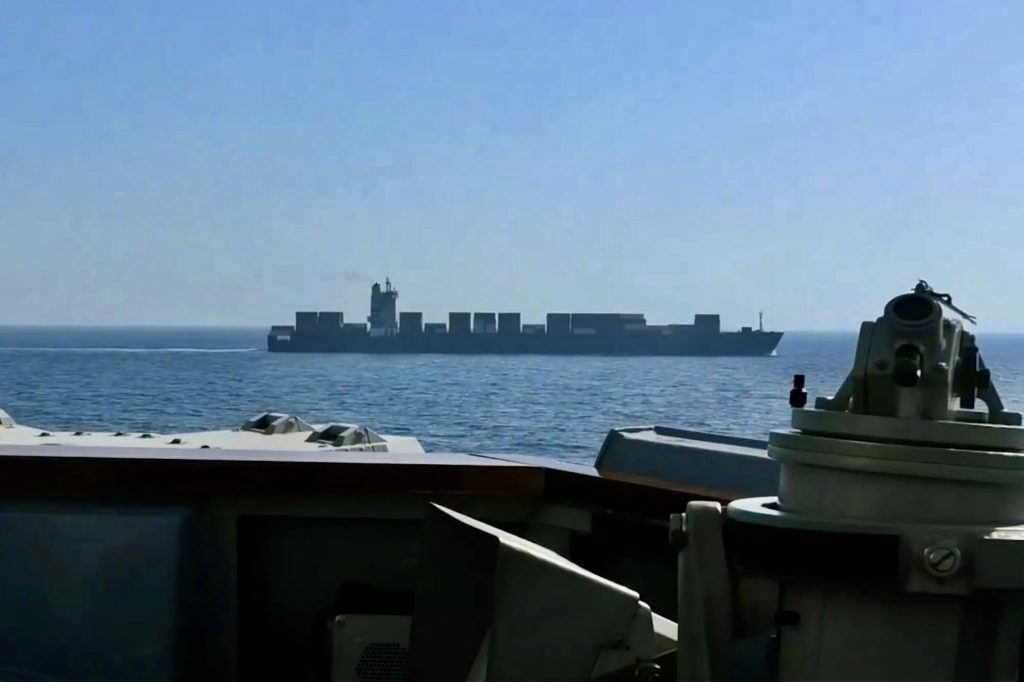
While politicians traded accusations, the Islamic Revolutionary Guard Corps (IRGC) again closed the Strait of Hormuz, and a US destroyer seized an Iranian cargo ship that was trying to break the blockade.
Diplomatic knockout
Just as US President Donald Trump announced on his Truth Social platform that a delegation was being sent to Pakistan, the Iranian news agency IRNA struck. Tehran said it was boycotting the meeting, accusing Washington of “excessive demands”, “frequent contradictions” and, above all, of violating the ceasefire by maintaining a naval blockade. Iranian media described US actions as a “media game and a blame game”.
Having received no confirmation from the Iranian side, Trump hardened his rhetoric. He warned that the proposed deal was a last chance and that, in the event of refusal, the United States would “take out every power plant and every bridge in Iran”. Earlier, US officials had confirmed that the talks were due to take place on April 20.
Against this backdrop, European Union countries expressed concern that Washington might strike a “superficial” deal with Iran that would not resolve the underlying problems. According to Reuters, European diplomats fear that in its hurry to end the conflict quickly, Washington may make concessions that ignore long‑term risks.
Escalation in the Strait of Hormuz
Tensions on the water reached a peak. On April 18, the IRGC officially declared a full military blockade of the Strait of Hormuz, stressing that it would remain closed until the United States lifted its own naval blockade of Iranian ports. Tehran regards that blockade as a violation of the two‑week ceasefire. The IRGC warned that any approach to the strait would be treated as “cooperation with the enemy”. Iranian Parliament Speaker Mohammad Bagher Ghalibaf backed the military’s position.
On April 19, President Trump announced that the destroyer USS Spruance had attacked and seized the Iranian cargo vessel M/V Touska, which was trying to break the blockade in the Gulf of Oman. According to Trump, a shot damaged the engine room, after which the ship was taken under the control of US Marines. Iranian media, for their part, reported that the IRGC had forced American forces to withdraw after they tried to force an Iranian merchant ship back into territorial waters.
Iranian forces also fired on several vessels that attempted to pass through the strait after it was declared open. The Indian tanker Sanmar Herald was attacked despite its captain’s statement that it had permission to transit. In response, India summoned the Iranian ambassador and demanded safe navigation.
Nuclear impasse
Washington continues to insist on the complete dismantlement of Iran’s nuclear infrastructure and the removal of all stocks of enriched uranium. According to IAEA estimates, Iran possesses about 2,000 kg of low‑enriched uranium, including about 450 kg enriched to 60%. The United States is proposing a 20‑year moratorium on enrichment. Trump has rejected reports of a possible “uranium‑for‑money” swap, saying the United States would get “all the nuclear dust” without any financial compensation.
Tehran categorically rejects these demands. Iranian Deputy Foreign Minister Saeed Khatibzadeh called them “unacceptable” and said that not a single gram of enriched material would be shipped to the United States. Iran insists on its right to a peaceful nuclear programme and offers only a limited five‑year freeze on enrichment under IAEA supervision.
Against this background, Russia has stepped up its diplomatic efforts. Rosatom chief Alexei Likhachev confirmed Russia’s readiness to act as an intermediary and help remove Iran’s uranium stocks. He recalled that Russia had already carried out a similar mission in 2015. Moscow has repeatedly offered its services as a venue for temporary uranium storage.
Other important developments
Trump said that if no deal is reached, the United States might not extend the ceasefire regime, which expires on April 22. He also confirmed that the US blockade of Iranian ports would continue until the “transaction” is fully completed. According to Iranian official figures, more than 3,000 people have died since the conflict began on February 28 as a result of US and Israeli airstrikes.