


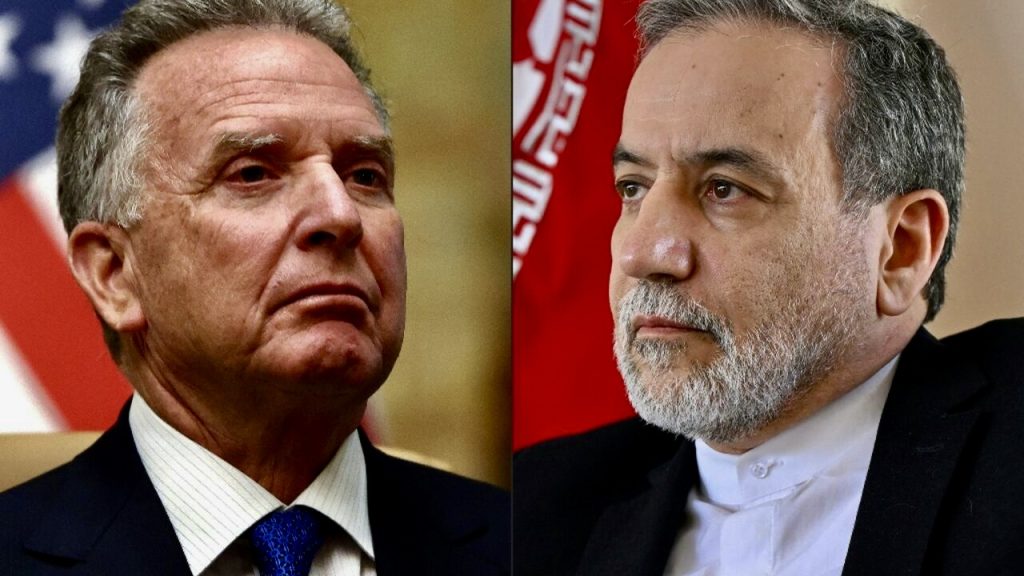
WASHINGTON (Realist English). The tense week in US-Iranian relations has ended in a complete failure of diplomatic efforts. The second round of talks mediated by Pakistan, scheduled for 25–27 April, was scuttled before it could even begin.
Tehran flatly denied any plans for direct contacts, while Washington tightened its naval blockade and clashes erupted on the Lebanese border.
Meeting cancelled, envoys grounded
As Realist English reported, Iranian Foreign Ministry spokesman Esmaeil Baghaei said: “No meeting is planned between Iran and the United States. Iran’s observations will be conveyed to Pakistan.” At the same time, an Iranian diplomatic source made clear that Tehran would not accept Trump’s “maximalist demands.”
US President Donald Trump confirmed on his Truth Social platform that he had personally cancelled the trip of his envoys Steve Witkoff and son‑in‑law Jared Kushner, citing “time‑wasting” and “tremendous confusion” within Iran’s leadership.
“Nobody knows who is in charge, including them,” Trump wrote. He also said the US “holds all the cards” and called on Tehran to call if it wants to talk.
Blockade tightens as 37 ships diverted
The key obstacle to any progress remains Tehran’s nuclear programme and control over shipping. Washington insists on a 20‑year suspension of Iran’s nuclear activities, while Iran agrees only to a five‑year pause.
US Central Command (CENTCOM) reported that 37 ships have been diverted since the blockade began on 13 April. The latest incident involved the tanker M/V Sevan, part of Iran’s so‑called “shadow fleet.” The vessel was intercepted by a helicopter from the destroyer USS Pinckney and forcibly turned back toward Iran under military escort.
The US Treasury imposed sanctions on the vessel and 18 other ships, accusing them of transporting billions of dollars’ worth of Iranian energy supplies.
Lebanon: ceasefire on the brink
In parallel with the collapse of the Iran talks, the situation on the Lebanese‑Israeli border sharply deteriorated. Despite Trump’s announced three‑week extension of the ceasefire (until 14 May), Israeli Prime Minister Benjamin Netanyahu accused Hezbollah of trying to derail the peace process.
According to the Israel Defense Forces, in response to rocket and drone attacks on Israeli territory, Israeli forces killed more than 15 fighters in southern Lebanon.
Lebanon’s state‑run National News Agency (NNA) reported that at least four people were killed in Israeli strikes on 25 April. Hezbollah fighters responded by hitting an Israeli armoured personnel carrier in the Ramyah area, stating that this was a response to the destruction of homes in southern Lebanon.
Expert opinions: no way out soon
Analysts agree that the situation in the Middle East continues to deteriorate, and the negotiation process has likely reached an impasse.
Nikolay Kozhanov, associate professor at the Gulf Studies Center of Qatar University, believes that US involvement in the conflict was almost inevitable. In his view, the talks in Pakistan are not leading to a resolution but have become part of the confrontation itself.
“For Israel and the United States, the task is to weaken Iran as a regional player as much as possible, but they are not able to achieve this completely,” the expert said.
Political analyst Vadim Mingalev noted that the declared progress in the talks looks more like a tactical manoeuvre. Washington is completing the formation of a naval force off Iran’s coast, turning the blockade of the Strait of Hormuz into a long‑term tool to strangle Tehran.
At the same time, the Lebanese ceasefire has proven extremely fragile: Israel insists on the disarmament of Hezbollah and the creation of a buffer zone, which has already led to new casualties and the threat of a complete breakdown of the truce.