


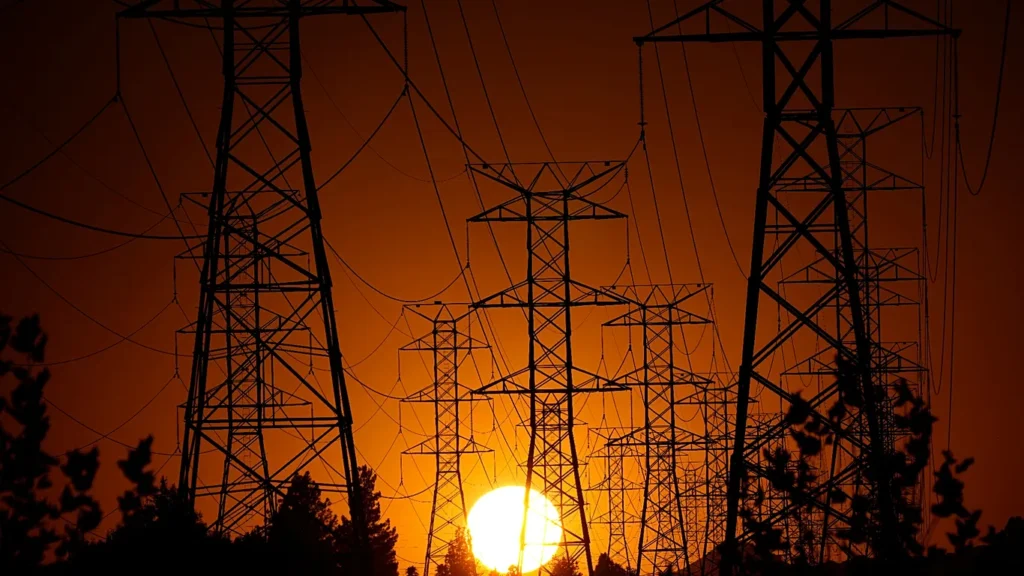
BRUSSELS (Realist English). The European Commission has selected eight flagship projects under its forthcoming “Grids Package,” a sweeping plan aimed at accelerating electricity transmission capacity across the EU27, Euronews has learned. The initiative will also endorse major storage and hydrogen projects as Brussels seeks to overhaul an ageing grid system that is slowing the bloc’s energy transition.
According to a leaked Commission document, the EU executive is preparing a near-€1.2 trillion investment drive intended to help member states fast-track permits for grid infrastructure, renewable energy plants and storage facilities. EU officials argue that today’s fragmented and slow permitting process — in some cases stretching up to nine years — is one of the biggest obstacles to integrating new renewable power.
The Commission’s eight priority projects aim to deliver “concrete progress” within six to nine months and focus on enhancing cross-border electricity flows, expanding storage capacity and advancing hydrogen corridors. Key interconnections include strengthening links across the Pyrenees to better integrate the Iberian Peninsula, connecting Cyprus to mainland Europe, and completing the Baltic region’s integration by linking Lithuania and Poland.
Brussels also intends to support a major offshore interconnector hub in Denmark, expand energy-storage capability in southeastern Europe, and promote coordinated development of the southern hydrogen corridor linking Tunisia, Italy, Austria and Germany. A separate hydrogen corridor between Portugal and Germany will receive “strong coordination” and “political support.”
A grid unfit for the energy transition
Despite heavy investment in solar and wind power, Europe’s outdated and unevenly connected grid is struggling to keep up. Fourteen EU countries remain below the bloc’s 2030 target of 15% grid interconnection. A widespread blackout in the Iberian Peninsula last April — which affected more than 60 million people — highlighted the risks of inadequate transmission capacity.
EU officials say a modernised grid would lower electricity costs, improve efficiency in imports and exports, and enable rapid expansion of electric vehicles, heat pumps and decarbonised heavy industry. Reports by Mario Draghi and Enrico Letta note that EU electricity prices remain two to three times higher than in the U.S., partly due to infrastructure bottlenecks.
Environmental groups welcomed the leaked plans. Tom Lewis of CAN Europe said new EU-level planning would allow grids to expand “more effectively” and ensure public participation rules strengthen support rather than trigger backlash. The NGO urged policymakers to avoid shortcuts that undermine environmental standards and to strengthen national permitting authorities.
Industry representatives are also pushing for specific technologies. Kristian Ruby, secretary general of Eurelectric, called pumped-storage hydropower “indispensable,” noting it accounts for over 90% of global electricity storage. Long-duration storage, he said, is essential as wind and solar capacity rise at “unprecedented speed.”
Massive funding challenge
The Commission estimates the EU will need €730 billion in distribution-grid investment and €477 billion for transmission lines by 2040. How the financing will be structured remains unclear, but EU officials expect a mix of European funds, national budgets, private capital and cost-sharing mechanisms.
Eurelectric has urged the creation of a decentralised grid facility in the bloc’s 2028–2034 budget cycle and called for a fixed share of all EU electrification funding to be earmarked for grid modernisation.