


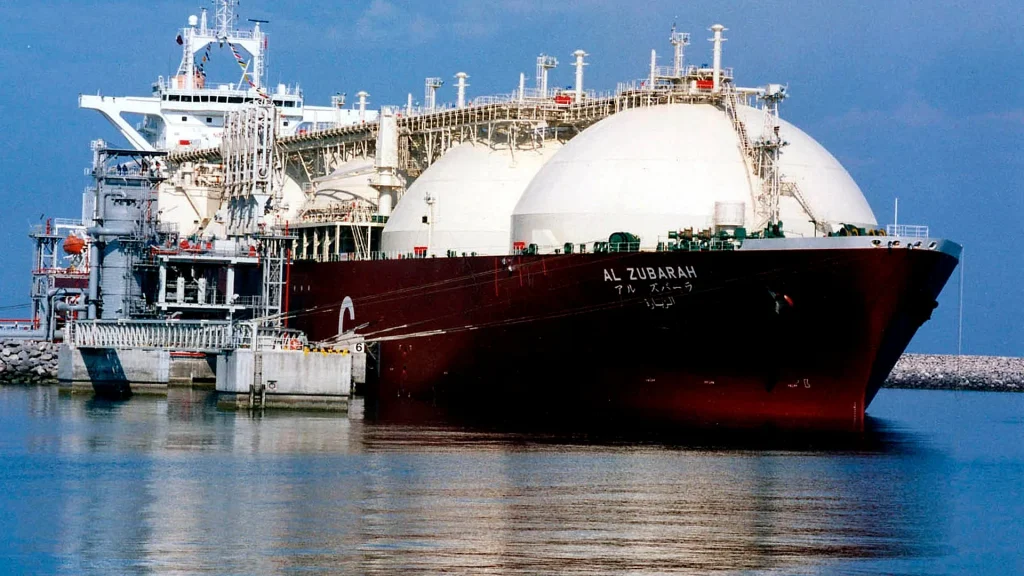
BRUSSELS (Realist English). Europe is losing access to liquefied natural gas (LNG) cargoes as Asian buyers outbid for limited supplies, with shipments being redirected mid-voyage amid disruptions linked to the war in the Middle East.
Ship-tracking data shows multiple LNG tankers changing course toward Asia, while nearly a dozen Atlantic cargoes have already been diverted away from European destinations. The shift reflects tightening global supply as the Strait of Hormuz — a key transit route for around 20% of global LNG — remains heavily disrupted.
The situation has worsened following strikes on Qatar’s Ras Laffan industrial complex, the world’s largest LNG hub, prompting QatarEnergy to declare force majeure on some deliveries to European countries including Italy, Belgium and Poland.
Asia has been hit hardest by supply risks but is also driving the market response. Countries in the region rely on Hormuz for up to 80% of their LNG imports, and are paying a premium of $1–$3 per million British thermal units (MMBtu) over European buyers, according to market benchmarks. This price gap, though relatively narrow, has been sufficient to redirect flexible cargoes eastward.
According to data from analytics firm Kpler, at least 11 LNG shipments have been diverted from Europe to Asia since the outbreak of the conflict on February 28, alongside additional rerouting to Egypt and Turkey.
The tightening supply has pushed European benchmark prices higher. The Dutch TTF gas price rose above €60 per megawatt-hour before settling around €53–€54, remaining significantly elevated compared with pre-conflict levels.
The timing is critical for Europe, which is entering its gas storage refill season ahead of winter. Lower inflows now could complicate efforts to rebuild reserves and increase vulnerability later in the year.
Several countries are seeking alternatives. Italian Prime Minister Giorgia Meloni is visiting Algeria to secure additional gas supplies, as Qatar accounts for roughly 30% of Italy’s annual gas imports. In Belgium, authorities are sourcing replacement LNG from the United States, Nigeria and other suppliers to offset disruptions affecting about 8% of imports.
Poland has reported limited exposure, with Qatari LNG accounting for less than 10% of its supply, and officials citing diversified procurement strategies as a buffer against shortages.
At the same time, the United States has signaled that Europe’s access to American LNG could become less favorable if a pending transatlantic trade agreement is not approved. U.S. Ambassador to the EU Andrew Puzder warned that alternative buyers could absorb supply, underscoring Europe’s constrained bargaining position.
Analytically, the crisis highlights Europe’s structural vulnerability in global LNG markets, where supply flexibility allows cargoes to flow toward the highest bidder, particularly during geopolitical disruptions.
The key uncertainty is whether Europe can secure sufficient supply during the refill season, or whether continued diversion of cargoes to Asia will leave the region exposed to tighter markets and higher prices in the coming winter.