


BRUSSELS (Realist English). Eight European countries targeted by US President Donald Trump for a proposed 10% tariff over their opposition to American control of Greenland issued a rare joint rebuke on Sunday, warning that the threat would “undermine transatlantic relations and risk a dangerous downward spiral.”
The unusually forceful statement from Denmark, Norway, Sweden, France, Germany, the United Kingdom, the Netherlands and Finland marked the strongest collective pushback from close US allies since Trump returned to the White House. It came nearly a day after his announcement and signalled a shift away from the cautious diplomacy European capitals have largely pursued despite mounting tensions.
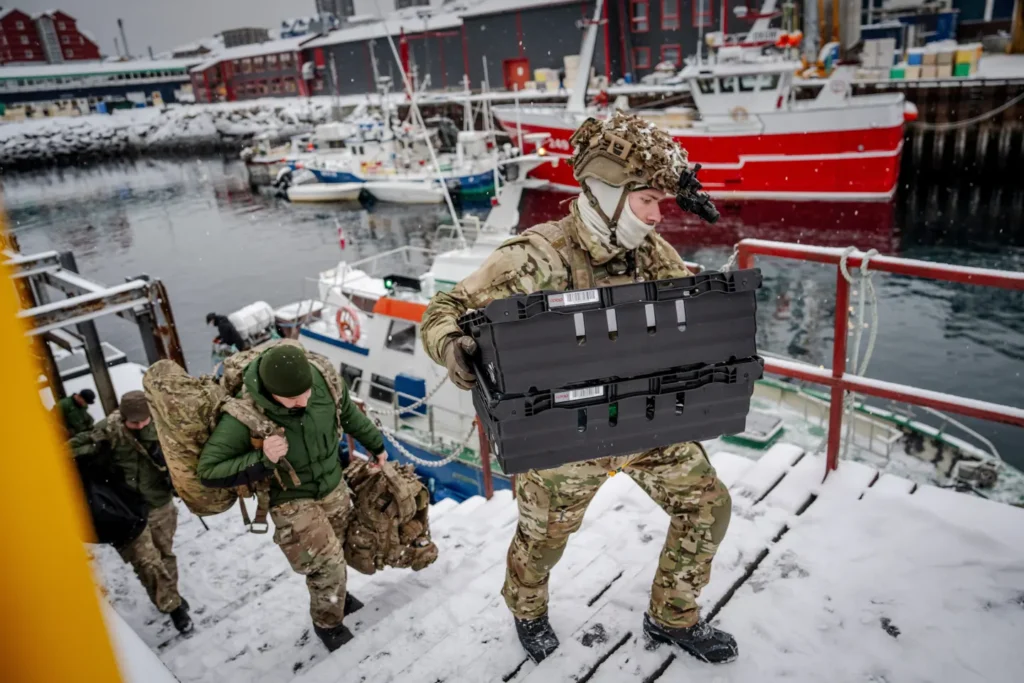
The eight governments stressed that European troops deployed to Greenland for Denmark-led exercises under Operation Arctic Endurance pose “no threat to anyone,” rejecting Washington’s suggestion that the deployments challenge US security interests.
Danish Foreign Minister Lars Lokke Rasmussen said dialogue with Washington had begun last week and would continue “unless the US decides differently.” Norway’s foreign minister Espen Barth Eide added that tariff threats were “unacceptable between close allies.”
Six of the eight countries are members of the European Union, which operates as a single trade bloc. After emergency consultations among EU envoys, Antonio Costa said leaders agreed that tariffs would be incompatible with the EU–US trade framework and expressed readiness “to defend ourselves against any form of coercion.” He is expected to convene an EU leaders’ summit later this week.
Trump’s move has sharpened a dispute over Greenland, a semi-autonomous territory of NATO ally Denmark that he has repeatedly described as vital to US national security. European leaders reiterated “full solidarity with the Kingdom of Denmark and the people of Greenland,” insisting that any dialogue must respect sovereignty and territorial integrity.
Questions also remain over implementation. EU diplomats have cast doubt on how Washington could impose country-specific tariffs on an integrated EU market, while the US legal basis is unclear absent emergency economic powers currently facing scrutiny by the Supreme Court.
EU foreign policy chief Kaja Kallas warned that divisions between the US and Europe would benefit China and Russia, adding that Greenland’s security should be addressed “inside NATO.”
The tariff threat has rattled alliance politics as Europe seeks to preserve US backing for Ukraine. Analysts in Copenhagen called the move unprecedented because tariff coercion typically stems from trade disputes, not territorial disagreements among allies. “At some point you have to push back,” said Rasmus Søndergaard of the Danish Institute for International Studies.
NATO Secretary General Mark Rutte said he had spoken with Trump and would continue discussions ahead of a meeting in Davos. UK Prime Minister Keir Starmer told Trump that imposing tariffs on allies for pursuing collective NATO security was wrong, according to Downing Street.
The backlash has crossed political lines. In Washington, Senator Mark Kelly said Americans would “pay more to try to get territory we don’t need,” while former Vice President Mike Pence questioned Trump’s authority to impose unilateral tariffs and warned of fracturing NATO ties.
Trump’s populist allies in Europe also voiced concern. Italy’s prime minister Giorgia Meloni called the tariff plan a mistake, saying troop deployments were misread in Washington. In France, Jordan Bardella urged the EU to suspend last year’s tariff deal with the US, labelling Trump’s move “commercial blackmail.”
The episode has unified Europe’s political spectrum against the tariff threat—and underscored how a dispute over Greenland has become a broader test of transatlantic cohesion.