


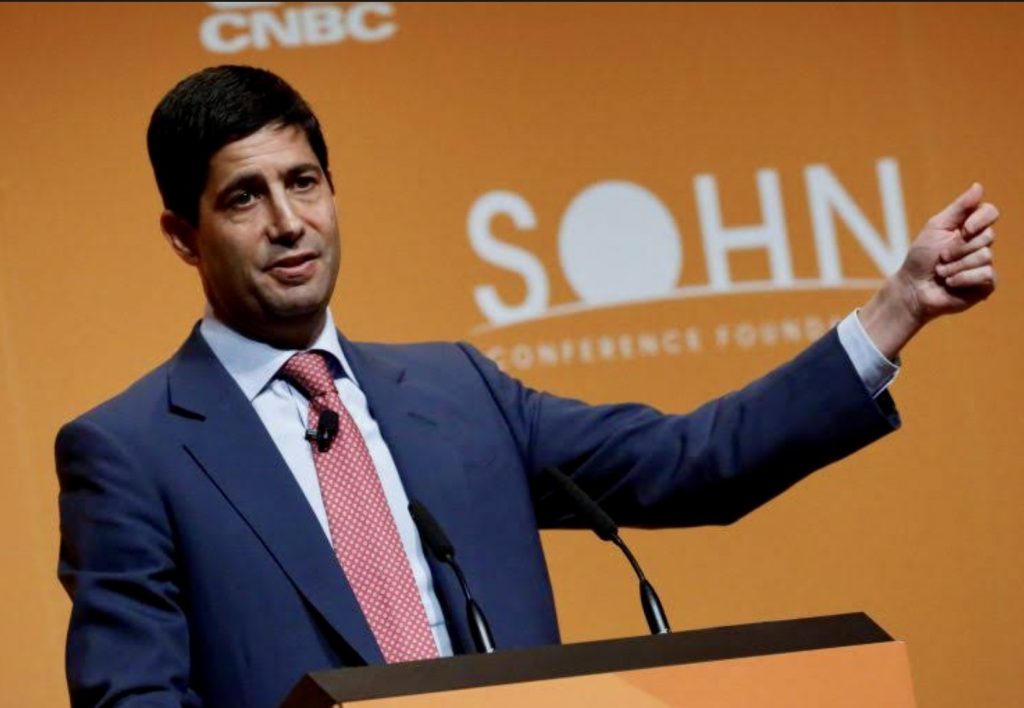
WASHINGTON (Realist English). The first Federal Reserve meeting under new Chairman Kevin Warsh concluded with the key interest rate unchanged, but a sharp shift toward tightening policy has occurred within the regulator.
Nearly half of Fed officials now support a rate hike by the end of 2026 — a dramatic change from March, when none of the policymakers had projected a hike in their forecasts.
Unanimous decision amid hidden divisions
The Federal Open Market Committee (FOMC) voted unanimously to keep the federal funds rate in the 3.5–3.75% range for the fourth consecutive meeting. This is the first unanimous decision in a year — the last time opposition within the committee was recorded was in June 2025.
However, the outward unanimity masks serious disagreements. The updated “dot plot” showed that nine of 18 officials expect at least one quarter‑point rate hike by the end of the year. Six of them support two or more hikes. Eight policymakers forecast rates to remain unchanged, and only one expects a cut.
This is a sharp reversal from March projections, when the committee as a whole had expected one cut in 2026. The median forecast for the rate at end‑2026 rose to 3.8% from 3.4% in March.
Warsh: ‘We will fix this’
In his first press conference as chairman, Kevin Warsh took an unexpectedly hawkish stance on inflation, despite having previously advocated for rate cuts.
“We have been missing (on inflation) for five years, and we will fix this,” Warsh said. “When we fulfil our commitment to price stability, the American people will feel that the hardships they have been through… are behind them.”
The Fed chair called inflation “a choice”: “I have been saying for years that inflation is a choice. Yes, indeed.” At the same time, he stressed that the committee is “unambiguous and unanimous” in its intention to ensure price stability.
Inflation — the main threat
The main reason for the hawkish shift was the rise in inflation triggered by the war with Iran and the ensuing spike in energy prices. Although a preliminary ceasefire agreement has been reached, the economic damage, in the Fed’s assessment, will be long‑term.
Updated officials’ forecasts reflect this concern:
- Inflation forecast (PCE) for end‑2026 raised to 3.6% from 2.7% in March
- Core inflation forecast (excluding food and energy) raised to 3.3% from 2.7%
- GDP growth forecast for 2026 lowered to 2.2% from 2.4%.
Inflation has exceeded the Fed’s 2% target for five years now.
A new era: abandoning ‘forward guidance’
Warsh began his tenure with a radical overhaul of the Fed’s communication strategy. The central bank abandoned the so‑called “forward guidance” — hints in statements about the future direction of rates.
The post‑meeting Fed statement was drastically shortened: instead of the usual 300+ words, just 130 words, without the traditional phrasing on intentions.
“I cannot give you any forward guidance on what we are going to do next. The good news is that we will meet again in six weeks,” Warsh said.
In addition, the new chairman declined to provide his own economic forecast for the dot plot — only 18 dots appeared on the chart instead of 19. Warsh had long criticised dot plots for potentially “locking” the Fed into a specific policy path and sending counterproductive signals to markets.
Five task forces for reform
Warsh announced the creation of five task forces to review key aspects of the Fed’s work:
- Communication strategy
- Balance sheet management
- Data sources
- Productivity and employment
- Inflation framework
The groups will include external experts and are to submit recommendations by the end of the year. “These topics are timely, relevant and, in my view, deserve a fresh look,” Warsh said.
At the same time, he ruled out a revision of the 2% inflation target: “I see no reason, until we have restored our commitment and ability to achieve 2% inflation, to revisit that.”
Market and Trump reaction
Markets reacted negatively to the Fed’s hawkish signal: stocks fell and bond yields rose. Traders after Warsh’s press conference fully priced in a rate hike by October.
President Donald Trump, who appointed Warsh and had previously exerted unprecedented pressure on the Fed to cut rates, reacted with restraint this time. Speaking at the G7 summit in France, Trump said: “That’s fine, whatever they do. Hard to believe. It just keeps the country in suspense.”
Trump had repeatedly attacked Warsh’s predecessor Jerome Powell for refusing to cut rates. But now he said: “We’ve got a very good guy in there now, so I’m guided by what he wants to do.”
Deutsche Bank chief economist Matthew Luzzetti commented: “The risk that they may have to raise rates has clearly increased, given what we got today.”