


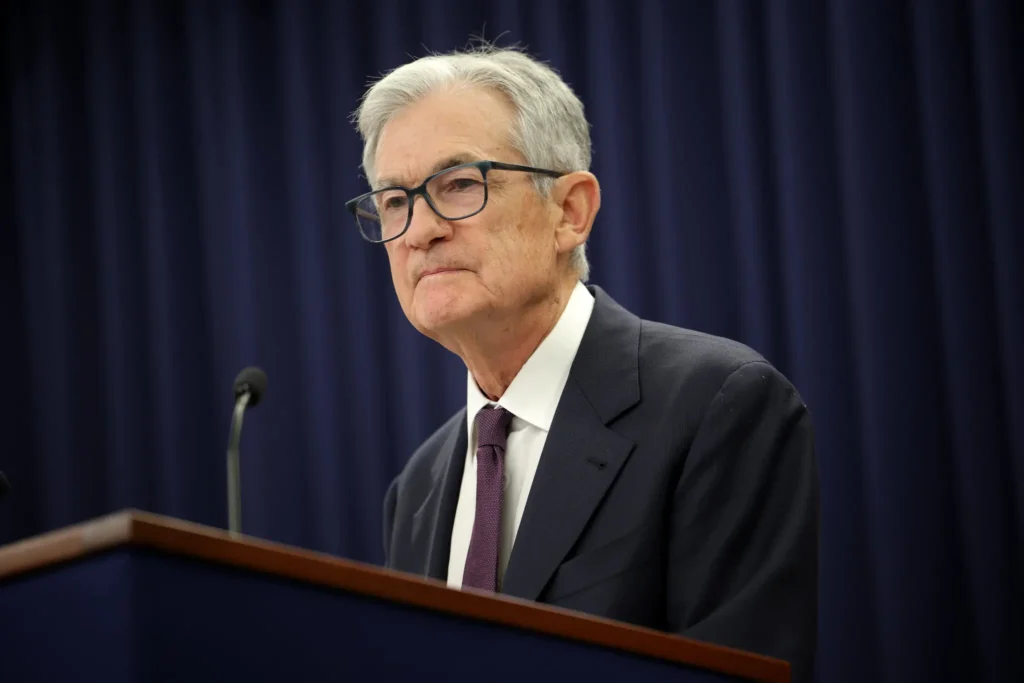
WASHINGTON (Realist English). The Federal Reserve on Wednesday halted its recent run of interest rate cuts, choosing to keep monetary policy steady as it reassessed economic conditions and faced intensifying scrutiny over its independence ahead of a leadership transition.
Meeting market expectations, the Federal Open Market Committee voted to hold the federal funds rate in a target range of 3.5% to 3.75%, ending a sequence of three consecutive quarter-point reductions that officials had described as precautionary steps to protect the labour market from a potential slowdown.
In its post-meeting statement, the central bank upgraded its view of economic growth and played down earlier concerns about labour market weakness relative to inflation. “Available indicators suggest that economic activity has been expanding at a solid pace,” the Fed said, noting that job gains remain modest and unemployment shows signs of stabilisation, while inflation “remains somewhat elevated.”
Significantly, the statement dropped language that had previously suggested labour market risks outweighed inflation risks, indicating that policymakers now see the Fed’s dual mandate of price stability and full employment as more evenly balanced. The shift reinforces expectations that rate cuts are likely on hold in the near term.
The Fed offered little forward guidance, repeating that future decisions would depend on incoming data, the evolving outlook and the balance of risks — wording markets have interpreted as a move away from the easing cycle that began in September 2025. Investors now expect no rate change before at least June.
Two governors dissented from the decision, with Stephen Miran and Christopher Waller favouring another quarter-point cut. The remaining ten voting members, including several newly rotated regional Fed presidents, supported the pause.
The decision comes at a sensitive moment for the central bank. Chair Jerome Powell is approaching the end of his term after a turbulent tenure marked by the pandemic, sharp economic swings and repeated confrontations with President Donald Trump over monetary policy and institutional independence.
Economically, the Fed faces a mixed picture. US growth remains strong, with gross domestic product expanding at a robust pace, while hiring has slowed but layoffs remain low. Inflation, however, continues to run above the Fed’s 2% target, and officials remain cautious, particularly as tariffs imposed by the Trump administration are expected to add short-term price pressures.
Financial markets reacted modestly to the decision, with Treasury yields edging higher and equities largely unchanged. Futures pricing suggests investors expect at most two rate cuts in 2026 and none in 2027, regardless of who succeeds Powell as Fed chair.