


TEHRAN (Realist English). Protests across Iran entered their third week on Sunday amid a markedly harsher crackdown by the authorities, including nighttime internet shutdowns and an escalation in the use of force by security services, according to activists and opposition-linked sources.
Demonstrations initially erupted on December 28, when merchants at Tehran’s Grand Bazaar closed their shops to protest deepening economic distress, including soaring prices and the sharp depreciation of the national currency. These actions followed earlier, more localized protests in cities such as Mashhad, where demonstrations were held during a memorial for human rights lawyer Khosro Alikordi, who was found dead earlier in December under circumstances that drew public anger and suspicion.
As the unrest has expanded geographically and in duration, reports from inside the country describe a significant rise in casualties over the past week, with security forces accused of firing into crowds in multiple cities. Independent verification of the death toll remains difficult due to restricted access, limited reporting and repeated disruptions to internet connectivity.
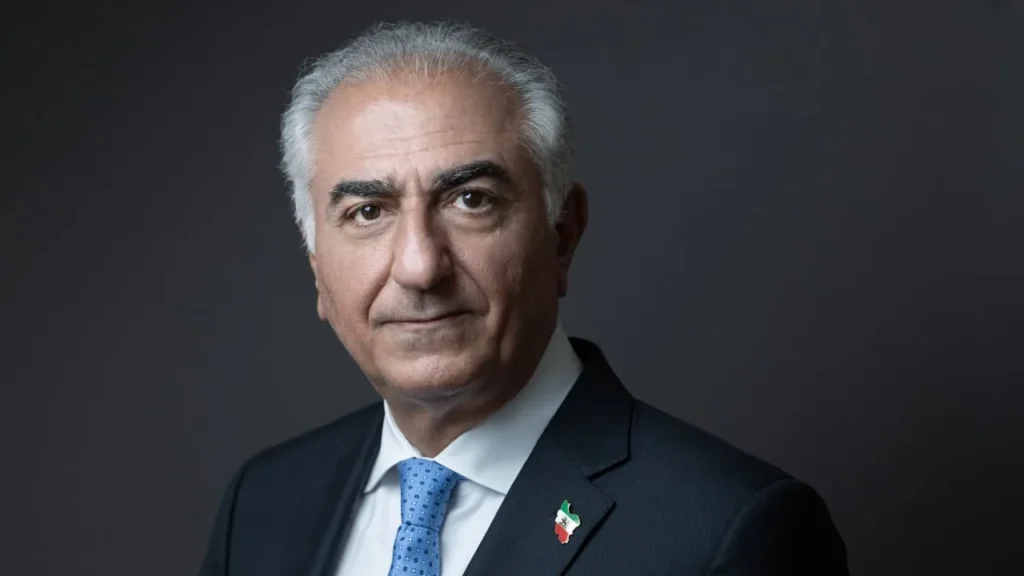
A notable feature distinguishing the current wave of protests from previous cycles is the emergence of more explicit attempts at centralized leadership. Over recent weeks, Reza Pahlavi has shifted from expressing moral support for demonstrators to issuing coordinated calls aimed at shaping the pace and direction of the movement.
Pahlavi has urged Iranians to sustain street protests at set times, followed by appeals for nationwide strikes, framing the unrest as a phased process rather than a spontaneous outburst. These calls reflect a political framework he has outlined over recent years, centered on national unity, civil resistance, economic pressure and preparation for a democratic transition.
Support for Pahlavi has become increasingly visible in parts of the country. Protesters in several cities have been heard chanting slogans invoking the former monarchy — a development not widely seen in Iran’s streets for decades — alongside broader anti-regime messages. Observers note that this symbolism suggests a search among some protesters for a unifying figure after years of leaderless movements.
In contrast to earlier protest waves in 2009, 2019 and 2022, when opposition appeals often outpaced public capacity to respond, Pahlavi’s recent messaging has emphasized sequencing and restraint. His guidance has included practical advice on protest tactics, such as remaining in large groups and avoiding isolated areas, reflecting an attempt to adapt to on-the-ground realities.
The most consequential signal came over the weekend, when Pahlavi declared his readiness to return to Iran after more than four decades in exile, saying he wanted to be present at what he described as a decisive moment for the country. The statement was widely circulated inside Iran and interpreted by supporters as an effort to address long-standing skepticism toward exile-based leadership.
Despite the growing momentum, significant uncertainties remain. Iran’s security apparatus retains substantial coercive capacity, and it is unclear how long large-scale protests and strikes can be sustained under mounting repression. Deep divisions also persist within the broader opposition over the country’s political future should the current system collapse.
What has changed over the past week, analysts note, is the role Pahlavi has assumed. Rather than remaining a distant commentator, he has positioned himself as an active political actor seeking to influence events as they unfold — a shift that may shape the trajectory of the protests in the weeks ahead.