


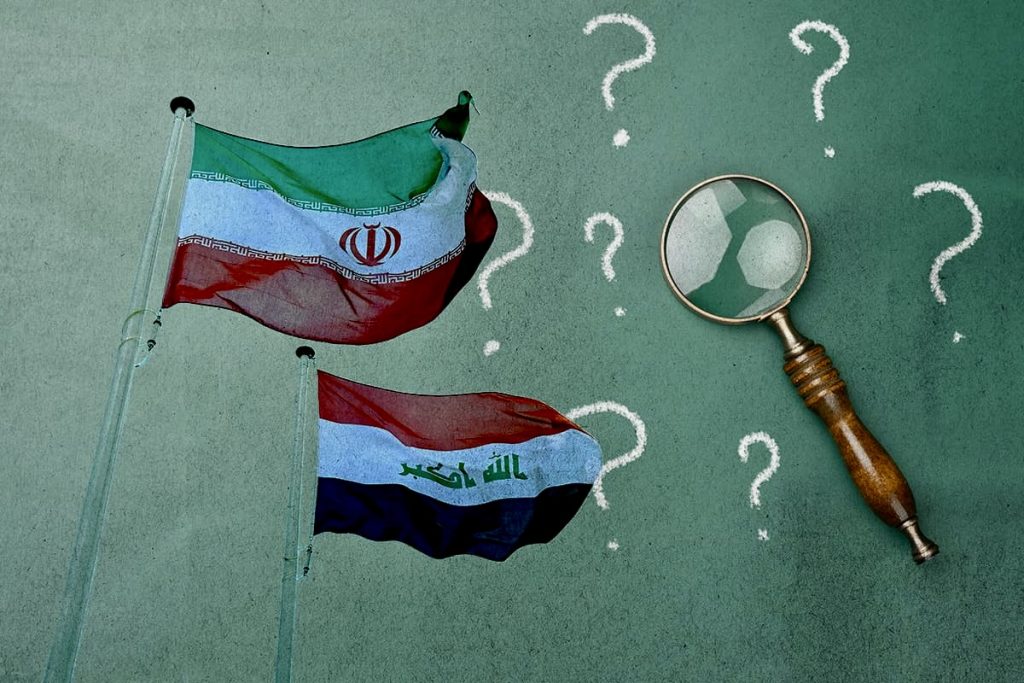
ERBIL (Realist English). Amid the escalating Middle East crisis, with Iran and the United States standing on the brink of full-scale war and the Strait of Hormuz effectively blockaded, Iraq’s importance as Tehran’s “window” to the Arab world has increased dramatically.
However, as Stanislav Ivanov, a leading researcher at IMEMO RAS, argues in his analysis, Baghdad has not become an Iranian satellite.
Instead, it has evolved into a complex arena where the interests of Iran, the United States, Turkey, and the Gulf monarchies intersect.
From War to Partnership
As is well known, Iraq and Iran have traveled a long road from the bloody Iran-Iraq War of 1980–1988 — triggered by territorial disputes and competition for regional leadership — to close regional cooperation. Following the overthrow of Saddam Hussein’s regime, Iraq became one of Iran’s principal political, trade, and economic partners in the region.
This development was facilitated by the rise to power in Baghdad of representatives of the Arab Shia majority (around 65% of Iraq’s population), some of whom had lived in exile in Iran during Saddam Hussein’s rule and maintained close ties with the Iranian leadership.
Economic Interdependence: $12 Billion and a Shared Border
Annual trade between Iran and Iraq currently exceeds $12 billion, and Baghdad and Tehran aim to increase it to $20 billion. Iran exports natural gas, electricity, agricultural goods, and food products to Iraq.
Their growing economic interdependence is reinforced by a shared border stretching 1,599 kilometers. Trade flows through eight border crossings. In addition to its embassy in Baghdad, Iran maintains consulates in Basra, Karbala, Erbil, and Sulaymaniyah.
Military Cooperation: Shia Militias Against IS
The occupation of large parts of Iraqi territory by the “Islamic State” (ISIS) between 2014 and 2017, and the threat of a jihadist advance on Baghdad, led Iraq and Iran to sign an agreement on July 23, 2017, aimed at strengthening military and military-technical cooperation.
The agreement emphasized the parties’ determination to combat terrorism and extremism in the region and provided for mutual logistical and other forms of support.
By that time, with Tehran’s direct involvement, the Shia militia force “Hashd al-Shaabi” had already been formed in Iraq, along with “Kata’ib Hezbollah.” Both groups were later integrated into the Iraqi armed forces. Officially, these formations were created to fight ISIS militants, but in practice they also participated in combat operations alongside Syrian government forces as part of the so-called “foreign Shia corps.” They were additionally used to maintain order in Iraq’s Sunni Arab provinces and in northern regions populated by Kurds.
Iraq as a Hostage of the Iranian-American Confrontation
During periods of heightened tensions between Iran, Israel, and the United States, rockets and drones were launched from positions held by these militias against US military bases in Syria, Jordan, and Iraq.
Such attacks intensified after October 7, 2023, and continued throughout 2024–2026 amid escalating regional instability. In response, US forces carried out strikes against the positions of pro-Iranian Shia militias in Iraq.
As a result, Iraq has effectively become a hostage to the confrontation between Iran on one side and Israel and the United States on the other.
Like other Gulf states, Iraq has sharply reduced oil exports due to the blockade of the Strait of Hormuz. The oil sector remains the backbone of Iraq’s economy, accounting for approximately 99.7% of foreign exchange earnings and more than 95% of state budget revenues.
Oil Alliance with Turkey: The “Development Road”
As of April–May 2026, Iraq has been actively restoring and utilizing the northern oil export route through Turkey and the port of Ceyhan as an alternative to the Strait of Hormuz.
Baghdad has increased daily oil shipments from the Kirkuk fields in the north and the Basra fields in the south (transported northward) to Ceyhan, with the goal of raising exports along this route to between 340,000 and 500,000 barrels per day.
In parallel with the oil and gas pipelines linking Iraq and Turkey, a 1,200-kilometer “Development Road” project is planned. The project would connect the Gulf states with Europe through Iraq’s and Turkey’s road and rail infrastructure. Companies from the UAE, Qatar, and India have been invited to participate as investors.
Fragile Equilibrium: Sunnis, Kurds, and Government Crises
When analyzing Iranian-Iraqi relations, it is essential to consider the instability within Iraq itself, where a fragile balance among the country’s main ethno-confessional groups is maintained only with great difficulty.
Arab Sunnis (20–25% of the population) and Kurds (12–15%) frequently oppose the central Shia-led government on key domestic and foreign policy issues. They view Iranian attempts to interfere in Iraq’s internal affairs, as well as Iraqi-Iranian defense and security cooperation, with considerable suspicion.
The creation of Shia armed formations is perceived by many Sunnis and Kurds as a direct threat to their security.
Traditionally, Iraq’s parliamentary speaker is drawn from the Sunni Arab community, the president is Kurdish, and the prime minister is a Shia Arab. This power-sharing system often results in prolonged political crises and difficulties in making major state decisions.
Division Within the Shia Camp: Sadrists vs. Pro-Iranian Forces
An important factor is that the Arab Shia political forces that came to power in Baghdad after 2003 are themselves far from unified.
While many remain closely aligned with Tehran, there are also influential Shia nationalist and patriotic groups advocating greater Iraqi independence and equal distance from both Iran and the United States. These forces are gaining broader support among the Shia population and Iraqi society as a whole.
It is no coincidence that the patriotic bloc led by Muqtada al-Sadr, the influential Shia cleric, won the parliamentary elections in October 2021.
Although pro-Iranian factions in parliament ultimately prevented him from forming a government, forcing him to withdraw his deputies from parliament and move into opposition amid political turmoil and mass protests in Baghdad, al-Sadr’s personal authority — and that of the Sadrist movement — remains extremely high.
At any moment, al-Sadr is capable of mobilizing hundreds of thousands of supporters in the streets.
Conclusion: Not a Bridgehead, but a Strategic Niche
Nevertheless, Tehran continues to view Iraq as a crucial element of its Middle East strategy, especially after the loss of Syria as a reliable regional pillar. Yet Iraq has not become an Iranian bridgehead or outpost in the Arab world.
The system of checks and balances established in multiethnic and multiconfessional Iraq after 2003 prevents any single regional power from dominating the country.
Iran occupies only one niche among Iraq’s many external partnerships, alongside Turkey, the Gulf monarchies, and other states.
At the same time, Iraq continues to maintain mutually beneficial relations with the United States, EU countries, India, and Russia.
Regarding the Iranian-Israeli and Iranian-American confrontations, the Iraqi authorities have adopted a formally neutral position. Baghdad seeks to preserve a balance in relations with all sides in order to avoid turning Iraqi territory into a battlefield.
The central government does not reject cooperation with Tehran, but simultaneously attempts to preserve its strategic partnership with Washington.
Iraqi Kurdistan, which functions as a quasi-state entity with broad autonomous powers, also maintains extensive cross-border trade and economic cooperation with Iran while preserving especially close ties with the United States in multiple sectors.
It is no coincidence that Washington has stationed two military bases near the capital of Iraqi Kurdistan, the city of Erbil.
Stanislav Ivanov — Leading Researcher at IMEMO RAS, Candidate of Historical Sciences.