


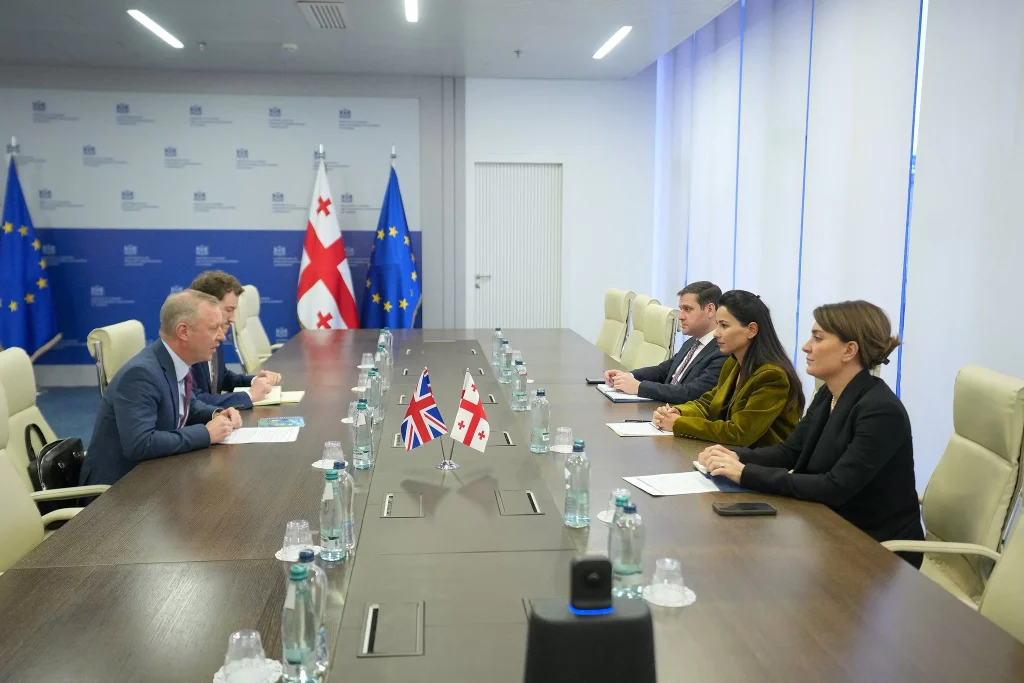
TBILISI (Realist English). Georgia and the United Kingdom have discussed compliance with international sanctions, including in maritime transport, amid growing concern in London over potential circumvention of restrictions through Georgian territory.
According to Georgia’s Ministry of Economy, the issue was raised during a meeting between Economy Minister Mariam Kvrivishvili and UK Ambassador Gareth Ward. Georgian officials said port procedures fully comply with national and international obligations and stressed that existing sanctions are being strictly enforced.
Kvrivishvili highlighted Georgia’s expanding role as a regional transit hub, pointing to increasing integration into global supply chains and infrastructure modernization. She also noted the growing presence of British investors in the country.
The UK embassy has not publicly commented on the outcome of the meeting.
The discussions come against the backdrop of heightened scrutiny by Western governments over sanctions evasion, particularly involving maritime oil shipments. In recent years, the UK has imposed sanctions on individuals and entities in Georgia it believes are linked to Russia or involved in the spread of disinformation.
In late 2025, British officials urged Tbilisi to strengthen controls against the import of Russian oil via so-called “shadow fleet” tankers. Around the same time, London expanded its sanctions list to include several Russian energy companies accounting for up to 10% of the country’s oil exports.
Attention has also focused on the Black Sea port of Kulevi, which has been linked in media reports to Russian oil shipments. The European Union considered including the port in its 20th sanctions package earlier this year but ultimately excluded it after Georgia pledged to block vessels associated with the shadow fleet.
Analytically, the dialogue reflects the tension between Georgia’s ambitions as a logistics hub and Western concerns over sanctions enforcement in increasingly complex global supply chains.
The key question is whether Georgia can maintain its transit growth while meeting stricter compliance expectations, or face increased scrutiny and potential restrictions from Western partners.