


BERLIN (Realist English). Germany and the United Kingdom have signed a joint procurement contract worth about $72 million (€61 million) to acquire modern, highly mobile artillery systems, marking another step in the deepening defence partnership between the two countries.
Under the agreement, Berlin and London will jointly purchase the RCH 155 artillery system — a wheeled, armoured platform capable of firing on the move and striking targets at distances of more than 70 kilometres. According to media reports on Sunday, the contract forms part of a broader push to intensify bilateral military cooperation.
The UK Ministry of Defence said the deal will initially deliver a demonstrator vehicle to the British Army, while two additional units will be supplied to Germany for testing and evaluation. The system is being developed by the Franco-German defence group KNDS in cooperation with Rheinmetall.
According to the manufacturers, the RCH 155 can fire up to eight rounds per minute, be operated by a two-person crew, and travel up to 700 kilometres without refuelling, combining long range with high mobility and rapid deployment.
Long-range strike cooperation
The artillery purchase follows a separate agreement reached in May, when Germany and the UK committed to jointly developing a long-range precision weapon. That project is intended to give both countries the ability to conduct so-called deep precision strikes, reaching targets far inside an adversary’s territory.
Beyond long-range weapons, Berlin and London have also agreed to expand cooperation in anti-submarine warfare under the Trinity House Agreement, a bilateral framework for closer military coordination.
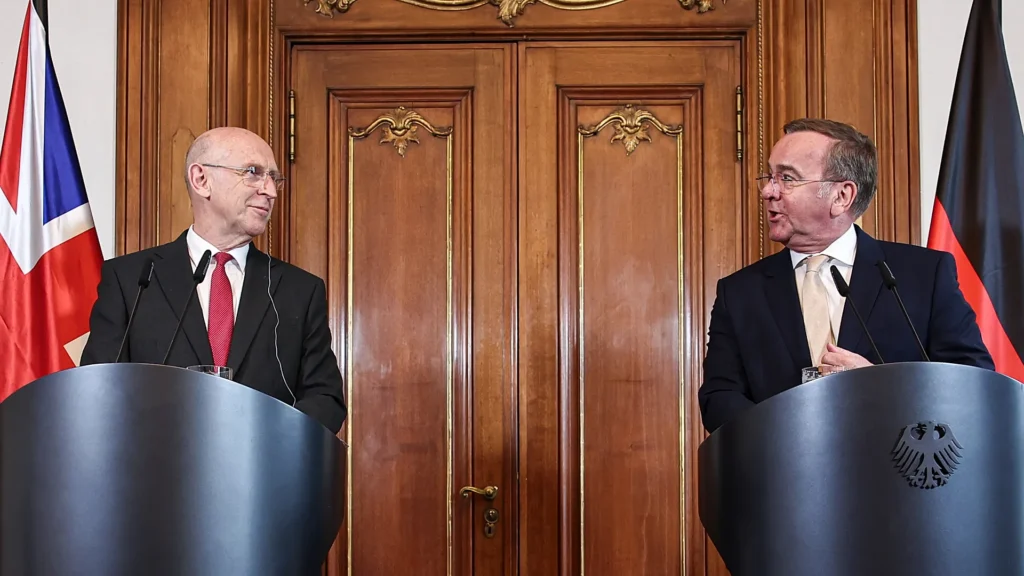
Speaking in Berlin alongside his British counterpart John Healey, German Defence Minister Boris Pistorius said the initiatives reflected the sharply changed security environment in Europe.
Healey described the defence relationship between the two countries as closer than ever, arguing that deeper cooperation would not only strengthen military capabilities but also support investment, industrial growth and job creation in both Germany and the UK.
The deal underscores a wider trend among European allies to pool resources, accelerate rearmament and build interoperable capabilities in response to growing security challenges on the continent.