


BERLIN (Realist English). The German government under Chancellor Friedrich Merz is preparing an unprecedented reversal in the country’s financial policy.
According to Financial Times forecasts, Berlin intends to borrow more than €800 billion by 2030 to finance a large-scale rearmament programme — a step that marks the end of decades of strict budgetary discipline, known as the “black zero.”
From the ‘Black Zero’ to a Debt-Fuelled Breakthrough
For decades, Germany made budgetary discipline its hallmark. Budgetary stability, spending restraint and distrust of public debt were the pillars of its influence in Europe. Yet the new programme reveals a shift of eras: national security is now placed above the balance sheet.
Finance Minister Lars Klingbeil drew a line under the debate with a phrase of high political tension: “Germany cannot defend itself against Vladimir Putin with a ‘black zero’.”
This statement encapsulates the essence of the turn: the policy of austerity, once presented as a guarantee of strength, is now perceived in Berlin as a strategic vulnerability.
Military spending will rise sharply:
| Year | Defence Budget |
| 2026 | ~€108 billion |
| 2027 | €109 billion |
| 2030 | €183.6 billion |
The share of military spending in GDP will rise to approximately 2.8% in 2026 and to 3.5% by 2029. This fundamentally alters the European political and economic balance.
Reform of the ‘Debt Brake’
At the heart of this historic turn is the reform of the constitutional “debt brake” (Schuldenbremse), in place since 2009. The Bundestag has already voted for amendments exempting defence spending above 1% of GDP from deficit limits.
According to estimates, this could free up to €400 billion in additional funds for military needs.
As the publication Negocios notes, “the most important thing is not how much Germany will borrow, but what taboo it has just broken.”
Why Does Germany Need Such a Turn?
Two factors have pushed Berlin towards this historic decision:
- Russia’s special military operation in Ukraine shattered the post-war belief that major land wars in Europe were a thing of the past. Germany, which as recently as 2023 spent only about 1.5% of GDP on defence, is now compelled to reconsider its priorities.
- Ambiguous signals from Washington under the Trump administration regarding the US’s willingness to guarantee the security of NATO allies accelerated the conclusion: Europe must become its own insurance policy. The possible US withdrawal from European security guarantees is a factor accelerating the decision.
As Cryptobriefing notes, “Europe simply decided that it was done with dependence on American security guarantees. The continent’s answer: borrow an almost inconceivable amount of money and start producing weapons.”
Ukraine — A Structural Priority
The plan also includes €11.6 billion in military aid to Ukraine for the coming year. This is not a one-off action: Kyiv is being cemented as a structural priority of the German budget, rather than exceptional military support.
Berlin proceeds from the assumption that the conflict with Russia is not conjunctural, and that European defence can no longer rely on diplomatic inertia or unlimited external guarantees.
Market Reaction and Geopolitical Consequences
Alongside the government’s decision, a reaction followed in the bond markets. German Bunds, long considered Europe’s safest paper, showed a sharp rise in yields after the announcement. This matters because Bund yields serve as a benchmark for pricing virtually all European debt instruments.
Structurally higher borrowing by Germany and the EU could exert sustained upward pressure on yields in euros. This will affect the euro exchange rate, European stock valuations and cross-border capital flows.
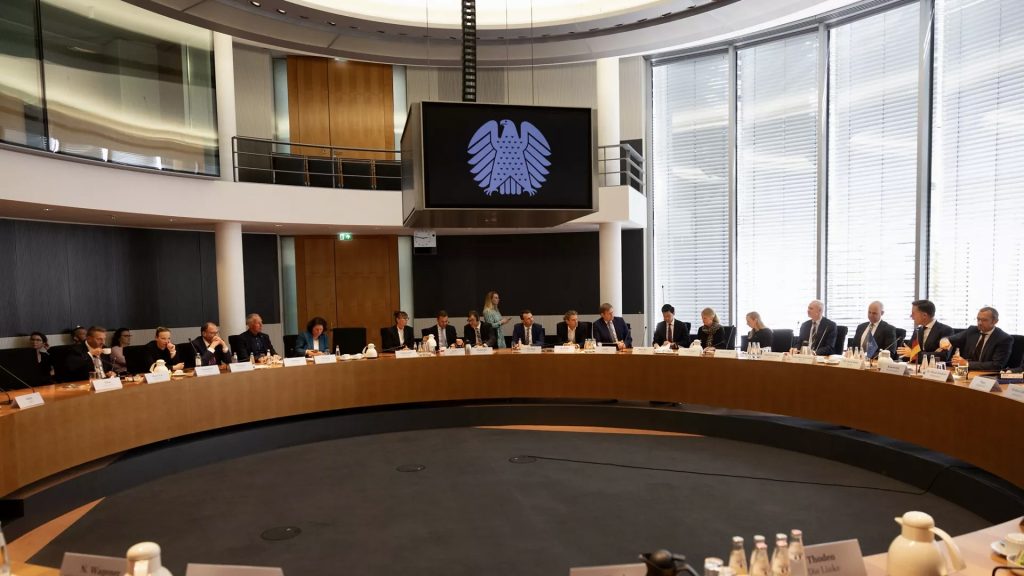
The plan also faces criticism domestically. The Left Party (Die Linke) has already come out against the rearmament.
Germany is making a historic turn, the likes of which the country has not seen since the Cold War.
The abandonment of the “black zero” in favour of debt-financed defence means not just a change in budgetary policy — it is an acknowledgment that the old Germany, which relied on American guarantees and shunned military responsibility, is becoming a thing of the past.
The question is how long European markets and partners will take to digest the consequences of this decision.