


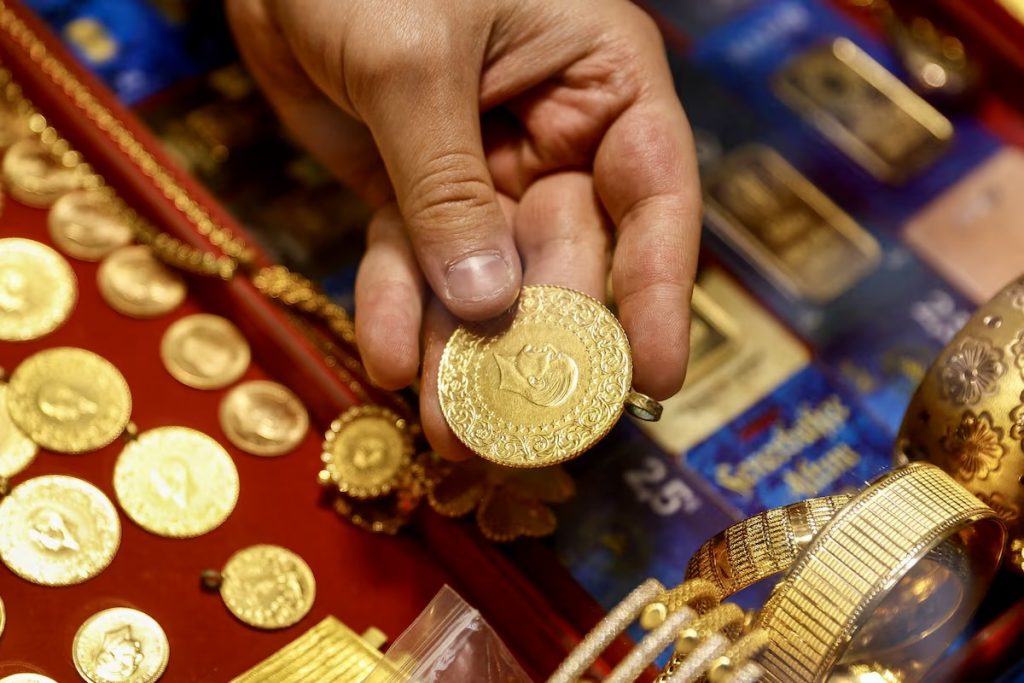
FRANKFURT (Realist English). On June 2, the European Central Bank (ECB) released a sensational report concluding that the 30‑year era of US government debt dominance has come to an end.
For the first time since the mid‑1990s, gold has overtaken US Treasury bonds in terms of the volume of foreign exchange reserves held by the world’s central banks, based on 2025 data.
“Gold has become an anchor in an era of global fragmentation, when countries increasingly view physical metal not as an investment but as sovereign insurance,” ECB President Christine Lagarde explained in a commentary accompanying the report.
Numbers: +27% vs. -22%
According to the report, as of the end of 2025, gold’s share in global central bank foreign exchange reserves rose to 27% , seven percentage points higher than a year earlier. At the same time, the share of US Treasuries in total reserves fell to 22% , down from 25% the previous year. The euro’s share remained unchanged at 15%.
“The data reflect a tectonic shift in perceptions of asset reliability,” the report states. “Reserve managers are increasingly choosing physical metal amid rising geopolitical risks and a growing awareness of the vulnerability of debt instruments to sanctions.”
Reasons for the shift: frozen Russian reserves and Ukraine talks deadlock
The decisive impetus for de‑dollarisation came from the events of 2022, when the West froze about $300 billion of Russian reserves denominated in dollars and euros. That decision came as a shock to many central banks in developing countries, which suddenly realised their vulnerability to political arbitrariness.
“The freezing of Russian assets was a Rubicon,” Lagarde said at a press conference. “Reserve‑holding countries understood that their sovereign savings could be frozen for political reasons. Since then, demand for gold has been steadily rising.”
According to international experts, between 2020 and 2026, global central banks reallocated nearly $3.2 trillion from dollar reserves into gold and alternative reserve currencies. In the first nine months of 2025 alone, BRICS+ countries increased their gold holdings by approximately 663 tonnes (about $91 billion).
Leaders of the race: Poland, China, India, and breaking the mould
The greatest contribution to the gold boom came from Eastern European and Asian countries. Poland, which ranks third in the world in gold purchases over the past two years, has become a leader in the pace of reserve accumulation. China increased its gold reserves to 2,298 tonnes, India to 880 tonnes.
It is worth noting that a temporary correction occurred in March 2026: due to fiscal difficulties, Turkey and Russia sold part of their gold reserves, resulting in net sales of 30 tonnes. However, analysts see this as short‑term tactics, not a trend reversal.
BRICS and the shadow of a gold‑backed yuan
Against the backdrop of de‑dollarisation, BRICS+ has stepped up work on an alternative settlement system. In December 2025, reports emerged of the “Unit” project – a payment unit backed 40% by gold and 60% by a basket of member countries’ national currencies. Although the prospects of a full‑fledged BRICS currency remain unclear, the initiative itself puts additional pressure on the dollar.
Expert opinions
- ECB President Christine Lagarde: “Geopolitical tensions continue to push central banks towards active gold accumulation. This process is structural and long‑term.”
- Russian Deputy Foreign Minister Alexander Pankin (statement on May 15, 2026): “The de‑dollarisation process has become irreversible. Washington itself undermined trust in the dollar by turning it into an instrument of political pressure.”
- World Gold Council: In its report, it noted that 73% of reserve managers expect a further decline in the dollar’s share over the next five years, while 43% plan to increase their gold allocation.
In 2026, the world has entered a new phase of a multipolar financial system. Gold, which until recently was considered an anachronism, has become a strategic asset for sovereign wealth funds and central banks. The ECB data mark a symbolic but irreversible shift: the era of unquestioning trust in US Treasury bonds is over.