


JERUSALEM (Realist English). Israeli blogger Alexander Lapshin has assessed the two-week ceasefire between the United States and Iran, calling it a tactical pause that allows Israel to focus on eliminating Hezbollah in Lebanon.
“So, Trump called off the ‘destruction of Iranian civilization’ for two weeks? Well and good,” Lapshin writes.
He notes that the agreement explicitly states that the ceasefire does not apply to Lebanese Hezbollah, which attacked Israel a month ago in support of Iran.
In the blogger‘s view, this means that now that the main (Iranian) theater of military operations has been paused for two weeks, Israel will throw all its resources into destroying Hezbollah in Lebanon.
“Those 250–300 aircraft that bombed Iran daily and spent only a very small resource on Lebanon will now fall entirely on Lebanon and Hezbollah,” Lapshin asserts. He also notes that the Lebanese government itself opposes Hezbollah, has declared Iran’s ambassador persona non grata, and the Lebanese army has been withdrawn from the border with Israel to allow the Israelis to destroy the group.
Why did Iran agree to the ceasefire?
Lapshin believes Tehran agreed to suspend hostilities and open the Strait of Hormuz not out of love for Trump, but after assessing the scale of destruction and the near-paralysis of its own economy.
“During these two weeks, the Americans will transfer new forces and ammunition to the region, but Iran will hardly be able to radically improve its position. They will need many years to rebuild destroyed plants and factories, oil facilities and military bases,” the blogger writes.
Lapshin considers the fact that Tehran did not insist on including Hezbollah in the temporary ceasefire agreement as key evidence of Iran‘s depleted resources.
“This is further proof that the ayatollahs no longer have the military or economic resources to defend their most important proxy in Lebanon,” he asserts.
Cleansing of southern Lebanon of Shiites
Lapshin also describes the situation in southern Lebanon, where, he says, a purge is underway not only of Hezbollah but of Shiite Muslims in general. He recalls that over 70% of southern Lebanon’s population are Shiites close to Iran, while the rest are Christians and Druze who “hate Shiites and Iran.”
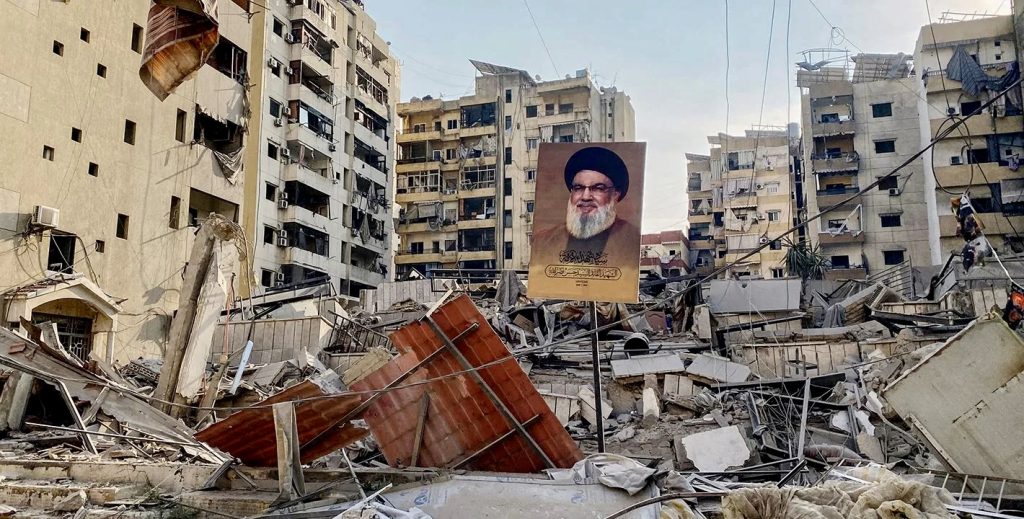
“Virtually the entire Shiite population has de facto fled toward Beirut — there are already more than a million refugees. But Christians and Druze were allowed to stay. Shiite villages have emptied, and those adjacent to the border with Israel from which shelling of Israeli territory was previously carried out are simply being bulldozed. That is, the Shiite refugees have nowhere to return,” the blogger writes.
According to him, Hezbollah relies precisely on Shiites, since Christians, Druze, and Sunnis are not its allies. Moreover, Christians are now actively expelling Shiite Muslims from their towns and villages so that their presence does not provoke Israeli strikes.
“Shiite families are shocked that no one wants them and their Christian and Druze neighbors do not want to take them in,” Lapshin claims.
Summing up, the blogger states: “Everyone in Lebanon is tired of Hezbollah, because by starting wars against Israel regularly on Tehran‘s orders, they lead to Lebanon’s destruction.”
Hezbollah not included in the ceasefire.
The office of Israeli Prime Minister Benjamin Netanyahu officially stated that the two-week ceasefire between the US and Iran does not apply to Lebanon, where the IDF is conducting a military operation against the Shiite organization Hezbollah. Netanyahu stressed that Israel supports Trump‘s decision on condition that Iran immediately opens the straits, but the war in Lebanon will continue.
Largest strike on Lebanon
On the morning of April 8, the IDF announced the largest series of strikes on Hezbollah targets in Lebanon since the start of the war. Within 10 minutes, more than 100 command centers and military facilities in Beirut, the Bekaa Valley and southern Lebanon were attacked, including intelligence centers, command centers, naval forces and facilities of the elite Radwan unit. The IDF said this was the largest strike since the start of Operation “Roaring Lion.” Hundreds of casualties are reported. The IDF intends to create a buffer zone in southern Lebanon.
Pakistani prime minister says otherwise
Pakistani Prime Minister Shehbaz Sharif, announcing the ceasefire, stressed that it applies “everywhere, including Lebanon.” Thus, a direct contradiction emerged between Israel’s and Pakistan’s interpretations of the agreement’s terms.
Iran accuses Israel of violating the ceasefire
Iranian Foreign Minister Abbas Araghchi discussed Israel’s violation of the ceasefire regime both in Iran and Lebanon in a phone call with the commander of Pakistan’s armed forces. Iranian media reported that passage through the Strait of Hormuz was suspended due to Israeli attacks on Lebanon, and Tehran threatens to withdraw from the ceasefire if the strikes continue.
Continued strikes on Iran
Despite the announced ceasefire, the Israeli Air Force continued to strike Iran, and the army recorded two missile launches from the Iranian side after the supposed start of the ceasefire. At the same time, the IDF later reported that, in accordance with instructions from political leadership, fire against Iran is being paused, but attacks on Hezbollah in Lebanon will continue.
New Iranian missile attack on Israel
Iran launched a fourth missile attack on Israel. Sirens sounded in the south of the country, and two teenagers were lightly wounded. The attack occurred about two hours after Trump’s ceasefire announcement.
EU reaction
The European Union called on Israel to halt its operation in Lebanon, stating the need to respect Lebanon’s sovereignty and territorial integrity and expressing full support for the UNIFIL peacekeeping mission. France also called for extending the ceasefire to Lebanon.