


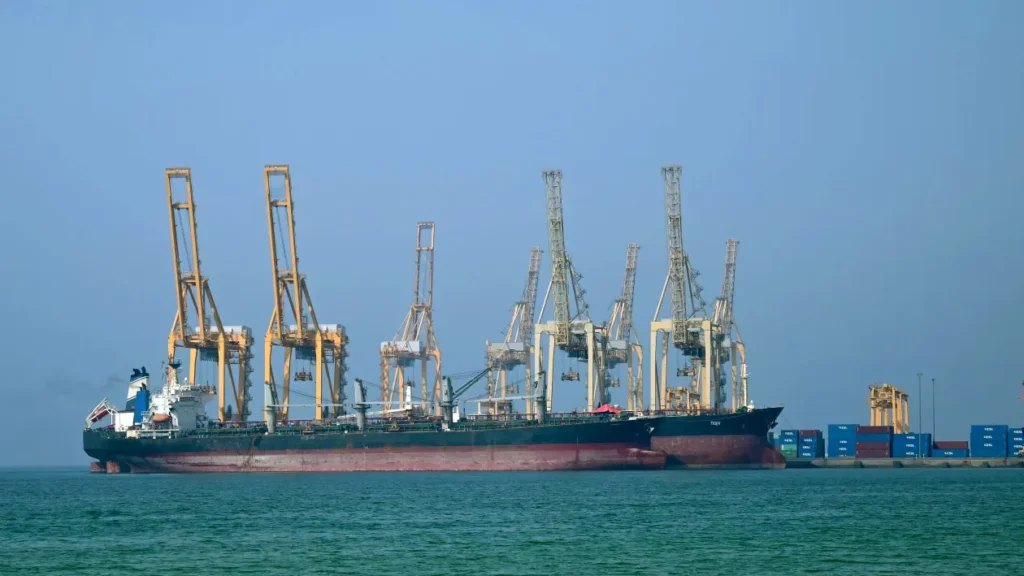
WASHINGTON (Realist English). The Strait of Hormuz has returned to the centre of global energy concerns as the prospect of a US intervention in Iran raises the risk of Tehran disrupting one of the world’s most critical oil transit routes.
US President Donald Trump is considering a range of options against Iran, according to multiple media reports on Sunday, as Iranian authorities intensify their crackdown on domestic protests.
Energy analysts warn that a military confrontation could prompt Iran to threaten or attempt to disrupt traffic through the Strait of Hormuz — a narrow waterway linking the Persian Gulf and the Arabian Sea that carries nearly a third of global seaborne crude oil.
“A disruption through the Strait of Hormuz could cause a global oil and gas crisis,” said Saul Kavonic, head of energy research at MST Marquee, citing what he described as the “desperate and ill-advised lengths” Iran’s leadership could consider if it felt cornered.
Around 13 mn barrels per day of crude oil transited the strait in 2025 — about 31% of global seaborne crude flows — according to data from Kpler. Similar concerns surfaced during heightened tensions between Washington and Tehran in June last year.
Because Iran’s production and exports far exceed those of Venezuela, any disruption would have broader global repercussions, said Muyu Xu, warning that Chinese refiners could be forced to seek alternative supplies.
Unlike Venezuela, military action involving Iran carries “materially higher risks” due to the scale of crude and refined product flows through the region, said Bob McNally, president of Rapidan Energy Group, who estimates a 70% likelihood of limited US strikes.
In a worst-case scenario — involving damaged infrastructure or blocked tanker traffic — oil prices could surge by double digits, analysts said. Andy Lipow, president of Lipow Oil Associates, said fears alone could lift prices modestly, but a full closure could drive a $10–$20 per barrel spike.
Kavonic expects an immediate price jump following any US strike on Iran, though he said prices would ease quickly if markets believed disruptions were temporary. Brent crude was last trading near $63 a barrel, with US West Texas Intermediate around $59.
Most analysts stress that catastrophic outcomes remain low-probability. Xu noted that while Iran can threaten to close the strait, it may lack the capability to sustain a full shutdown given US naval patrols and the complex regional balance of power.
Even a temporary disruption — such as tanker harassment — would have limited physical impact, particularly as the oil market is currently oversupplied. Kpler estimates excess supply of about 2.5 mn barrels per day in January, rising above 3 mn barrels per day in February and March.
Any prolonged disruption would also likely prompt a swift military response by the US and its allies to restore shipping, analysts said.
Experts cautioned against direct comparisons with Venezuela, where the Trump administration relied primarily on sanctions and enforcement actions before capturing President Nicolas Maduro. Applying a similar strategy to Iran would be far more complex due to geography and Middle Eastern geopolitics, Xu said, adding that Trump’s current priority appears to be consolidating US influence in the Western Hemisphere.
Lipow echoed that assessment, arguing that a Venezuela-style approach toward Iran would more likely involve sanctions and pressure rather than direct military occupation or strikes on energy infrastructure.