


PARIS (Realist English). The 32 member states of the International Energy Agency (IEA) have agreed to release 400 million barrels of oil from strategic emergency reserves in an effort to stabilize global markets disrupted by the war in the Middle East.
The decision followed an extraordinary meeting of IEA member governments convened by Executive Director Fatih Birol, who called the session to assess the impact of the conflict on global oil supply and consider emergency measures to address market disruptions.
“The oil market challenges we are facing are unprecedented in scale,” Birol said in a statement. “That is why IEA member countries have agreed on a collective emergency action of unprecedented magnitude. Oil markets are global, and major disruptions require a global response.”
The oil will be released gradually, with each member country determining the timing and scale of the drawdown according to its national circumstances. Some governments are also expected to introduce additional emergency measures to support the market.
IEA members collectively hold more than 1.2 billion barrels in strategic reserves, while an additional 600 million barrels are stored by industry under government obligations. The coordinated release marks the sixth such intervention in the agency’s history since its creation in 1974.
Previous emergency releases took place in 1991 during the Gulf War, in 2005 after Hurricane Katrina, in 2011 during the Libya crisis, and twice in 2022 following the disruption of energy markets after the outbreak of war in Ukraine.
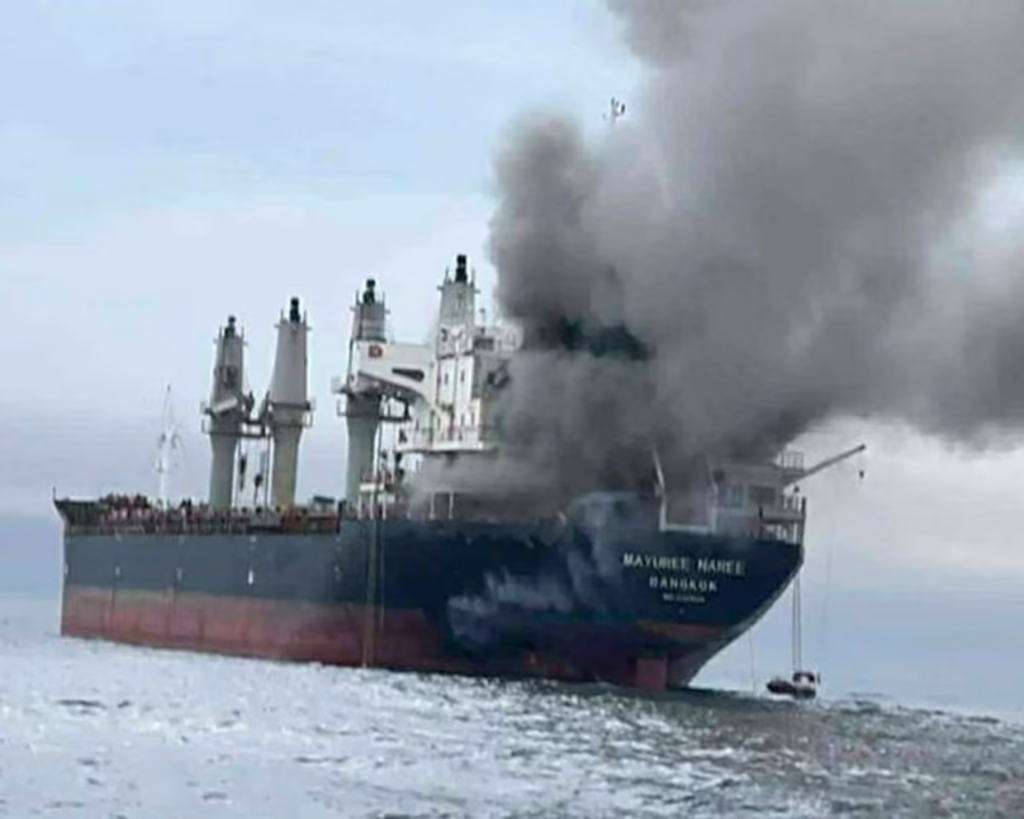
The latest move comes as the conflict in the Middle East, which began on February 28, 2026, has severely disrupted oil shipments through the Strait of Hormuz — one of the world’s most critical energy chokepoints.
According to the IEA, oil exports through the strait have fallen to less than 10% of pre-conflict levels, forcing many producers in the region to reduce or halt production.
In 2025, about 20 million barrels of crude oil and refined petroleum products per day passed through the Strait of Hormuz, accounting for roughly a quarter of global seaborne oil trade. Alternative export routes remain limited.
The IEA said its secretariat will provide additional details on the implementation of the coordinated release in the coming weeks and will continue to monitor global oil and gas markets while advising member governments on further measures if necessary.