


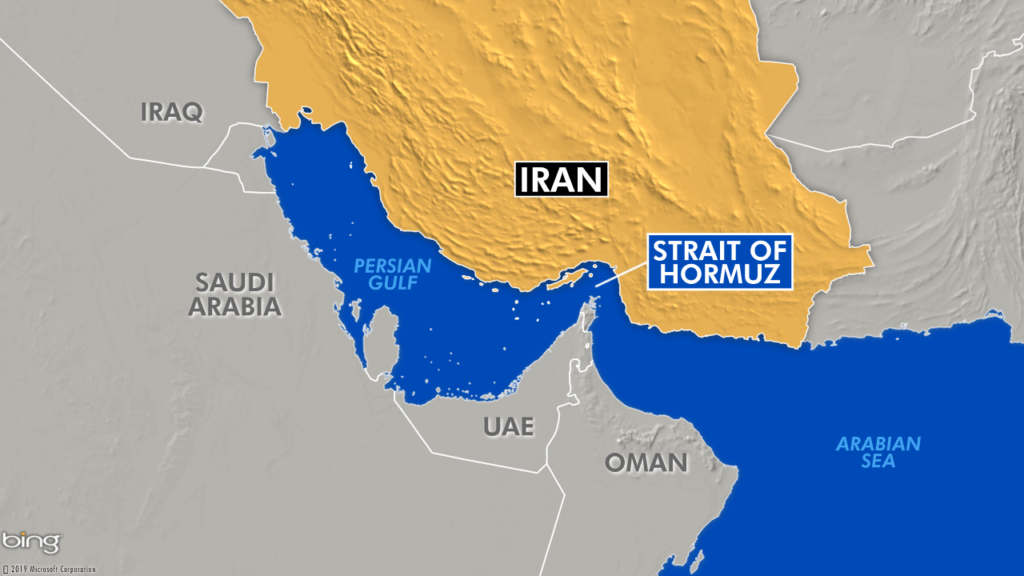
PARIS (Realist English). The International Energy Agency (IEA) has warned that the war in the Middle East is causing severe disruptions to global energy markets, after oil and gas shipments through the Strait of Hormuz dropped dramatically following the outbreak of hostilities.
According to the agency, the conflict that began on February 28 has reduced the flow of crude oil and refined petroleum products through the strategic waterway to less than 10% of pre-war levels. The disruption has forced producers across the Gulf region to shut down or scale back significant volumes of production.
Global supplies of liquefied natural gas (LNG) have also been affected, with the IEA estimating that available volumes on the international market have fallen by roughly 20%.
In response to the growing supply shock, the 32 member states of the IEA agreed on March 11 to release 400 million barrels of oil from emergency reserves — the largest coordinated stock release in the organization’s history.
Energy prices have surged since the conflict began. Between February 28 and March 10, Brent crude futures rose by about 20%, while the Dutch TTF benchmark for European natural gas climbed roughly 50%. Markets for refined products, particularly diesel and jet fuel, have also tightened, with the impact spreading across global supply chains.
As storage facilities in the region reach capacity, major Gulf producers — including Iraq, Kuwait, Qatar, Saudi Arabia and the United Arab Emirates — have begun cutting output. Analysts warn that deeper production reductions could follow if export routes remain blocked.
Liquefied natural gas supplies have been further constrained by disruptions at Qatar’s Ras Laffan complex, the world’s largest LNG export facility. Production at the site was halted after an attack on March 2. In 2025, Ras Laffan produced 112 billion cubic meters of LNG along with significant volumes of liquefied petroleum gas and condensate.
The Gulf region is also a major supplier of refined petroleum products, particularly middle distillates such as diesel and jet fuel. Global markets for these fuels were already tight before the conflict, leaving little spare refining capacity elsewhere to compensate for sustained supply losses.
The Middle East additionally plays a critical role in supplying other energy-related commodities, including liquefied petroleum gas and petrochemical feedstocks. Several refineries and downstream processing facilities producing these materials have also been affected by the fighting.
The IEA said its emergency stock release is part of its core mandate to protect global energy security. Since its creation in 1974 after the oil crisis of the early 1970s, the agency has coordinated international responses to major supply disruptions by mobilizing strategic reserves.
Under IEA rules, each of the agency’s 32 members must maintain emergency oil reserves equivalent to at least 90 days of net imports. Collectively, members hold more than 1.2 billion barrels of government-controlled reserves, in addition to roughly 600 million barrels stored by industry under government mandate.
The March 11 decision marks the sixth coordinated release of emergency stocks in the IEA’s history. Previous interventions occurred during the Gulf War in 1991, after Hurricane Katrina in 2005, during the Libya crisis in 2011, and twice in 2022 following the disruption of global energy markets after Russia’s invasion of Ukraine.
The crisis has also highlighted the strategic importance of the Strait of Hormuz — the narrow maritime passage between Iran and the Arabian Peninsula that connects the Persian Gulf to the Gulf of Oman and the Arabian Sea.
Roughly 20 million barrels per day of crude oil and petroleum products passed through the strait in 2025, accounting for about a quarter of global seaborne oil trade. Around 80% of these shipments were destined for Asian markets.
More than 110 billion cubic meters of LNG also transited the strait last year, including the vast majority of exports from Qatar and the United Arab Emirates. Together, these shipments represent nearly one-fifth of global LNG trade, and there are currently no alternative routes capable of handling similar volumes.
Beyond energy, the disruption is also affecting global trade in key industrial and agricultural commodities. Over 30% of the world’s traded urea and roughly one-fifth of ammonia and phosphate shipments pass through the Strait of Hormuz, raising concerns about potential impacts on fertilizer supply and food prices.
The region is also a significant producer of aluminum, supplying about 8% of global output. Approximately five million tonnes of the metal are shipped annually through the strait from smelters in Bahrain, Qatar, Saudi Arabia and the United Arab Emirates.
In addition, about half of global seaborne sulfur trade — used in fertilizer production, chemical manufacturing and metal refining — also depends on the same maritime corridor.
The IEA said it will continue to monitor developments in energy markets and coordinate with governments worldwide to assess potential risks to global energy security.