


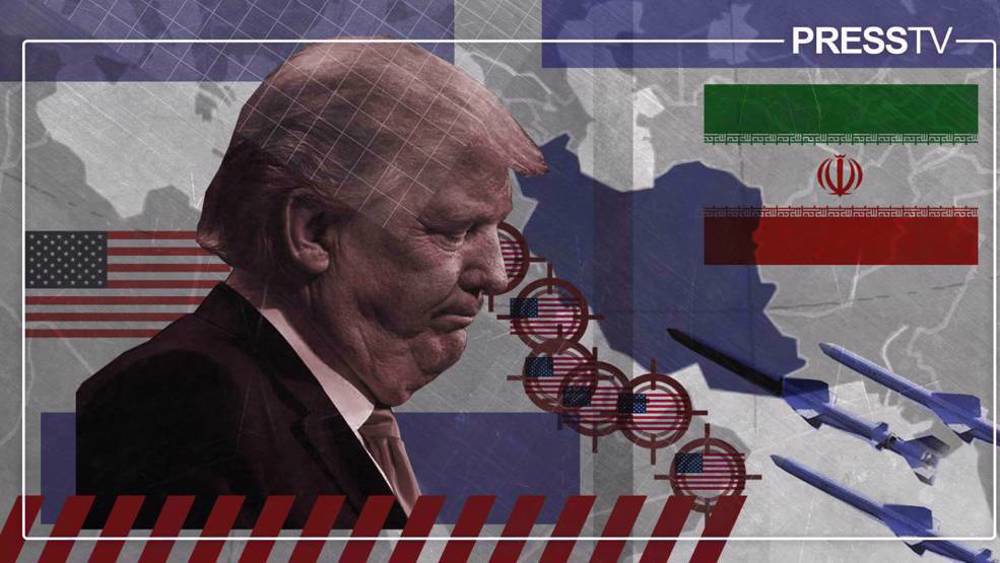
TEHRAN (Realist English). Iran has declared a “historic and crushing defeat” of the United States and Israel after 40 days of war, publishing a detailed 10-point plan that it claims Washington has accepted as the basis for ending the conflict.
In a statement, the Supreme National Security Council said the United States now sees “no way forward but to submit” to Iran’s conditions, presenting the outcome as a decisive military and political victory.
According to Tehran, the U.S. has agreed to the following ten points:
— no new military aggression against Iran
— continued Iranian control over the Strait of Hormuz
— formal acceptance of Iran’s right to nuclear enrichment
— removal of all primary U.S. sanctions
— removal of all secondary sanctions targeting third parties
— termination of all United Nations Security Council resolutions against Iran
— termination of all resolutions by the IAEA Board of Governors
— payment of financial compensation to Iran for war damages
— full withdrawal of U.S. combat forces from the region
— cessation of hostilities on all fronts, including against Iran-aligned forces in Lebanon
The announcement sharply contrasts with statements by U.S. President Donald Trump, who said Washington had agreed only to a temporary, two-week suspension of strikes, conditional on Iran reopening the Strait of Hormuz.
Trump described the arrangement as a “double-sided ceasefire,” without confirming acceptance of broader Iranian conditions.
Iranian Foreign Minister Abbas Araghchi said negotiations with the United States are expected to begin in Islamabad, with a two-week window to finalize terms. Iranian officials emphasized that the talks are viewed as a continuation of the conflict “on the political level,” rather than a concession.
The war, which began on February 28, has triggered a major regional crisis, disrupted global oil supplies and led to thousands of casualties. The Strait of Hormuz — through which roughly one-fifth of global oil flows — remains the central leverage point in negotiations.
International reaction remains mixed. Religious and political figures, including Pope Leo XIV, have criticized escalating rhetoric during the conflict, while analysts point to a widening gap between the narratives presented by Tehran and Washington.
This divergence underscores the uncertainty surrounding the next phase: whether the ceasefire will translate into a durable agreement, or whether incompatible expectations will push both sides back toward escalation.