


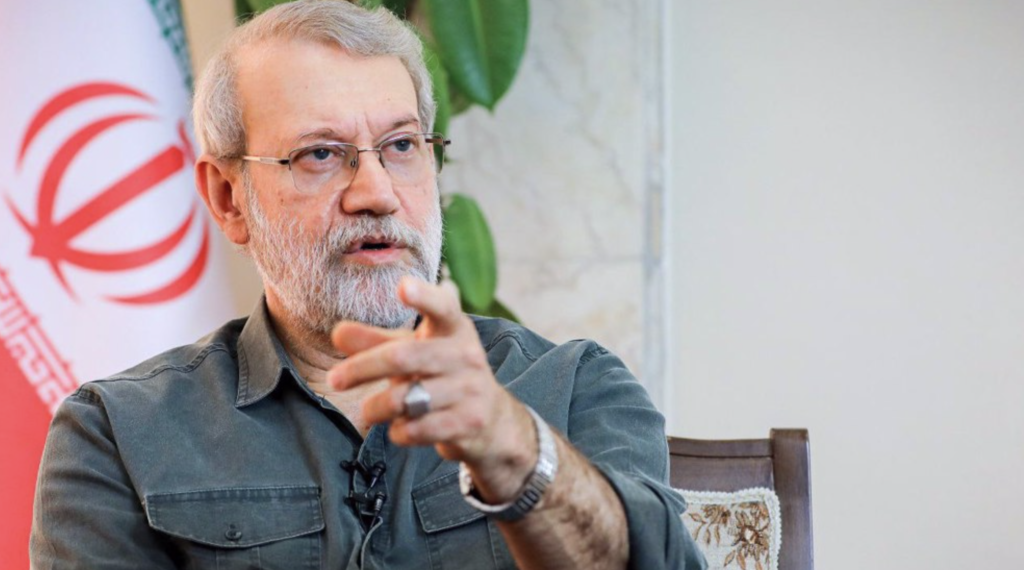
TEHRAN (Realist English). Iran’s top security official Ali Larijani has warned that the armed forces of European Union member states that supported the blacklisting of the Islamic Revolutionary Guard Corps (IRGC) will be designated as “terrorist organisations” under Iranian law.
In a statement posted on X on Friday, Larijani, who serves as secretary of Iran’s Supreme National Security Council, said the EU was fully aware of the legal consequences of its decision. He cited legislation adopted by Iran’s parliament that mandates reciprocal measures against countries taking hostile actions against the IRGC.
“The European Union is certainly aware that, under a law adopted by Iran’s Islamic Consultative Assembly, the armed forces of countries that took part in the EU’s recent measure against the Islamic Revolutionary Guards Corps are considered terrorist organisations,” Larijani wrote. “Therefore, the consequences will fall on the European countries that undertook such an action.”
Larijani was referring to Article VII of a law passed in April 2019, following the United States’ designation of the IRGC as a terrorist organisation. The article stipulates that any country supporting or implementing similar measures is subject to reciprocal action by Iran.
The warning follows the EU’s recent decision to place the Islamic Revolutionary Guard Corps on its terrorism list. Tehran has condemned the move as politically motivated and illegal, with the Iranian Foreign Ministry accusing Brussels of acting outside international law.
Iranian officials say the EU decision was taken in response to Tehran’s handling of unrest earlier this year, when sporadic protests over economic grievances escalated into violent riots. Iranian authorities claim that armed groups hijacked the demonstrations, attacking mosques, public transport, medical facilities and government buildings.
Tehran has also accused US and Israeli intelligence services of backing the unrest by providing funding, training and media support to violent groups — allegations rejected by Washington and Tel Aviv.
The latest exchange adds to mounting tensions between Iran and the EU, raising the prospect of further diplomatic and legal escalation as Tehran signals it is prepared to apply its domestic legislation in response to what it views as hostile foreign actions.