


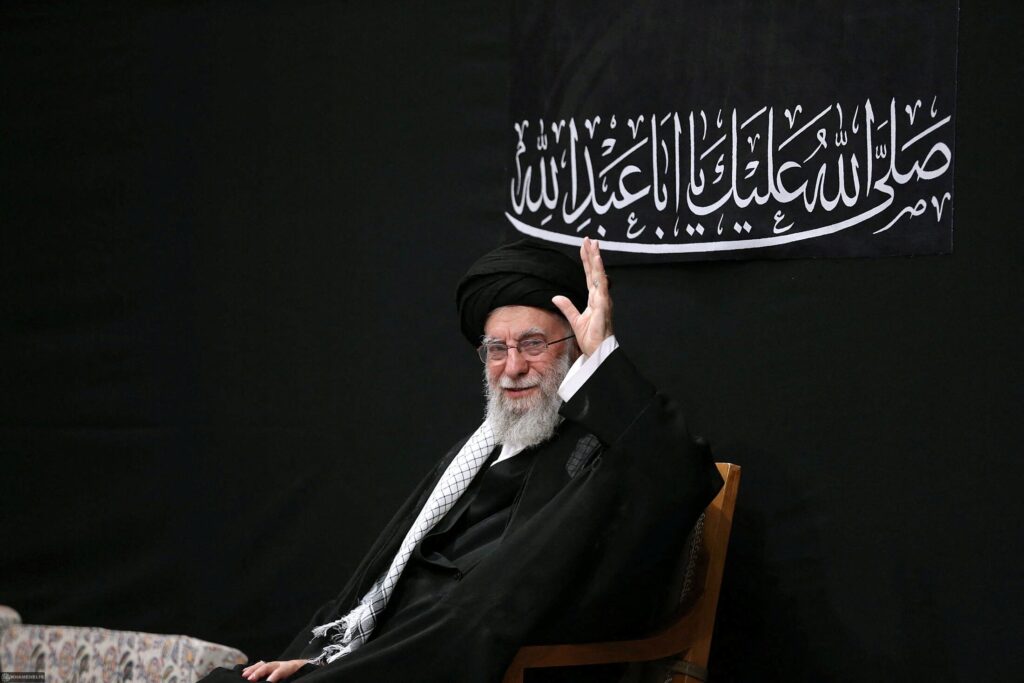
TEHRAN (Realist English). Iran’s Supreme Leader Ali Khamenei was killed in an Israeli strike on Saturday as part of a large-scale joint military operation involving the United States and Israel, Iranian state media confirmed.
The Iranian government announced 40 days of national mourning following what it described as the “martyrdom” of the 86-year-old cleric, who had ruled the Islamic Republic for more than three decades.
US President Donald Trump welcomed the development, calling Khamenei “one of the most evil people in history” in a post on Truth Social and describing his death as “justice” for Americans and others killed in attacks attributed to Iran over the years. Trump indicated that US intelligence had played a role in locating and tracking Khamenei, saying he was unable to evade “highly sophisticated tracking systems.” He also warned that military operations would continue “as long as necessary” to secure what he called peace in the Middle East.
According to Israeli officials, the opening wave of strikes targeted dozens of senior political and military figures, severely disrupting Iran’s command structure. Those reported killed include top security adviser Ali Shamkhani, Islamic Revolutionary Guard Corps commander Mohammad Pakpour, Defense Minister Aziz Nasirzadeh, senior military aide Mohammad Shirazi, military intelligence chief Saleh Asadi, and senior figures linked to Iran’s nuclear research establishment.
Khamenei’s death represents a profound shock to the Iranian political system. Under Iran’s constitution, an interim leadership council is to assume authority while the Assembly of Experts — an 88-member clerical body — selects a new supreme leader. However, with much of the senior leadership reportedly eliminated, the succession process may be complicated.
One prominent figure said to have survived is Ali Larijani, secretary of Iran’s Supreme National Security Council and a long-time political insider. In a message on social media, he vowed that Iran would deliver an “unforgettable lesson” to Israel and the United States.
It remains unclear whether the Islamic Revolutionary Guard Corps will attempt to consolidate power directly or whether the strikes could create the political opening that Israeli Prime Minister Benjamin Netanyahu and President Trump have suggested might emerge.
Reports indicate that Khamenei’s sons were also targeted, though intelligence assessments suggest they survived. Mojtaba Khamenei, widely seen as a potential successor, had long been viewed as a leading candidate to inherit his father’s position.
Khamenei came to power in 1989 after the death of Ayatollah Ruhollah Khomeini and gradually consolidated authority over Iran’s judiciary, armed forces, intelligence services and state media. During his tenure, the regime forcefully suppressed protests and dissent, including recent nationwide demonstrations.
In a video address overnight, Trump urged Iranians to remain indoors during ongoing strikes but called on them to “take over your government” once operations conclude. Exiled opposition figure Reza Pahlavi also appealed to Iranian security forces to side with the public, warning that those who remained loyal to the regime risked “sinking with Khamenei’s ship.”
The developments mark a historic turning point for Iran and the wider region, with the balance of power inside the country now uncertain.