


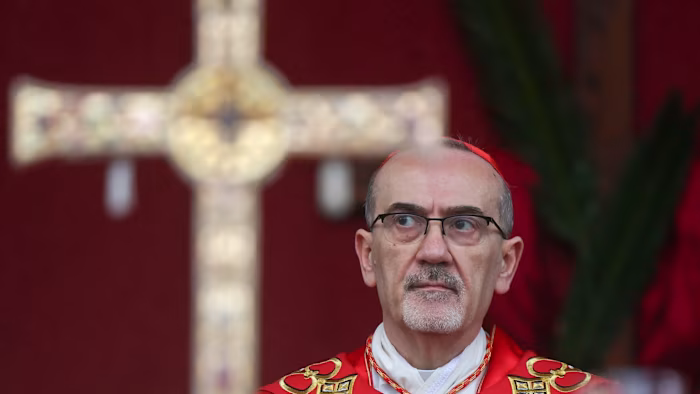
JERUSALEM (Realist English). France and Italy have criticised Israel after authorities blocked Cardinal Pierbattista Pizzaballa, the Latin Patriarch of Jerusalem, from entering the Church of the Holy Sepulchre on Palm Sunday, citing security concerns linked to ongoing regional hostilities.
The Patriarchate said Pizzaballa was prevented from accessing the church — one of Christianity’s holiest sites, traditionally associated with the crucifixion of Jesus Christ — just days before Easter. The incident follows tightened restrictions on gatherings in Jerusalem’s Old City amid missile threats linked to the conflict involving Iran.
Israeli authorities said the decision was based on safety concerns, including the risk of debris from missile strikes. President Isaac Herzog expressed “deep sorrow” over the situation, while Prime Minister Benjamin Netanyahu said the restriction was imposed out of concern for the cleric’s safety and denied any malicious intent.
The Catholic Church described the move as “manifestly unreasonable and grossly disproportionate,” arguing that it disrupted religious observance during a critical period in the Christian calendar.
French President Emmanuel Macron said the incident reflected “an alarming increase in violations of the status of the Holy Places in Jerusalem,” while Italian Prime Minister Giorgia Meloni called it “an offence not only against believers, but against every community that recognises religious freedom.” Italy’s foreign ministry summoned the Israeli ambassador following the incident.
The restrictions are part of broader security measures introduced after the escalation of hostilities in the region. Israeli authorities have limited public gatherings in the Old City, including at Jewish and Muslim holy sites. Access to the Al-Aqsa Mosque has also been restricted, drawing criticism from Muslim communities.
Israel has controlled the Old City of East Jerusalem since 1967 and administers religious sites under a longstanding arrangement known as the “status quo,” which governs access and worship practices among different faiths.
The Patriarchate said the Palm Sunday procession, which typically draws tens of thousands of worshippers, had already been cancelled due to security concerns. Pizzaballa had sought to hold a smaller private ceremony when access was denied.
The developments come as missile strikes in Israel have caused casualties and damage in several areas, including parts of Jerusalem, reinforcing the security rationale cited by authorities.
Analytically, the incident highlights the growing tension between security measures and religious access in a highly sensitive environment, where restrictions risk amplifying diplomatic friction and interfaith tensions.
The key question is whether Israel can balance security imperatives with maintaining the delicate status quo governing holy sites, particularly during major religious observances with global significance.