


TEHRAN (Realist English). Israel has struck a nuclear facility in Isfahan and significantly expanded its ground operation in Lebanon, capturing the strategic Beaufort Castle.
Israel on the Iranian front: strike on nuclear facility
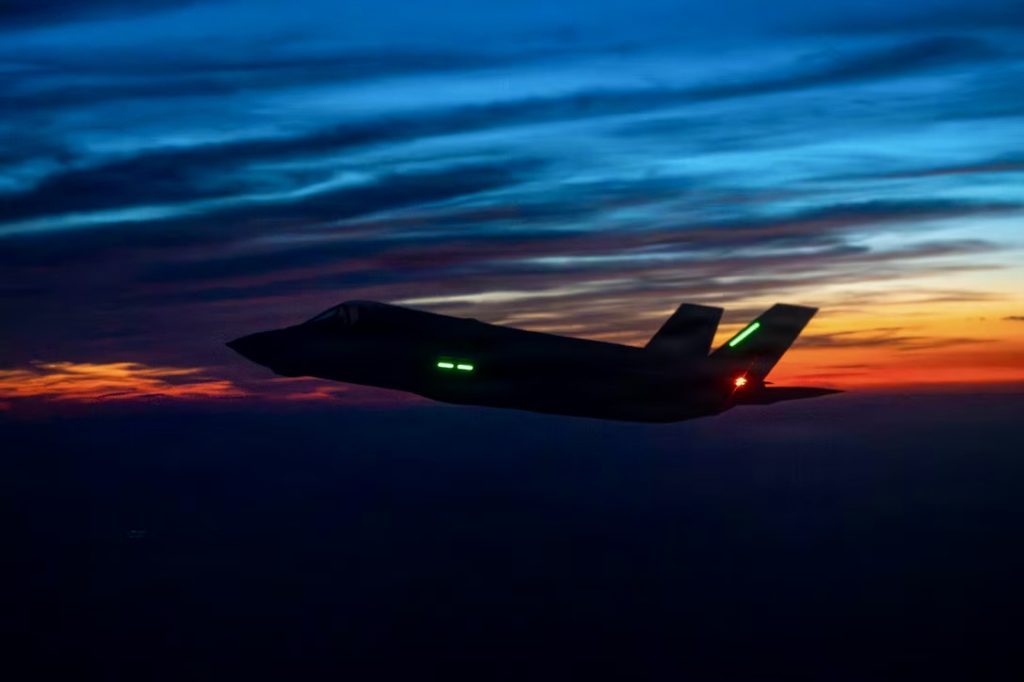
On the night of June 1, 2026, Israeli warplanes struck an Iranian nuclear facility in Isfahan, where, according to intelligence, most of the stockpile of highly enriched uranium is stored. The strike used precision munitions capable of hitting deep underground targets.
The IAEA confirmed the attack, noting that underground storage facilities were damaged, but according to preliminary data, no nuclear materials themselves were destroyed. Iranian authorities have not yet officially commented on the extent of the damage.
Earlier reports indicated that the US and Israel had resumed developing plans for strikes on Iranian territory, considering two scenarios: massive bombings or a ground special operation to seize nuclear materials.
US-Iran talks: nuclear deadlock and financial disputes
The sides continue to argue over three key issues. Iran insists that only the end of the war is under discussion, while the nuclear file has been postponed for now. The US demands immediate guarantees that Tehran will not develop nuclear weapons.
Furthermore, Iran demands the unfreezing of $12 billion of its assets before substantive talks on the nuclear program can begin. Tehran also insists that any agreement include a complete ceasefire on all fronts, including the Lebanese front, where pro‑Iranian forces operate.
Iranian Foreign Ministry spokesman Esmaeil Baghaei said the talks are taking place in an atmosphere of “deep distrust” and accused the US of constantly shifting positions, which drags out the process.
The White House stressed that President Donald Trump is ready to sign only an agreement that is “good for America and satisfies his red lines.”
Mutual strikes amid the talks
Despite diplomatic activity, hostilities have not ceased. The Pentagon announced “defensive strikes” against Iranian radar stations and drone control centers in the Goruk area and on Qeshm Island in the Strait of Hormuz. In response, the Islamic Revolutionary Guard Corps (IRGC) struck a US military base located in Kuwait.
“If it weren’t for me, you’d be in prison”: expletive‑laden altercation
Alongside the diplomatic and military events in the Middle East, an equally dramatic conflict is unfolding between the most influential figures in this process – President Donald Trump and Israeli Prime Minister Benjamin Netanyahu.
The culmination of the confrontation was a phone call between the leaders on June 1, 2026. Israeli sources called it one of the worst and most tense since Trump’s return to the White House.
According to Axios, Trump unleashed a stream of expletives at Netanyahu, calling him “crazy.”
“You’ve lost your mind. If it weren’t for me, you’d already be in prison. … Now everyone hates you. Everyone hates Israel because of this,” the publication quoted the US president as saying.
Trump was referring to his support for Netanyahu during his corruption trial – allegedly, thanks to that support, the Israeli premier avoided jail. The US leader also warned that Israel would face even greater international isolation because of the ongoing strikes on Lebanon, and expressed concern over high civilian casualties.
Beirut conflict: Trump reins in escalation
The immediate trigger for the scandalous call was Israel’s plan to strike Beirut. Trump categorically opposed the proposed offensive, fearing it would undermine diplomatic efforts with Iran. He bluntly asked Netanyahu: “What the hell are you doing?” referring to the Israeli army’s plans for the Lebanese capital.
As a result, Trump’s pressure worked: after the call, he announced that Israeli troops would not be sent into Beirut. However, Netanyahu stressed in his statement that despite this, “the IDF will continue to operate in southern Lebanon according to plan.”
Lebanese front: capture of Beaufort Castle and advance to the Litani River
The most dramatic events unfolded on the Lebanese front. Israeli forces significantly expanded the area of their ground operation. The Israel Defense Forces (IDF) established control over the strategically important Crusader castle of Beaufort, located on a hill north of the Litani River.
This allowed Israeli forces to advance several kilometers, seizing commanding heights. The IDF also crossed the Litani River and reached the Wadi Saluki area, expanding the combat zone north of it.
Strikes on Beirut and civilian casualties
Prime Minister Netanyahu ordered strikes on the southern suburbs of Beirut, where Hezbollah’s headquarters and infrastructure facilities are located. According to Lebanese authorities, dozens of civilians were killed in the airstrikes. The total number of victims since the start of the Israeli operation in Lebanon has exceeded 3,400 people, according to the Health Ministry.
Fragile partial ceasefire
A partial ceasefire was reached through US mediation. According to Lebanese authorities, Hezbollah agreed to halt attacks on Israel in exchange for the Israeli army refraining from strikes on Beirut and its southern suburbs. President Trump confirmed that after his talks with representatives of Israel and Hezbollah, the sides agreed to a ceasefire.
However, the truce remains extremely fragile. Netanyahu stressed that despite the agreement, “the IDF will continue to operate in southern Lebanon according to plan.” Immediately after the ceasefire was announced, Hezbollah claimed several attacks on Israeli positions.