


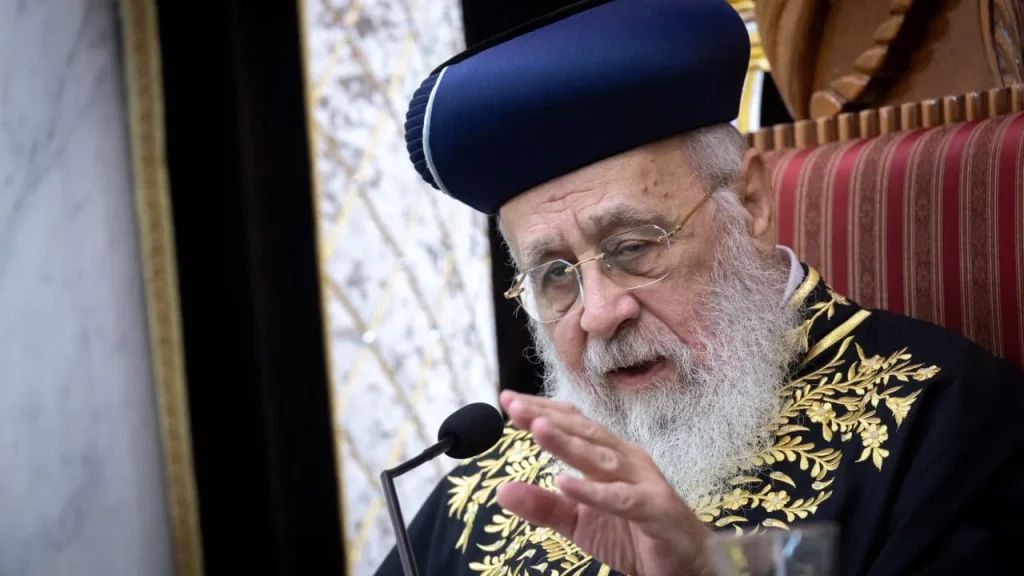
JERUSALEM (Realist English). Former Sephardi Chief Rabbi Yitzhak Yosef has sharply criticised Israel’s High Court of Justice after it upheld restrictions on attendance at the Western Wall during Passover, intensifying tensions between religious leaders and state institutions.
The court ruled that public prayer gatherings at the Western Wall Plaza would be limited to around 50 participants this year due to security concerns linked to the ongoing regional conflict. The traditional priestly blessing ceremony, which typically draws tens of thousands, has instead been moved to the Western Wall Tunnels under controlled conditions.
At the same time, the court allowed protests against Israel’s military campaign — including operations against Iran and Hezbollah — with attendance capped at 600 participants.
Yosef, the spiritual leader of the ultra-Orthodox Shas party, condemned the decision in strong terms, accusing the judiciary of undermining religious life and drawing a comparison between protest rights and restrictions on worship.
His remarks prompted immediate backlash from political figures. Lawmaker Gilad Kariv described the statements as “violent and extreme,” warning that such rhetoric could incite harm against judges. Former military chief Gadi Eisenkot also condemned the comments as a “severe and personal attack” on the judiciary.
Current Sephardi Chief Rabbi David Yosef, the former rabbi’s brother, also criticised the court’s ruling, arguing that it disregards religious sensitivities and traditions. He said judicial decisions taken during the Sabbath and affecting religious practices had eroded trust among observant communities.
The restrictions come amid heightened security concerns. Israeli authorities have limited large gatherings in Jerusalem’s Old City following missile strikes and regional escalation tied to the ongoing war involving Iran.
The Western Wall — one of Judaism’s holiest sites — has frequently been at the centre of disputes over access, religious practice and state authority. The latest ruling highlights a broader fault line in Israeli society, where security imperatives, civil liberties and religious traditions continue to collide.
Analysts say the episode reflects a deepening institutional and cultural divide, with the judiciary, political leadership and religious authorities increasingly at odds over the balance between security, democracy and religious identity.