


TOKYO (Realist English). Nearly half of Japan’s 20 largest cities — each with a population exceeding 700,000 — have recorded a population decline over the past decade, partly due to the country’s falling birthrate, according to an analysis published by Kyodo News.
Projections for 2050 indicate that the number of major cities experiencing population decline will increase to 18, despite earlier success by many of them in attracting younger residents from surrounding areas.
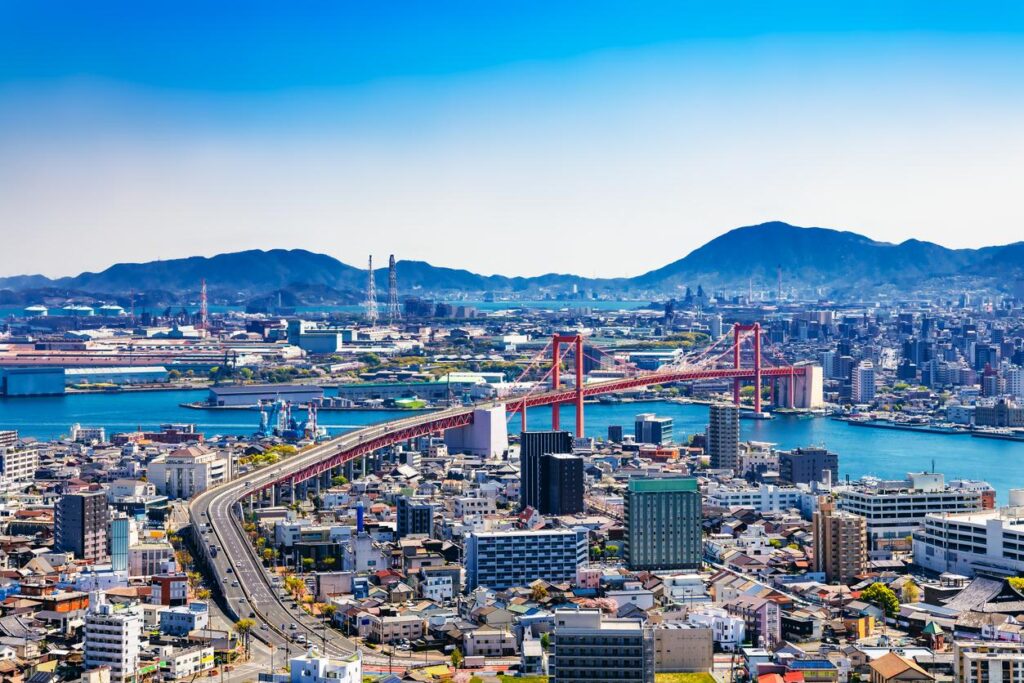
Kitakyushu, located in southwestern Japan, posted the sharpest decline among ordinance-designated cities, which are granted administrative powers similar to those of prefectures in areas such as social welfare and public health. The city’s population fell by 6.5%, from around 970,000 to 910,000 between 2015 and 2025.
The trend is prompting policymakers to reassess the designated city system, which was introduced in 1956 on the assumption of continued population growth. Yokohama, Nagoya, Kyoto, Osaka and Kobe were the first cities to receive the status. In subsequent years, cities including Shizuoka were added after the government lowered the population threshold from 1 million to 700,000.
A comparison of basic resident registry data as of January 1 shows that Shizuoka followed Kitakyushu with a 6.0% decline, from roughly 710,000 to 670,000 residents.
By contrast, several cities continued to grow. Fukuoka recorded the strongest increase, expanding by 8.2% to 1.60 million residents, followed by Saitama, up 7.1% to 1.35 million, and Kawasaki, which grew by 6.2% to 1.53 million.
According to 2025 figures and population estimates for 2050 from the National Institute of Population and Social Security Research, only Fukuoka and Kawasaki are expected to avoid population decline among designated cities.
Critics argue that designated cities are burdened with extensive administrative responsibilities without receiving sufficient financial resources. As a result, lawmakers from multiple parties have proposed turning them into “special cities” with greater independence from prefectural governments.
The demographic pressure extends beyond Japan’s largest urban centres. Of the country’s 62 core cities with populations of at least 200,000, 52 — or about 84% — have also seen their populations shrink compared with a decade ago.